A woman’s body goes through A LOT of changes during pregnancy. One of the most noticeable changes is postpartum hormonal fluctuations. As our bodies work to grow a little life inside of us, our hormones are working overtime to ensure both mom and baby have the support they need to develop, stay healthy, and prepare for childbirth. Needless to say, pregnancy can send your hormones on a rollercoaster ride.
And that ride doesn’t end after giving birth. Our hormones will still fluctuate drastically, causing various physical and emotional symptoms! For many women, it can take up to a year to get back to normal . . . however if you’re a woman with polycystic ovarian syndrome (PCOS) it can take longer to regulate. Plus, determining if you have hormonal imbalance related to pregnancy or PCOS can be more difficult than you think!
However, just like with PCOS, hormonal imbalance after pregnancy may be common, but it doesn’t have to stay that way. You can fix irregular hormone levels using natural healing methods and lifestyle changes. So, today, we’re going to get into how you can tell if you have a hormonal imbalance post-pregnancy and what you can do about it.
Note: PCOS is now called PMOS (periendocrine metabolic ovarian syndrome.) I fully support this name change, so you’ll see me use both names in this post.
7 Signs of Hormonal Imbalance After Pregnancy
Irregular Menstrual Cycle
After giving birth (if you decide not to breastfeed), your period should return in 6 to 8 weeks postpartum. If you are breastfeeding, it could take up to 12 months postpartum. Of course, every body is different, and your period may come sooner or later than that. This is especially true if you have PCOS, because we Cysters already deal with menstrual irregularity. One reason for these changes is that certain hormonal levels drop sharply after delivery, including estrogen and progesterone, which can impact the timing and flow of your cycles. Because of this, it’s something you want to monitor really closely postpartum to understand what’s normal for your body and catch any signs of imbalance early.
Difficulty Losing Weight
Let’s get one thing straight: weight gain during pregnancy is COMPLETELY NORMAL and is a natural part of this incredible process. While you may feel societal pressure to lose the “baby weight” after giving birth, women with PCOS may find it more difficult to accomplish this. This is due to insulin resistance, when the body cannot properly metabolize glucose and manage blood sugar levels, leading to weight gain and difficulty losing weight using normal measures.
Don’t put too much pressure on yourself to lose weight after pregnancy, especially if you have PCOS and already struggle with insulin resistance! However, if you’ve tried a PCOS-friendly diet, you’ve done slow-weighted workouts, and you’ve reduced your stress levels and still aren’t experiencing weight loss, take a look at your other PCOS symptoms first. If those are improving, these are signs that you are on the right track.
Fatigue and Low Energy Levels
Of course, being tired is expected postpartum. You probably won’t get to sleep through the night for quite a while. But, there is a difference between being tired from lack of sleep and feeling fatigued from a hormonal imbalance. Even after a decent night’s rest or a long nap, you’ll still feel exhausted and have low energy levels, which could be caused by high cortisol levels.
Cortisol, also known as the stress hormone, disrupts our sleep cycles, making us feel tired in the morning and awake when it’s time to go to bed at night. Chronic fatigue while adjusting to a baby is challenging, and as a woman with PCOS, your cortisol levels are probably naturally elevated, but there are ways to lower your cortisol with supplements and help you regain energy.
If cortisol is normal, you can also check your thyroid hormones. Thyroid hormones drop significantly after pregnancy normally and tend to regulate on their own. However, if they don’t, it could be a sign of postpartum thyroiditis. This is chronic inflammation of the thyroid and may need to be addressed by a medical professional.
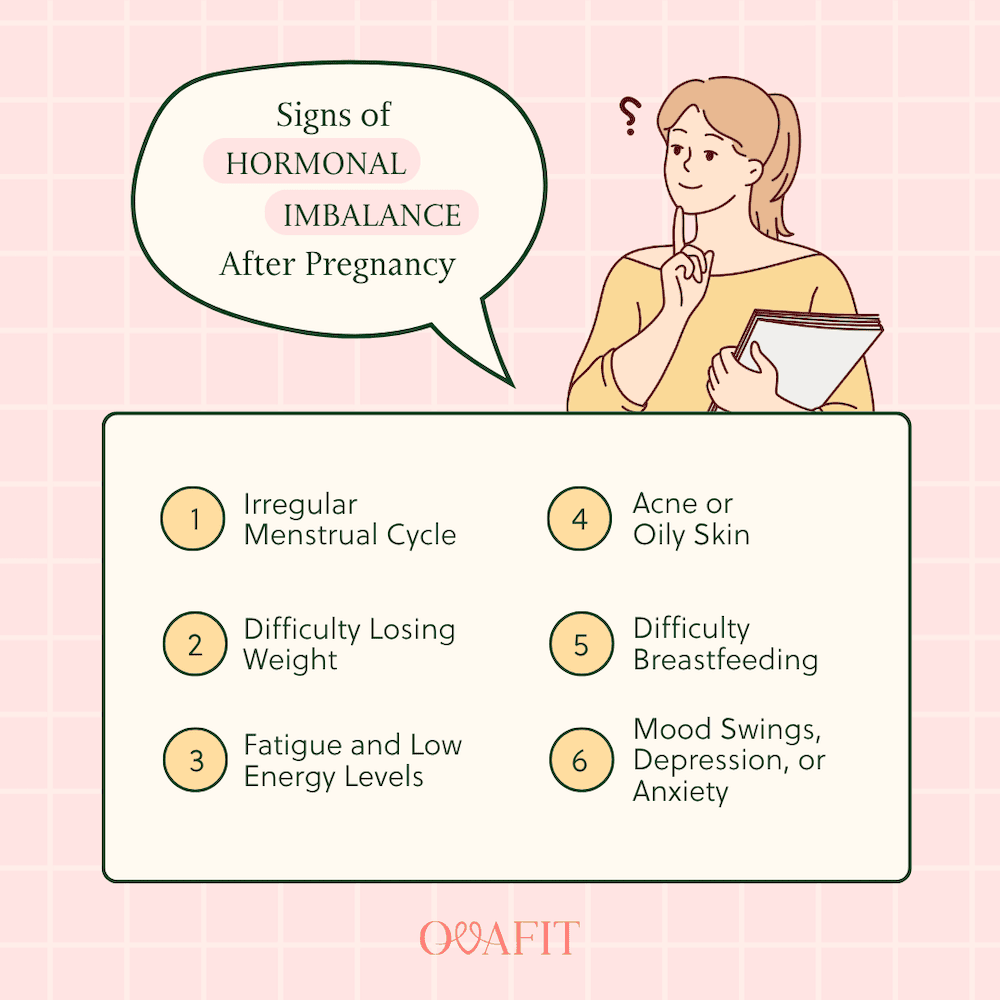
Acne or Oily Skin
You may have noticed changes in your skin during pregnancy. You likely experienced acne in your first and third trimesters. However, if you have a hormonal imbalance, you’ll find that you have acne and oily skin during this postpartum period too. This is caused by elevated androgen levels, such as testosterone, and other hormonal shifts post-pregnancy.
Fun Fact: My Testosterone Relief Tea is my go-to herbal remedy to help lower androgen levels with PCOS! It’s one of the main hormones that gets out-of-whack with this hormonal condition, so adding postpartum fluctuations to the mix can make it even more challenging. Try this tea and other natural ways to lower testosterone to get back on track.

Difficulty Breastfeeding
Producing breastmilk takes a significant amount of effort from your body—mostly your endocrine system! The hormone working overtime to produce breastmilk is prolactin. But in women with PCOS, prolactin is often elevated, meaning it can be difficult for their bodies to regulate breast milk production. If you can’t breastfeed or are struggling, definitely talk with your doctor and see a lactation consultant to see if this is a result of hormonal imbalance.
Vaginal Dryness
Vaginal dryness is a common sign of postpartum hormonal imbalance, often caused by the sharp drop in estrogen levels after giving birth. This is especially noticeable in breastfeeding mothers, as elevated prolactin can further suppress estrogen. Along with other symptoms like fatigue, mood swings, or irregular cycles, vaginal dryness can signal that your body is still experiencing hormonal imbalances.
Mood Swings, Depression, or Anxiety
Our hormones majorly affect our mental health and moods. With fluctuating estrogen and progesterone levels after pregnancy, many women experience mood swings, depression, anxiety, and what is also known as the baby blues. But in women with PCOS, there is an increased risk of postpartum depression, which can show up around three months after giving birth.
Postpartum depression (PPD) symptoms you should be on the lookout for include:
- Loss of appetite
- Fear of being a bad mother
- Difficulty bonding with your baby
- Feelings of self-shame, worthlessness, or guilt
- Withdrawal from friends and family
If you’re experiencing any of these, see a doctor immediately, and let’s get your hormones back on track.
Postpartum Hormone Drop
After delivery, your body undergoes a rapid hormonal transition as pregnancy hormones begin to decline. During pregnancy, hormones like estrogen and progesterone rise to levels they may never reach again. Then, within days of delivery, those hormone levels fall dramatically. This sudden shift is one of the biggest hormonal changes your body will ever go through.
For many women, this adjustment period causes temporary symptoms like mood swings, crying spells, fatigue, irritability, brain fog, and changes in libido. In fact, the postpartum hormone drop is one of the main reasons the “baby blues” are so common during the first few weeks after birth.
Most women begin feeling more like themselves as their hormones stabilize. However, if symptoms are severe, persist for several months, or interfere with daily life, it may be a sign that an underlying hormone imbalance is contributing to the problem.
Hormone Issues After Pregnancy
Progesterone and Estrogen
The placenta produces high levels of estrogen and progesterone throughout pregnancy to support the baby. When the placenta is no longer there postpartum, you experience a significant drop in progesterone and estrogen. If the ovaries don’t immediately take back over and produce those hormones (which is common if you’re stressed, sleep-deprived, breastfeeding, or have PMOS), levels could stay low.
When this happens, you could experience:
- Mood swings
- Anxiety or depression
- Brain fog
- Vaginal dryness
- Low libido
- Sleep issues
Thyroid Hormones
Irregular thyroid hormone levels are really common postpartum. Pregnancy puts a lot of strain on the immune system, and after delivery, it rebounds. This can sometimes trigger inflammation in the thyroid gland. It’s supposed to be temporary and brief, but in some women, it can develop into postpartum thyroiditis.
With this condition, you could feel:
- Fatigue
- Weight changes
- Hair loss
- Anxiety
- Depression
- Heart palpitations
- Feeling unusually hot or cold
Cortisol
It’s no secret that delivery and the postpartum period impose a lot of stress on your body, physically and emotionally. It’s not unusual for a woman to stay stressed in the weeks and months following birth. Whether that’s because of delivery recovery, poor sleep, anxiety about your newborn, or the weight of constant responsibility, it can keep your body in a prolonged state of stress. That chronic stress can lead to chronically high cortisol levels, which is your body’s primary stress hormone.
If you have high cortisol, these could be the signs:
- Exhaustion despite sleeping
- Feeling “wired but tired”
- Cravings
- Difficulty losing weight
- Increased anxiety
Prolactin
Prolactin is the hormone responsible for milk production. So naturally, it’s high after birth. However, many women with PMOS have chronically elevated prolactin levels even when they’re not postpartum. No one is sure why, but it seems to be an issue with the feedback mechanism between the brain and the ovaries. Because some Cysters already have high prolactin, levels can become significantly elevated postpartum.
Signs of high prolactin levels include:
- Delayed return of ovulation
- Low estrogen symptoms
- Vaginal dryness
- Reduced libido
Insulin
Pregnancy naturally increases insulin resistance to ensure your body has enough nutrients to support both you and the growing baby. Because of this, most women become more insulin-sensitive after delivery. It’s meant to go away, but if you have PMOS or other predispositions to insulin resistance, the issue can persist long after birth and may even worsen.
High insulin resistance postpartum can lead to:
- Increased hunger
- Sugar cravings
- Fatigue after meals
- Weight retention
- Difficulty losing postpartum weight
When Do Postpartum Hormones Level Out?
When hormones balance again after pregnancy depends on a lot of factors. You won’t find a one-size-fits all answer. For some women, hormone levels return to baseline within a few weeks, while for others the process can take months or even years.
Here are some factors that could prolong postpartum hormonal imbalances:
- Breastfeeding
- Underlying conditions like PMOS
- Sleep deprivation
- Chronic stress
- Poor nutrition
- Nutrient deficiencies
- Lack of physical activity
- Excessive exercise during recovery
- Significant postpartum weight gain
- Rapid postpartum weight loss
- Returning to hormonal birth control
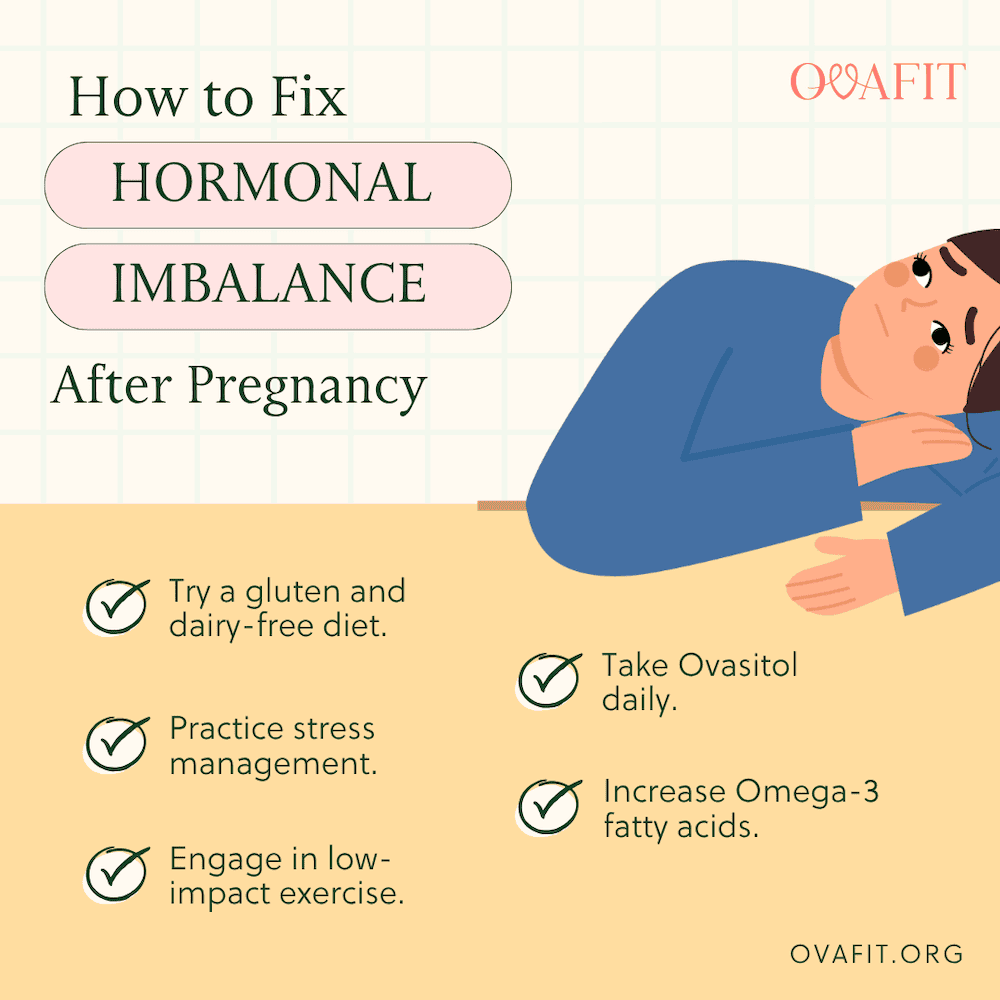
How to Fix PCOS Hormonal Imbalance After Pregnancy
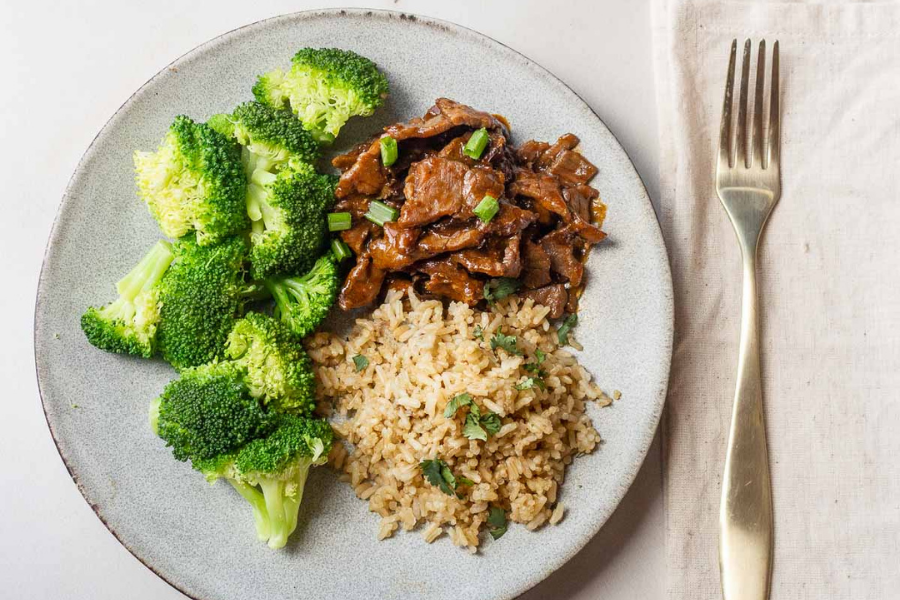
Try a gluten- and dairy-free diet.
While pregnant, you may have followed my PCOS pregnancy diet plan. I’m a huge advocate for eating a healthy and whole-food diet. For Cysters in postpartum who want to balance their hormones, I recommend trying a gluten- and dairy-free anti-inflammatory diet. You’ll still get to enjoy your favorite foods, but with PCOS-friendly alternatives (check out my favorite PCOS-friendly recipes on the Cysterhood App!) while naturally balancing your hormones and reversing your PCOS.
Practice stress management.
Becoming a new mother can be a stressful period. Adding hormonal imbalance during postpartum can make it even more stressful. Incorporate stress management techniques like yoga, meditation, and deep breathing to lower elevated cortisol levels. These natural remedies are super safe and effective, especially for breastfeeding mothers.
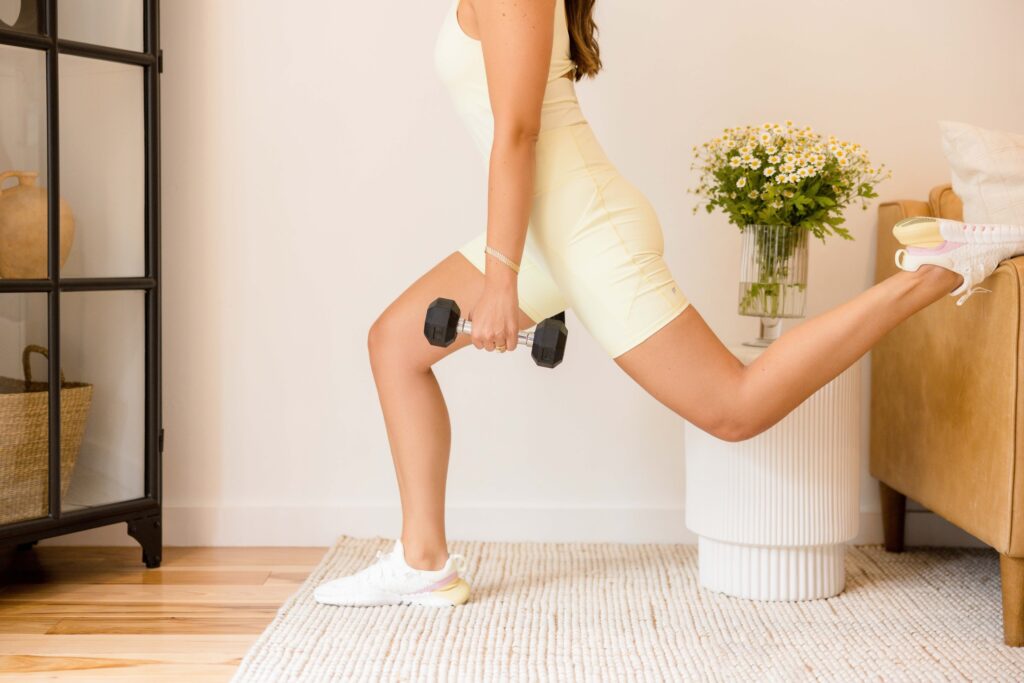
Engage in slow-weighted or low-impact exercise.
Meditative and slow-weighted exercises like walking, lifting weights, and pilates have a ton of benefits for postpartum mothers. Not only can it help balance hormones to pre-pregnancy levels, but it can promote weight loss by improving insulin sensitivity. Plus, exercise releases endorphins, which are super helpful in reducing stress and fighting depression.
And did you know that when breastfeeding, low-impact workouts are better than high-intensity workouts? Studies show that after an intense workout, there is a higher concentration of adiponectin in breast milk. This can prevent your baby from gaining weight in early infancy. Plus, these exercises are much better for a PCOS body overall to achieve your goals! So, slow is the way to go!
Head on over to the Cysterhood App to check out PCOS-friendly workouts to help balance your hormones and get you feeling great!
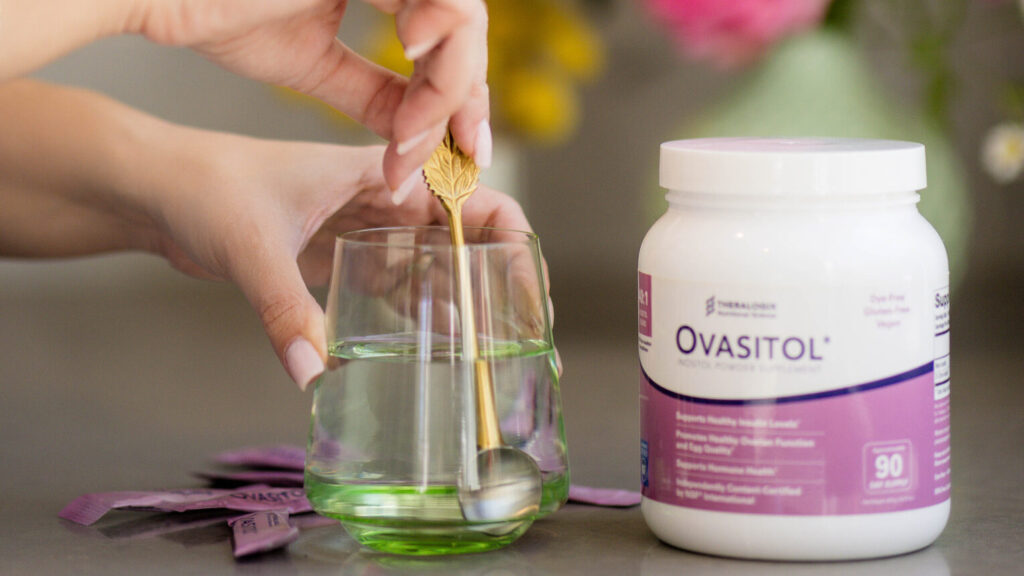
Take Inositol Complete 40:1 daily.
Adding the natural supplement inositol to your daily routine is a great way to start your hormone health journey. Adding one scoop of my Inositol Complete 40:1 to your favorite non-carbonated drink twice a day can improve your insulin resistance, androgen levels, metabolic hormones, and ovulation!
It’s also super safe to take when breastfeeding. In fact, one study shows that inositol in breast milk could help your baby’s brain develop and make neurological connections. Of course, talk to your doctor before starting any kind of supplement while breastfeeding.
Increase Omega-3 fatty acids.
While we’re on the topic of natural supplements, taking an omega-3 supplement can help reduce inflammation, clear up skin, lower testosterone levels, and improve insulin sensitivity in women with hormonal imbalances. It’s also super beneficial for both mom and baby and safe to use when breastfeeding.
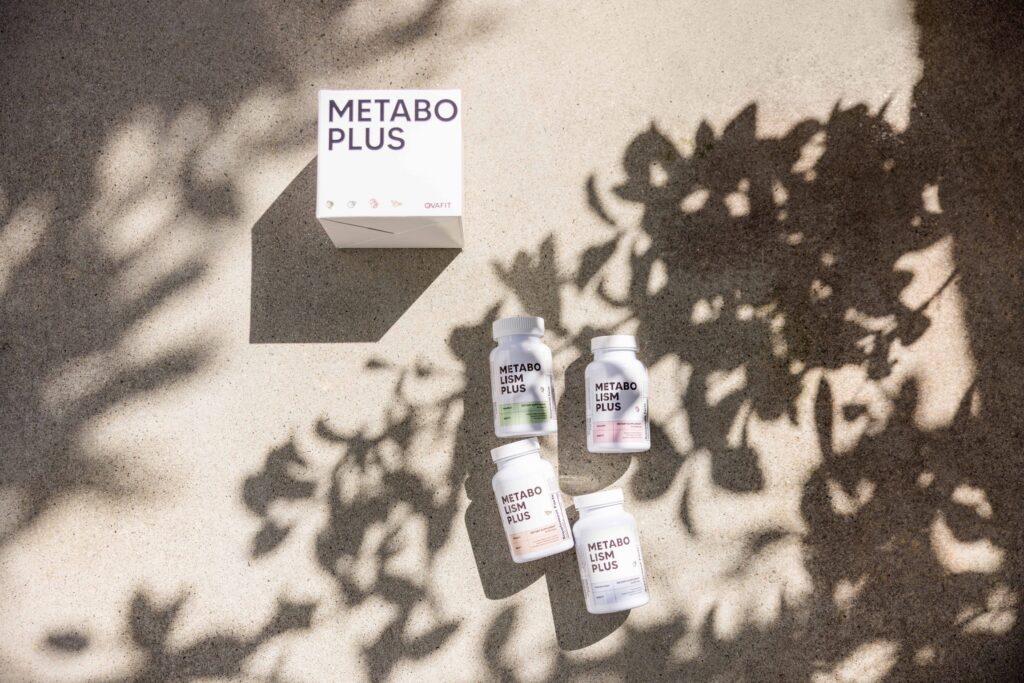
You can find omega-3 supplements in my Metabolism Plus bundle, along with other helpful supplements to fight PCOS symptoms, like curcumin, Coenzyme Q10, and my MetaMulti vitamin.
Take control of your hormonal health and start feeling yourself again!
Mamas, it’s so important to remember that after your baby is born, your health and wellbeing is still a priority. You can be the best version of yourself when you’re well taken care of . . . and that involves keeping your hormones in check. Look out for signs of hormonal imbalance and don’t be too quick to accept a “new normal.” You deserve to live symptom-free postpartum with PCOS!
You can find more ways to naturally heal PCOS on the blog, and you’ll get tons of great advice on supplements and other remedies that can get you feeling your best.