

Polycystic ovary syndrome (PCOS) is a complex endocrine condition that affects a good percentage of women of reproductive age. There are a lot of symptoms that come with PCOS, but you can’t actually diagnose PCOS by symptoms alone. Instead, doctors diagnose patients with PCOS by looking at a lot of different factors, like their medical history, the results of physical exams, something called the Rotterdam Criteria, and their hormone levels. That last one is a big one!
Since PCOS is an endocrine disorder, that means the primary issue is with hormones. Imbalances in various hormones set off a chain reaction that prompt tons of symptoms, from hair loss and weight gain to anxiety and infertility. In the past, we’ve talked about AMH, testosterone, progesterone, and even luteinizing hormone (LH) levels, but today we’re talking about prolactin levels and how PCOS affects this important hormone.
What You Need to Know About Prolactin Levels in PCOS
When getting hormone testing to diagnose PCOS or come up with a treatment plan, it’s important to look at your serum prolactin levels. If your prolactin levels are high and you are experiencing other sex hormone imbalances, you could have PCOS. And, if you already know you have PCOS, an imbalance of prolactin could be the root of several symptoms. All around, it’s a good idea to know where your prolactin levels are and get them under control if they’re out of whack!
What is Prolactin?
Prolactin is a hormone that’s produced by the pituitary gland in the brain. It does SO much in a woman’s body. Its number one superpower is helping stimulate milk production when breastfeeding.
However, it’s hard at work even when you’re not pregnant or breastfeeding!
The right balance of prolactin helps the reproductive system, immune system, and metabolism all run optimally. If you’re a Cyster like me, you know that the state of these three systems has a HUGE impact on your PCOS symptoms.
So, it’ll probably come as no surprise to you that prolactin levels are often imbalanced in Cysters’ bodies, further contributing to the dysfunction of these essential systems.
Why is Prolactin High in PCOS?
Studies show that women with PCOS often have elevated prolactin levels. Usually, Cyster’s prolactin levels are 1.5 times higher than a woman without PCOS, and this can contribute to several PCOS symptoms. (Prolactin levels over 25 ng/ml are considered high.)
The reason for this??? Well, we don’t really know. Experts think it might be due to an error in the feedback mechanism between the brain and the ovaries, which means the ovaries are never alerted to stop making prolactin.
These high prolactin levels can cause irregular menstrual cycles, galactorrhea, infertility, low libido, vaginal dryness, acne, hair loss, headaches, weight gain, and mood swings.
Luckily, like other hormonal imbalances that come with PCOS, there are natural solutions to reverse your symptoms and balance your hormones! So, that’s what we’re going to dive into next. Of course, discuss any changes in your PCOS treatment journey with your doctor, but here are some natural ways to lower prolactin levels with PCOS.
Is High Prolactin Dangerous?
Not always! You shouldn’t ignore high prolactin levels, but don’t panic either. When your prolactin levels are chronically high, it can mess with ovulation. That can result in irregular periods, low progesterone, and, of course, fertility challenges. It can also throw off your overall hormone balance, which may show up as heavier cycles, fatigue, or stubborn weight gain.
Because prolactin can suppress ovulation, it can also lower estrogen levels over time. And estrogen plays a key role in everything from your cycle to your metabolism. When estrogen stays low for too long, it can even impact bone health. So, don’t ignore high prolactin, but don’t stress either. Focus on supportive lifestyle changes, stay consistent with your hormone labs, and work with a provider if needed to get things back on track.
Does High Prolactin Cause Weight Gain?
Yes. Chronically high prolactin can cause weight gain, but usually not directly. It tends to happen through a chain reaction. First, high prolactin levels lower dopamine, and dopamine is essential for appetite regulation. At the same time, high levels of prolactin can worsen insulin resistance, making it harder for your body to process glucose. This can increase appetite, intensify cravings, and slow your metabolism. Together, these effects can make it easy to gain weight . . . and really hard to lose it.
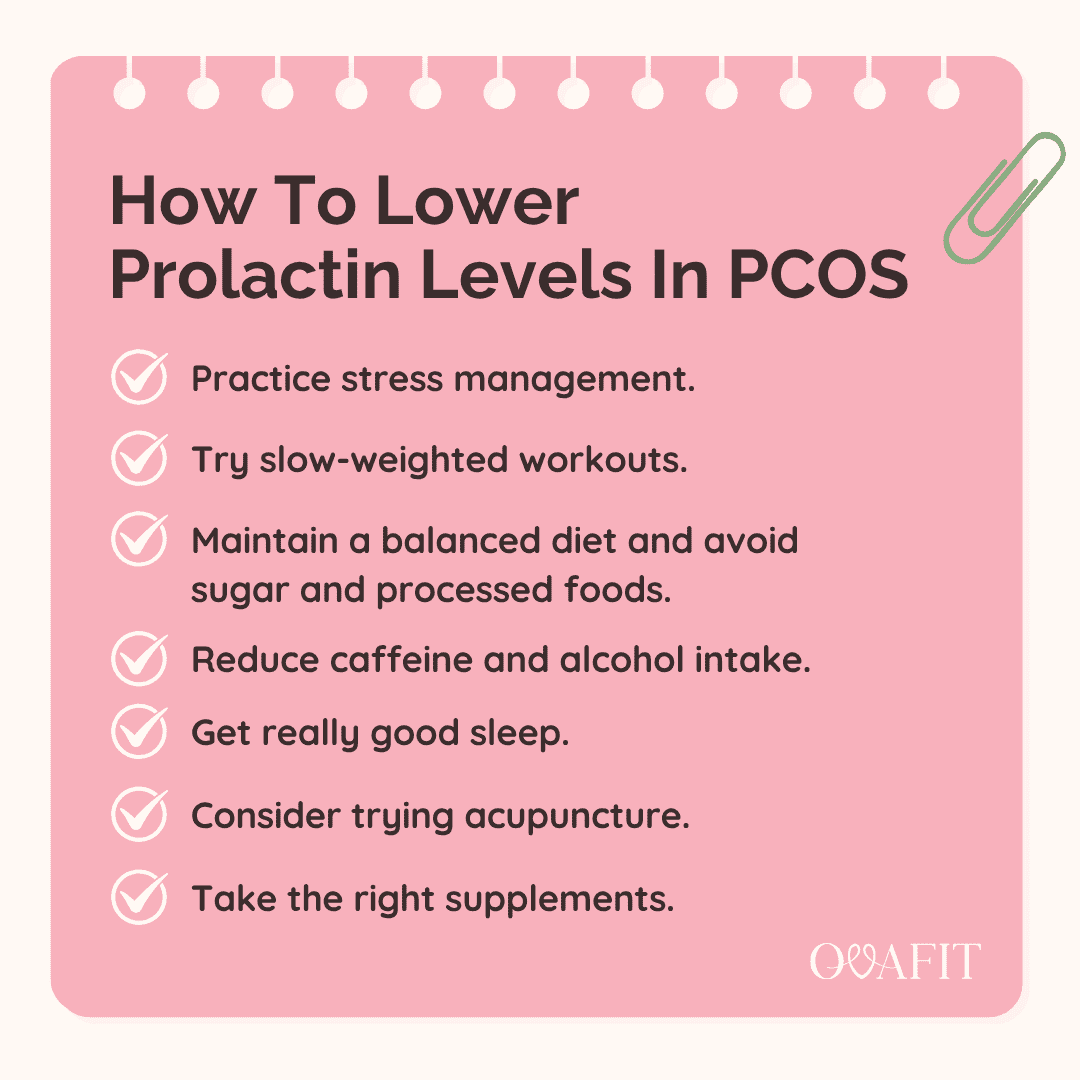
How To Lower Prolactin Levels In PCOS
Practice stress management.
Stress can have a big impact on your body. It’s not just something you feel in your mind! When you get stressed, your body actually releases “stress hormones” (AKA cortisol).
Too much cortisol can disrupt the balance of other hormones in your body too, like prolactin, resulting in worsened PCOS symptoms.
Try doing things to relieve stress. Of course, this is different for everyone, but some things that really help me are low-intensity exercises, meditation, taking my 10 minute walks after my meals, and putting my screens away before going to bed!
Reducing stress is key to healing your PCOS! Here’s more on the link between stress and PCOS symptoms.
Try slow-weighted workouts.
So, I talked about how stress can increase prolactin levels, but so can weight gain. Exercise can help with both stress and weight management, and therefore, it can have a positive effect on prolactin levels, too!
However, not every workout is helpful for stress management and weight loss with PCOS. High-intensity and high-impact exercise elevate your heart rate and trigger your body to produce extra adrenaline and cortisol.
Remember, cortisol is a stress hormone, so that’s not good for weight loss and balancing prolactin levels. Instead, opt for slow-weighted workouts or other low-impact exercises like lifting weights, walking, and yoga.
You can find PCOS-friendly slow-weighted workout routines on The Cysterhood app! All the exercises I post are specifically designed to support PCOS healing in Cysters like you.
Maintain a balanced diet and avoid sugar and processed foods.
One of the key things that can have a big impact on hormone balance is diet. Doctors will tell most PCOS women that weight loss is necessary to reverse symptoms. The truth is, we can’t “just lose weight” with PCOS. We have to understand the root cause of the weight gain…insulin resistance. Managing insulin resistance will help you reverse symptoms and lose weight.
Insulin resistance is when your body can’t correctly process glucose, so rather than the sugar turning to energy, it’s absorbed by the body as fat. No thanks! However, when you avoid sugar, processed foods, and inflammatory foods, you can reduce your levels of insulin and help your body utilize glucose properly again, avoiding hormonal imbalances and inflammation.
All around, eating well can have a huge impact on your PCOS healing process, including lowering prolactin levels. Here’s the details on my recommended PCOS diet, and download The Cysterhood app for hundreds of delicious and nutritious PCOS-friendly recipes.
Reduce caffeine and alcohol intake.
These two can each contribute to a rise in prolactin levels, but for different reasons. Caffeine triggers your body to produce cortisol and adrenaline.
Those high cortisol levels (stress hormones) influence other hormone levels like prolactin and induce plenty of PCOS symptoms.
Alcohol, on the other hand, is sometimes full of carbs and sugar. This is not good for insulin resistance! And, insulin resistance, as I’ve discussed, can lead to hormonal imbalances. If that wasn’t enough, we all know how hard alcohol is on the liver and the liver is an essential piece of cleansing your body of excess hormones! If your liver isn’t working well and your insulin resistance is high, lowering prolactin levels will be very difficult!
For best PCOS-healing results, consider cutting way back on caffeine and reducing your alcohol intake. Here’s more on alcohol and PCOS and caffeine and PCOS if you want to dive deeper!
Get really good sleep.
As you’re sleeping, your body goes through a whole hormone regulation process. Disruptions in sleep (which are unfortunately common with PCOS), can obviously disrupt this regulation process and lead to various hormone imbalances, including prolactin! So, finding ways of getting better sleep can be very helpful.
Like I said, that can be hard with Cysters already naturally struggling with sleep, but there are things you can do to help. Try to read before bed, do meditative exercises, stick to a consistent sleep schedule, and don’t forget to spend time out in the sun! Here’s my whole post on improving sleep with PCOS.
Consider trying acupuncture.
Acupuncture can stimulate the release of endorphins and improve blood circulation, and both of these help regulate hormone levels, including prolactin! There are indirect effects of acupuncture on prolactin as well, since it’s been shown to help relieve stress and promote regular menstrual cycles!
I know acupuncture may be a bit outside of your comfort zone, but it can be so helpful for supporting your overall PCOS-healing journey. If you want to learn more about it, Sirak and I talk to lead acupuncturist Megan Joyce in this episode of A Cyster and Her Mister! It’s a must-listen!
Rule out other potential causes.
If prolactin levels are high in someone with PCOS, it’s important to check for other possible causes before jumping into treatment. Conditions like congenital adrenal hyperplasia (CAH) can look a lot like PCOS, with symptoms like irregular periods and high androgens, but need different care. Hypothyroidism is another common cause, since it can trigger a rise in prolactin. You also want to rule out things like pituitary tumors (like prolactinomas) or side effects from certain meds. Getting a full picture helps make sure the treatment is actually targeting the right issue.
Supplements to Lower Prolactin
No matter what you do, if your body doesn’t have the right nutrients to function optimally, you’ll always have an uphill battle on your hands. That’s why adding supplements to your routine can make SUCH an impact. Because, even if your diet is great, it’s really hard to get all the right vitamins and minerals in a given day. Some of those nutrients you’re lacking can impact prolactin levels!
Let’s take a look at the essential vitamins that I have in my MetaMulti PCOS-multivitamin. Every nutrient in the MetaMulti is specifically designed for women with PCOS, so of course it fills common nutrient gaps! Here are the ones that’ll have the biggest impact:
Vitamin B6
Studies show that vitamin B6 plays a big role in supporting the functioning of the endocrine and metabolic system. Since those two systems have the biggest effect on prolactin levels, it makes sense the vitamin B6 would help regulate prolactin production and management!
Vitamin B6 works by promoting dopamine synthesis in the brain. Dopamine is the neurotransmitter that actually prevents and regulates the release of prolactin! So, by increasing dopamine through vitamin B6, you can improve your prolactin levels!
Magnesium
Magnesium helps reduce prolactin levels in a big way. Magnesium affects the hypothalamic-pituitary axis, which prevents the release of prolactin by action on dopamine receptors in the hypothalamus. We know that when someone is deficient in magnesium, this axis doesn’t work properly and not enough dopamine is released, contributing to prolactin imbalances. So, by maintaining proper magnesium levels, you can help ensure your body regulates prolactin correctly!
Magnesium has LOTS of other benefits for PCOS too. Here’s my full post on magnesium for PCOS. It can be an important part of finding PCOS symptom relief!
Zinc
The last one is zinc! This is another vitamin that packs a huge PCOS punch! It can help regulate prolactin by preventing the amino acid L-tryptophan from converting into serotonin. Serotonin, unlike dopamine, triggers the release of prolactin. So, by reducing serotonin levels as well.
Zinc has plenty of health benefits for PCOS, and can actually regulate other hormones too, like free testosterone levels! Here are all the benefits of zinc for PCOS!
Foods to Reduce Prolactin
Vitamin B6-Rich Foods
Vitamin B6 plays a key role in dopamine production, which helps keep prolactin in check.
- Salmon
- Turkey
- Bananas
- Potatoes
- Spinach
Zinc-Rich Foods
Zinc is essential for hormone regulation and may help reduce elevated prolactin levels.
- Oysters
- Beef
- Pumpkin seeds
- Chickpeas
- Cashews
Magnesium-Rich Foods
Magnesium helps regulate the nervous system and can lower stress-related prolactin spikes.
- Dark chocolate (85%+)
- Almonds
- Avocado
- Black beans
- Leafy greens
Anti-Inflammatory Foods
Chronic inflammation can worsen hormonal dysregulation. So, naturally, anti-inflammatory foods can help balance prolactin and other imbalances.
- Berries
- Olive oil
- Fatty fish (like salmon, sardines)
- Turmeric
- Green tea
Low-Glycemic, Blood Sugar–Balancing Foods
Since insulin resistance can raise prolactin, stabilizing blood sugar is key.
- Eggs
- Greek yogurt
- Lentils
- Quinoa
- Non-starchy vegetables (broccoli, zucchini, peppers)
Foods that Support Dopamine
Since dopamine and prolactin are directly connected, eating dopamine-boosting foods is a great way to support prolactin balance.
- Eggs (tyrosine + protein)
- Chicken
- Cottage cheese
- Almonds
- Apples
Lowering prolactin levels is an important part of PCOS healing!
Hormonal imbalances are the root of most polycystic ovarian syndrome (PCOS) symptoms. Finding natural ways to achieve hormone balance can help you find healing totally side-effect free. Talk to your doctor about lifestyle changes like regularly exercising, eating a balanced diet, and taking supplements to help lower prolactin levels and relieve other PCOS symptoms. With the right strategy, you can do this! It’s time to live symptom-free!