

Polycystic ovary syndrome (PCOS) is one of the most common health conditions affecting women of reproductive age. But even though it’s so common, it’s still widely misunderstood and often goes undiagnosed. Millions of women are living with hormonal imbalances caused by PCOS without even realizing it.
So what does it really mean?
It means many women are dealing with frustrating symptoms like irregular periods, fatigue, weight gain, or acne, and assume that’s just how their body works. But here’s the truth: it doesn’t have to be that way. Once you get a proper diagnosis and understand how your hormones are impacting your body, you can take real steps to reverse PCOS naturally.
Because PCOS is so misunderstood, I’m dedicating this post to breaking down just how common it really is. I’ll also walk you through how to get a PCOS diagnosis, and, most importantly, what you can do to start feeling like yourself again!
How Common Is PCOS? The Shocking Statistics Explained
PCOS is a complex hormonal disorder that operates on a spectrum. That means it doesn’t look the same for every woman. It’s also one of the trickier conditions to diagnose because there isn’t just one simple test, which is often why it’s under or misdiagnosed.
But if you have a feeling your hormones are out of balance, or something just feels “off,” that’s your sign to start paying attention. Educating yourself about PCOS is the very first step toward understanding what’s really going on inside your body. When you learn what PCOS is and how it shows up, you can advocate for your health and start healing.
By the end of this post, you’ll have a foundation of what PCOS is, how it’s diagnosed, and symptoms to watch for. I’ll also share some eye-opening statistics about how many women are living with PCOS and how many are still going undiagnosed.
What Percentage of Women Have PCOS?
Approximately 10-13% of women of reproductive age are living with PCOS. That’s MILLIONS of women worldwide dealing with imbalanced hormonal levels that affect their energy, metabolism, fertility, and overall well-being.
But here’s the part that really matters: up to 70% of women with PCOS are never diagnosed. That means many Cysters are living with frustrating symptoms and have a higher risk of developing long-term health conditions without even realizing it.
And the numbers are growing. Research shows that from 1990 to 2021, PCOS increased by about 55% worldwide. In some countries, including Italy, Japan, New Zealand, and Australia, rates are among the highest. Meanwhile, Central and Eastern Europe tend to report lower rates.
All of this highlights one important takeaway: awareness matters. The more we talk about PCOS, recognize the symptoms, and seek proper testing, the sooner women can get answers.
How to Know If You Have PCOS
PCOS can show up differently for every woman. For some Cysters, symptoms are mild and easy to overlook. For others, they can have a big impact on daily life. That’s why understanding the signs is so important. It helps you connect the dots and recognize what your body might be trying to tell you.
Here are some of the most common symptoms of PCOS to watch for:
- Irregular menstrual cycles
- Excess hair growth on the face or body
- Thinning hair on the scalp
- Difficulty losing weight
- Fatigue, even after a full night’s sleep
- Depression or anxiety
- Intense sugar or carb cravings, especially at night
- Hormonal acne along the jawline or chin
- Gut issues like bloating or IBS
- Abdominal or pelvic discomfort
If you want a deeper look at how these symptoms show up in real life, check out my post, “What Does PCOS Feel Like?” It breaks down what living with the condition actually feels like day to day. And, as a result, it can help you better understand whether PCOS might be behind your symptoms.
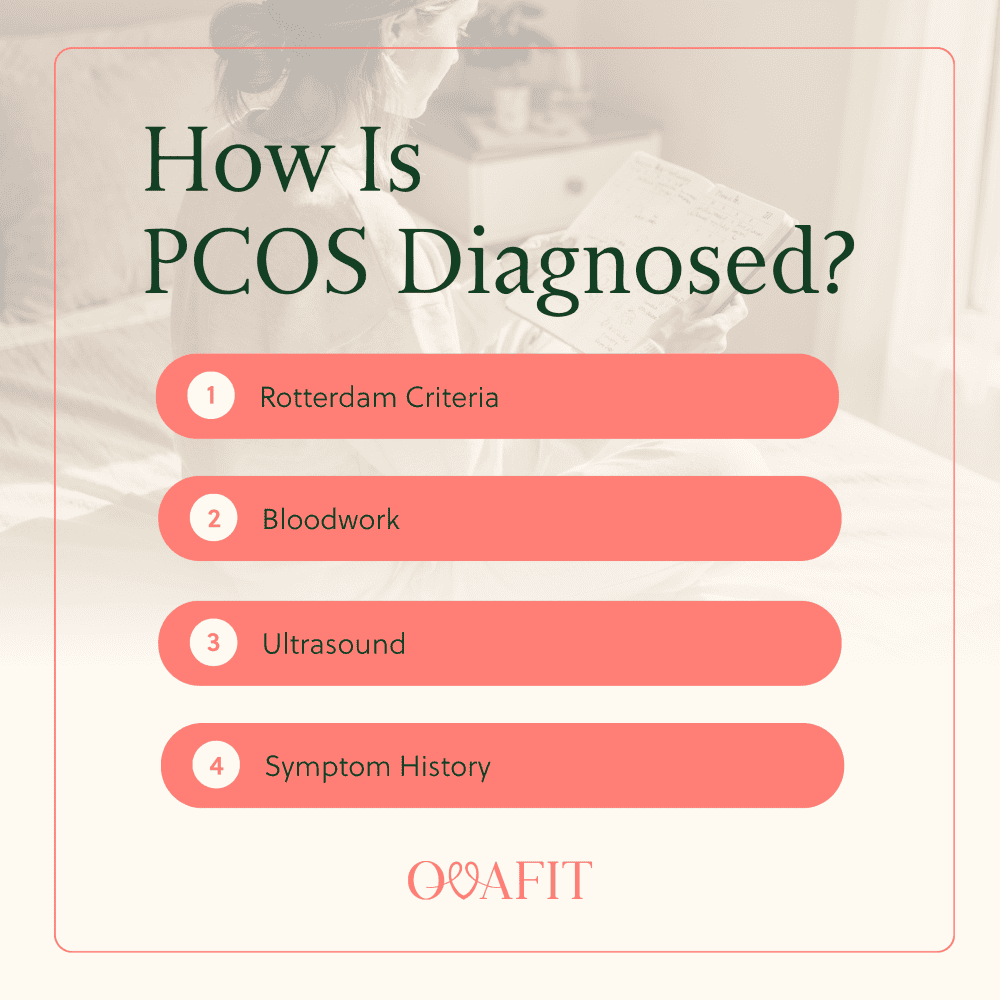
How Is PCOS Diagnosed?
Rotterdam Criteria
There isn’t a single test or quick physical exam that can diagnose PCOS. And, as I mentioned previously, that’s one of the biggest reasons it’s often underdiagnosed. Instead, diagnosing PCOS usually involves a process of elimination. Doctors will look at the full picture of your medical history, hormones, symptoms, and cycle patterns.
The most common method doctors use is called the Rotterdam Criteria. With this approach, you need to meet 2 out of these 3 criteria to receive a PCOS diagnosis:
- Irregular or absent ovulation
- Hyperandrogenism (elevated male hormones like testosterone)
- Polycystic ovaries seen on an ultrasound
These criteria are evaluated using various tools, such as blood tests, cycle tracking, and imaging. And here’s an important tip: when you’re seeking a diagnosis, work with a healthcare provider who is familiar with the Rotterdam Criteria. PCOS is a complex condition, and having someone who understands how to evaluate it properly can make a huge difference in getting accurate answers.
If you want to learn more about the steps involved, dive deeper with my guide “How Can PCOS Be Detected?”
Bloodwork
One of the best ways to understand what’s happening with your hormones is through a blood test. It gives you a clear snapshot of how your body is functioning behind the scenes.
A proper PCOS blood panel can evaluate:
- Androgen levels
- Insulin levels and blood sugar markers
- Inflammation levels
- Thyroid function, to rule out other conditions that can mimic PCOS
All of this helps your provider connect the dots and move closer to the right diagnosis. If you want a deeper breakdown of the exact markers to look for, check out my post “Blood Workup for PCOS.”
Ultrasound
Even though “polycystic ovaries” is in the name, having cysts on your ovaries is actually not the most common symptom. That surprises a lot of Cysters!
An ultrasound can be a very helpful tool for detecting small, fluid-filled follicles on the ovaries. Often appearing in a pattern called a “string of pearls,” these follicles can result from elevated androgen levels. And when that happens, ovulation becomes disrupted. From there, it can set off a chain reaction and affect your hormone levels, menstrual cycle, and how your body feels day to day.
That’s why PCOS is about so much more than ovarian cysts. It’s really about understanding the bigger picture of your hormones and addressing the root causes behind the symptoms.
Symptom History
Your medical provider will review your symptom history and identify which signs may be connected to PCOS. In some cases, they may ask you to track your menstrual cycle and daily symptoms for a few weeks leading up to your appointment. This gives them a clearer picture of how your body functions over time.
And here’s something important to keep in mind: many PCOS symptoms overlap with other conditions. That’s why symptom tracking alone isn’t enough. The real key to getting answers is to pair your symptom history with a blood test and an ultrasound. When those pieces come together, it becomes much easier to uncover what’s truly going on and move forward with a treatment plan that supports your healing journey.
How Often Is PCOS Misdiagnosed?
It’s actually quite common for PCOS to be misdiagnosed. That’s largely because many other conditions share similar symptoms.
Take hypothyroidism, for example, which can also be driven by hormonal imbalances. In this case, however, it involves the thyroid rather than the reproductive hormones. There can also be confusion between PCOS and perimenopause, since both can cause changes in cycles, mood, and energy levels.
And here’s another layer to consider: up to 80% of women with PCOS also have insulin resistance. Because of that, some women are first diagnosed with prediabetes or type 2 diabetes, without anyone looking deeper at the hormonal root cause. That’s why taking a whole-body approach and looking at hormones, metabolism, and symptoms together is so important when evaluating PCOS.
Can PCOS Be Healed?
As of right now, there isn’t a “cure” for PCOS, but it can be managed and symptoms can be reversed through the right lifestyle changes! Because PCOS is a chronic condition, it means Cysters need to take a long-term, sustainable, and whole-body approach.
This approach includes nourishing your body with the right foods, moving in ways that support your hormones, and using targeted supplements when needed. The exciting part? These are natural treatments for PCOS that you can start implementing today.
And here’s something I always stress: the sooner you catch PCOS, the sooner you can start healing. When PCOS goes unaddressed, it can increase the risk of long-term health issues like type 2 diabetes, cardiovascular disease, and mental health challenges. But with early awareness and consistent lifestyle habits, you can take back control of your health.
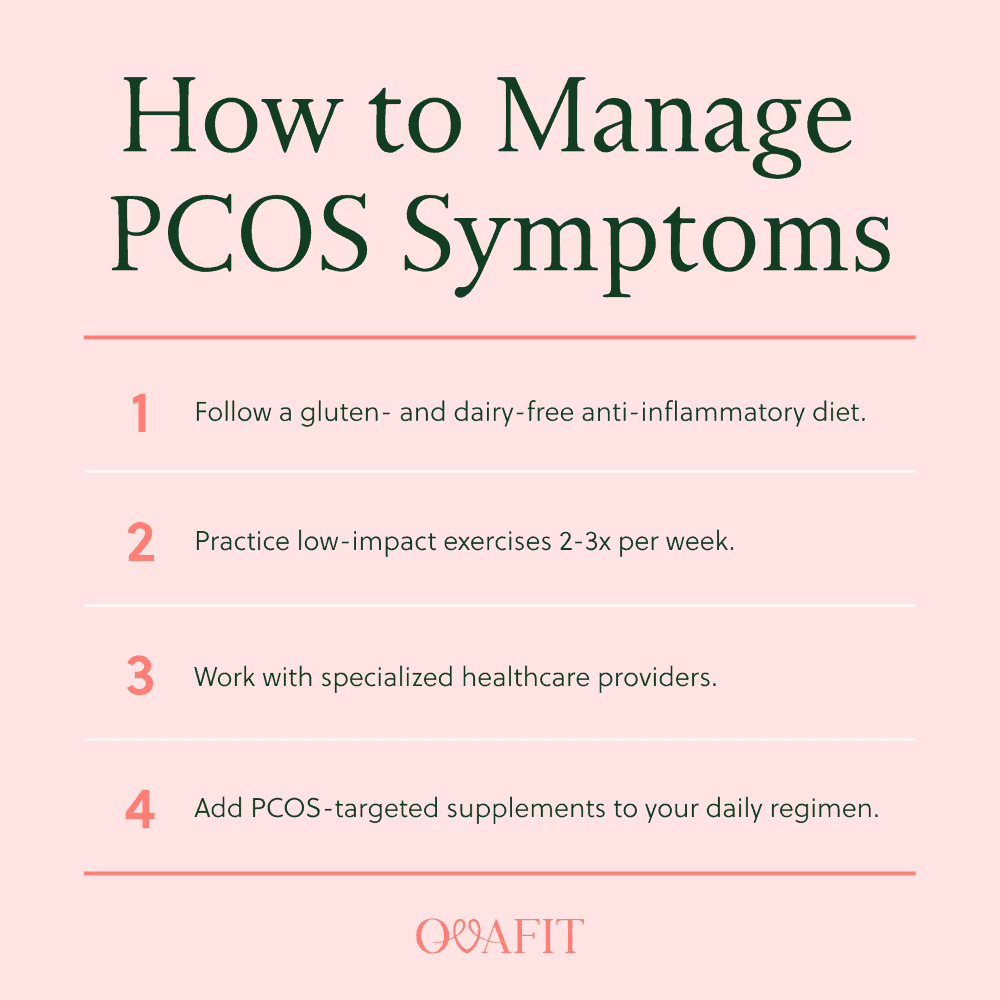
How to Manage PCOS Symptoms
Follow a gluten- and dairy-free anti-inflammatory diet.
You might be surprised by just how much your diet impacts your hormones, especially if you’re dealing with insulin resistance. For Cysters, I always recommend starting a gluten- and dairy-free anti-inflammatory diet that prioritizes lean protein, fiber, and healthy fats. This simple shift can help lower inflammation, stabilize blood sugar, support gut health, and balance your hormones.
And yes, it can also help kick-start that stubborn weight loss. Because when your hormones are working with you and not against you, your body can finally start to let go of that PCOS belly.
If you’re not sure where to begin, that’s exactly why I created The Cysterhood app. You’ll find hundreds of recipes made specifically for Cysters. Plus, there’s an easy PCOS meal planning feature to help you stay consistent all week long.
Practice low-impact exercises 2-3x per week.
Even when you don’t feel like exercising, especially during tough PCOS days, movement can be one of the most powerful tools for managing symptoms. But here’s the key: it has to be the right kind of exercise.
Low-impact workouts like cycling, walking, swimming, Pilates, and slow-weighted strength training are ideal for Cysters. These forms of movement help lower inflammation, build lean muscle, balance hormones, and support your body in reversing PCOS. The best part? You can find PCOS-friendly workout routines inside The Cysterhood app! They’re designed for Cysters to keep stress levels low while helping your hormones stay balanced, and your body feel stronger.
Work with specialized healthcare providers.
When you receive a PCOS diagnosis, working with a knowledgeable healthcare provider can make a huge difference. You don’t have to navigate this journey on your own.
However, it’s important to find someone who truly aligns with your values and your goals for healing. Many doctors prescribe medications like birth control pills or Metformin to help manage symptoms. And while these can be helpful in certain situations, they often focus on symptom control rather than addressing the root issues. They also carry risk factors that can lead to worsened PCOS symptoms.
That’s why understanding your approach to healing is so important. Do you want a more natural, holistic path? A medical-based plan? Or a combination of both? There’s no one-size-fits-all answer. The key is creating a personalized strategy that fits your lifestyle, supports your body, and helps you feel your best.
Add PCOS-targeted supplements to your daily regimen.
Adding targeted PCOS supplements to your daily routine can give your body the extra support it needs to truly heal. I like to think of supplements as tools that help address the root issues behind PCOS, like insulin resistance, inflammation, and hormone balance.
Here are some of my go-to supplements for Cysters:
- Inositol Complete: A clinically supported 40:1 ratio of myo- and D-chiro inositol that can help improve insulin sensitivity, support fertility, and lower inflammation.
- Berberine Advanced: A natural GLP-1 booster for metabolic support that can help stabilize blood sugar levels and calm inflammation.
- Metabolism Plus: A targeted bundle aimed to support insulin sensitivity, reduce inflammation, and help balance hormones.
- Crave Control Protein Powder: An easy way to increase daily protein intake, which plays a key role in improving insulin resistance and reducing cravings.
When you combine the right supplements with consistent lifestyle habits, you give your body the foundation it needs to start feeling better, stronger, and more balanced.
Discover a community of Cysters and begin your healing journey with the support you need.
At Ovafit and The Cysterhood, our mission is simple: help women truly understand PCOS. Because far too many Cysters are living with symptoms without answers or receiving the wrong diagnosis altogether.
The more you learn about the condition, the more confident you become in advocating for your health. And that’s when real change starts to happen. You can make informed decisions, ask better questions, and build a healing plan that works for you.
If you’re ready to keep learning, explore more resources on the Ovafit blog. And when you’re ready to take the next step, check out our NSF-certified line of PCOS supplements. These are your answers for creating a routine that supports your hormones, energy, and long-term health.