
Polycystic ovary syndrome (PCOS) is one of the most common endocrine disorders affecting millions of women during their reproductive years. Because hormone imbalances drive PCOS, it can impact nearly every system in the body. This leads to symptoms like weight gain, irregular menstrual cycles, fatigue, abdominal pain, and skin issues.
Many women with PCOS also experience closely related conditions, including thyroid dysfunction, most commonly known as hypothyroidism. Since your thyroid plays a major role in hormone balance and metabolic health, it’s not surprising that PCOS and hypothyroidism often show up together.
A diagnosis of PCOS can bring up a lot of questions and concerns about your overall health. That’s why understanding these connections is so important. In this post, I’m breaking down the link between PCOS and hypothyroidism, and how the two are often confused. I’ll also talk about practical, natural ways to support and treat PCOS and thyroid health.
Hypothyroidism and PCOS: The Hidden Hormone Link
Understanding how your thyroid function and PCOS are connected can be a powerful step toward healing. When you know what’s happening behind the scenes, you can better address the root issues driving your symptoms. Knowledge truly is the first step to healing.
That’s why I’m diving deep into the relationship between PCOS and hypothyroidism, and how these hormone imbalances can influence one another. I’ll walk you through the different types of thyroid disorders Cysters may experience, why they’re so common, and how they overlap with PCOS symptoms.
And if you’re unsure whether you’re dealing with a thyroid issue, PCOS, or both, I’ll cover this, too. I’ll explain exactly what to look for in your lab work and what to ask your doctor to test. Advocating for your health is one of the most important parts of your PCOS healing journey.
Prefer to listen instead? Be sure to check out my podcast episode on A PCOS Podcast: A Cyster and Her Mister. I break down hypothyroidism and PCOS in an easy-to-understand way.
Are Hypothyroidism and PCOS Related?
Yes, hypothyroidism and PCOS are closely related, but they aren’t the same condition. While both are endocrine disorders with overlapping symptoms, they affect the body in different ways.
Research shows that 22-30% of Cysters are also diagnosed with hypothyroidism. The most common form is chronic lymphocytic thyroiditis (AKA Hashimoto’s), an autoimmune thyroid disease. This is when the immune system attacks the thyroid, leading to reduced function and lower thyroid hormone levels.
Hypothyroidism happens when the thyroid gland—that small, butterfly-shaped gland in your neck—slows down and doesn’t produce enough thyroid hormones. When this happens, it can affect your metabolism, energy, mood, fertility, and menstrual cycle. Sound familiar? These symptoms overlap heavily with PCOS, which is why the two are often confused.
The difference is where each condition begins. PCOS starts in the ovaries and is driven by elevated androgens (like testosterone), insulin resistance, and chronic inflammation. Hypothyroidism, on the other hand, starts in the thyroid.
Here’s where the connection comes in: many Cysters experience estrogen dominance, which can interfere with how thyroid hormones function in the body. Over time, this can slow thyroid activity and contribute to hypothyroidism.
While PCOS and hypothyroidism don’t directly cause one another, they’re absolutely related. Understanding how they influence each other and addressing the shared root issues is key to healing both.
Can Hypothyroidism Be Mistaken for PCOS?
Yes, hypothyroidism can absolutely be mistaken for PCOS because the two share many of the same symptoms. But as I’ve talked about, they actually start in very different parts of the body.
Your thyroid plays a key role in ovulation. Thyroid hormones help regulate luteinizing hormone (LH) and follicle-stimulating hormone (FH) levels, which control ovarian follicle development. When thyroid hormone levels are low, ovulation can slow or stop, leading to irregular cycles. The ovaries can even appear polycystic on an ultrasound. These overlaps make it easy to confuse hypothyroidism with PCOS.
The most reliable way to tell the difference is by ordering a blood test. The key thyroid markers to check include:
- Thyroid Stimulating Hormone (TSH)
- Free T3
- Free T4
- Thyroid antibodies (TPO and TG)
When TSH levels are high and Free T4 is low, it’s a clear sign of hypothyroidism.
But here’s where it gets tricky: thyroid disorders exist on a spectrum. Some Cysters may have subclinical hypothyroidism, which doesn’t always show up clearly on standard blood tests.
That’s why the best approach is to test for both PCOS and thyroid dysfunction. Below, I’m breaking down exactly how PCOS is diagnosed. This will help you know what to ask your doctor for when ordering both a thyroid panel and PCOS lab work.
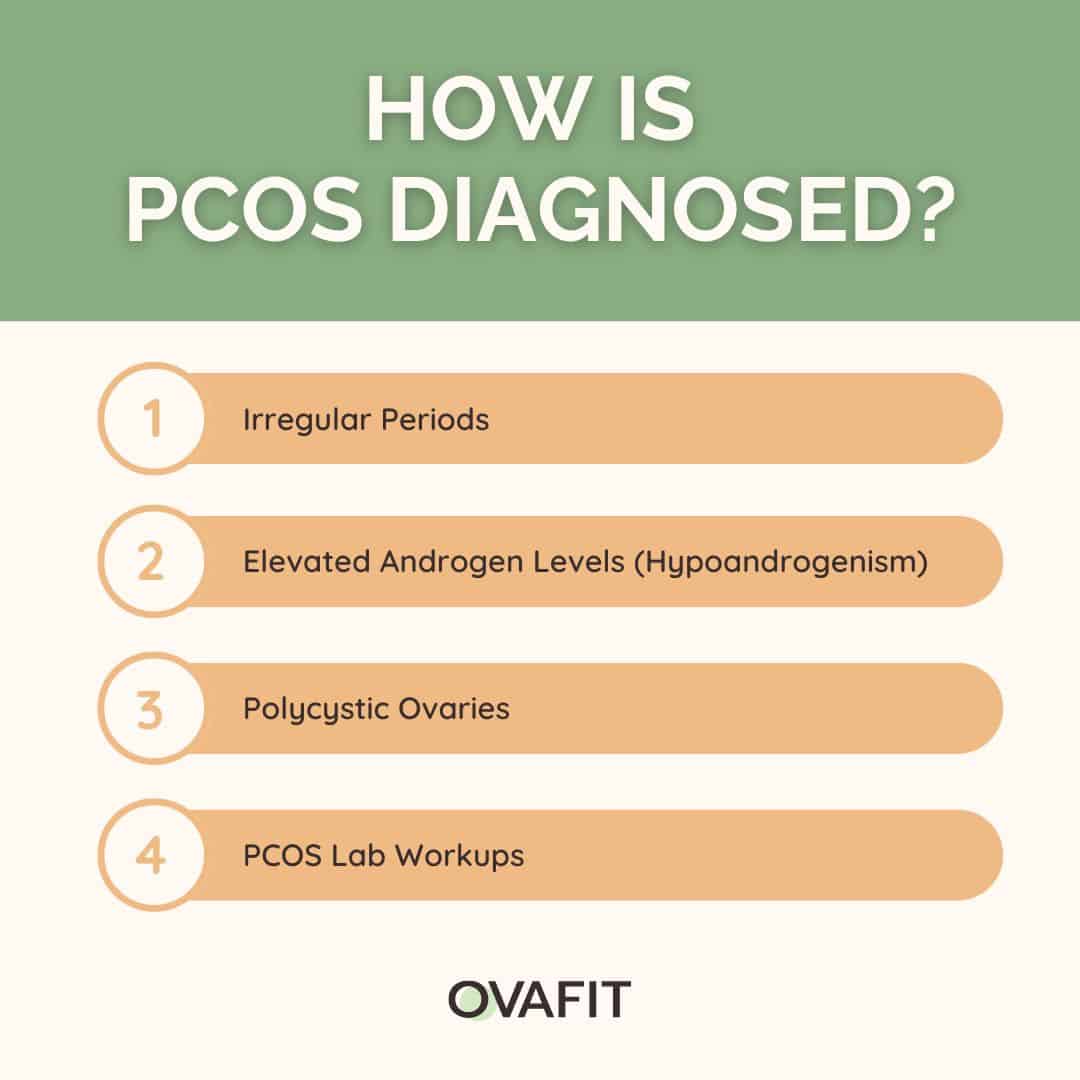
How Is PCOS Diagnosed?
PCOS isn’t diagnosed with a single test. It requires a clinical diagnosis, meaning doctors look at the full picture—symptoms, lab work, and imaging. They also rule out other conditions that can look similar, like hypothyroidism.
I dive deeper into this topic in my post, “How Can PCOS Be Detected?”
Irregular Periods
One of the clearest signs of PCOS is irregular or absent ovulation. This often shows up as cycles longer than 35 days, fewer than eight periods per year, or missing periods altogether.
In PCOS, anovulation is usually driven by insulin resistance, excess androgens, and chronic inflammation. Imbalanced LH and FSH levels can also prevent eggs from fully maturing. This causes them to stay trapped in the ovaries instead of being released.
It’s also important to note that thyroid disorders can cause or worsen anovulation. That’s why ruling out thyroid issues is a critical step when diagnosing PCOS.
Elevated Androgen Levels (Hypoandrogenism)
One of the most common hormone imbalances in Cysters is elevated androgen levels. When diagnosing PCOS, it’s important to consider both symptoms and lab work to get the full picture.
When androgens are high, you may notice acne along the jawline or chin, excess facial or body hair, or hair loss on the scalp. On lab tests, elevated androgens often show up as high total or free testosterone, low sex hormone binding globulin (SHBG), or elevated DHEA-S.
And here’s something important to know: you don’t need both physical symptoms and abnormal labs to confirm high androgens. Having just one is enough for it to be relevant to diagnosing PCOS.
Polycystic Ovaries
Despite the name polycystic ovary syndrome, not all Cysters actually have cysts on their ovaries. These “cysts” are small, immature follicles, not true cysts, and many women with PCOS never develop them at all.
That said, doctors could identify PCOS through a pelvic ultrasound. This imaging looks for a higher number of small follicles on the ovaries. It can be a helpful diagnostic clue when combined with symptoms and lab work.
PCOS Lab Workups
When it comes to diagnosing PCOS, blood work is a must. Lab testing helps confirm what’s happening hormonally and rule out other conditions, like hypothyroidism.
A comprehensive PCOS lab panel typically includes:
- Total testosterone
- Free testosterone
- Sex hormone-binding globulin (SHBG)
- DHEA-S
- LH and FSH
- Fasting glucose and insulin
- Lipid panel
- Full thyroid panel
- Prolactin
When doctors review your lab results alongside your symptoms and ultrasound, it gives them a clear picture of whether PCOS is truly the root issue. The right labs make all the difference in building a healing plan that actually works for your body.
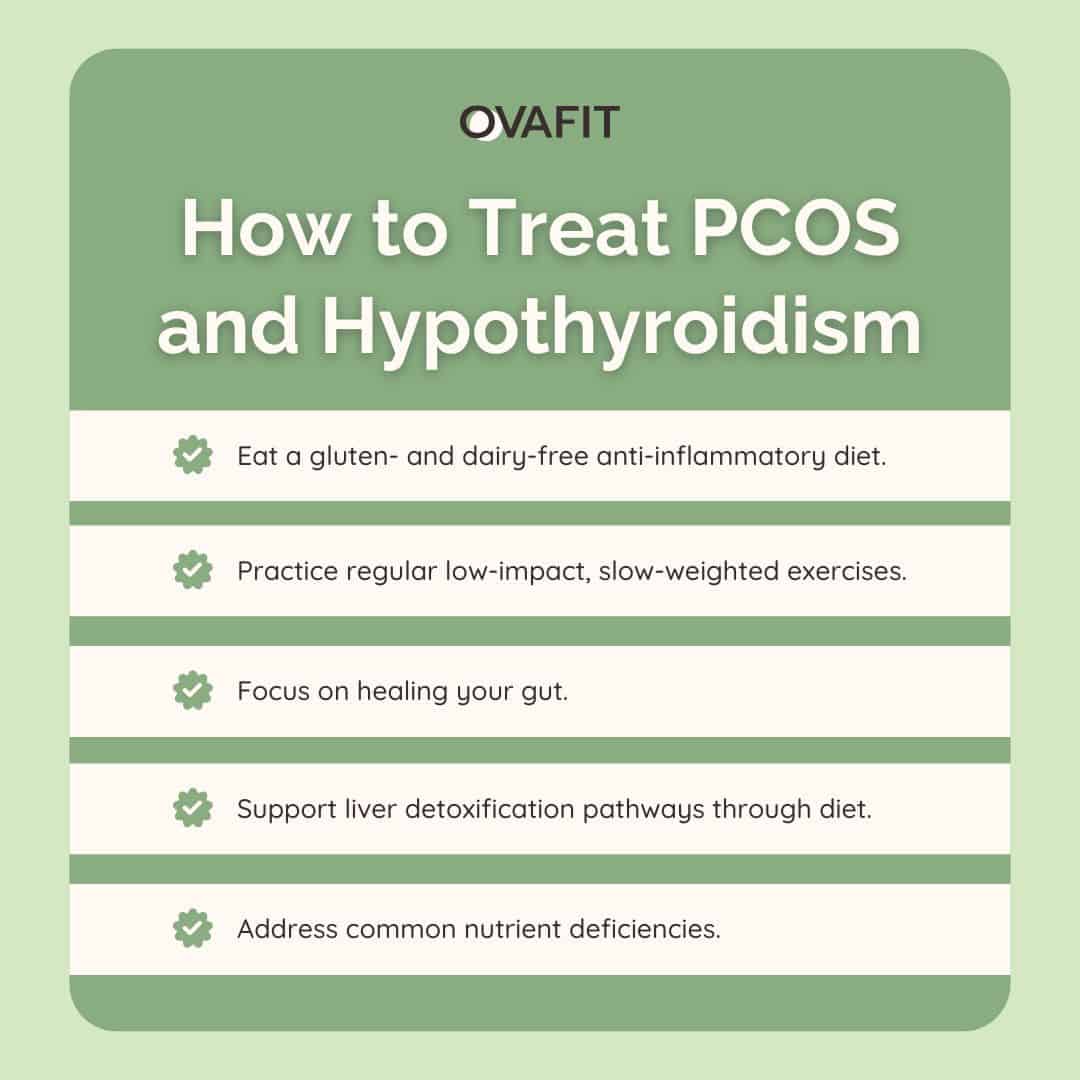
How to Treat PCOS and Hypothyroidism
Eat a gluten- and dairy-free anti-inflammatory diet.
In my opinion, as a registered dietitian, one of the most powerful steps Cysters can take to start reversing PCOS naturally is with their diet. Following a gluten- and dairy-free anti-inflammatory diet can improve hormone balance. And that matters even more when you’re navigating PCOS and hypothyroidism together.
This way of eating also helps lower chronic inflammation, improve insulin sensitivity, and support gut healing. And those three things? They’re the major root issues behind both of these endocrine conditions.
Practice regular low-impact, slow-weighted exercises.
Moving your body the right way is an important part of healing PCOS. That means choosing PCOS-friendly workouts that support your hormones instead of stressing them out. Think low-impact movement like slow-weighted strength training, walking, Pilates, yoga, and swimming.
When you stay consistent with gentle movement, you help stabilize blood sugar, lower inflammation, and bring hormones back into balance. It’s one of the simplest—and most sustainable—ways to support hormone health.
Not sure where to start? Inside The Cysterhood app, you’ll find hundreds of PCOS-friendly workouts designed specifically for people with PCOS. They help you build muscle, burn calories, and support your hormones—without overdoing it.
Focus on healing your gut.
Nearly half of women with PCOS also struggle with gut health issues, which can make hypothyroidism even harder to manage. Your gut plays a huge role in thyroid autoimmunity, inflammation levels, and estrogen balance.
The good news? You can support your gut with a few intentional changes. Adding soluble fiber to your daily routine, cutting back on processed sugars, and avoiding gluten and dairy can make a big difference. When your digestion is moving regularly, your body is better able to eliminate excess estrogen. And that’s something incredibly helpful for both PCOS and hypothyroidism healing.
You can read more about how PCOS affects your gut in my post, “PCOS Digestive Symptoms: What Your Gut Is Telling You.”
Support liver detoxification pathways through diet.
Your liver is a key player in hormone balance, especially for Cysters dealing with hypothyroidism. It acts as a major detox pathway, helping clear excess estrogen and testosterone from the body. It also converts thyroid hormone from T4 to the active form of T3, which is essential for healthy metabolism, energy, and thyroid function.
You can support your liver naturally by adding cruciferous veggies and bitter greens to your meals. Staying well-hydrated and limiting alcohol also goes a long way.
These simple habits help your liver efficiently detox excess hormones and support proper thyroid hormone conversion. And these are both crucial for healing PCOS and hypothyroidism from the inside out.
Address common nutrient deficiencies.
Women with PCOS often struggle to properly absorb essential nutrients from food alone. While a nourishing diet is always the foundation, it isn’t always realistic—or enough. That’s where PCOS supplements can step in and give your body the extra support it needs to heal.
Some of the most helpful supplements for targeting both PCOS and hypothyroidism include:
- Zinc – helps lower excess androgens, improves insulin sensitivity, and supports thyroid hormone production
- Selenium – protects the thyroid from immune-related damage
- Iron – essential for thyroid peroxidase (TPO), ovulation, and progesterone production
- Vitamin D – improves insulin sensitivity, lowers inflammation, and supports immune balance
- Magnesium – helps lower cortisol, improves insulin sensitivity, and activates vitamin D
- B12 – supports energy production and nervous system health
- Omega-3 – reduces inflammation, improves thyroid hormone receptor sensitivity, and lowers insulin resistance
You don’t have to juggle all of this on your own. Many of these nutrients are thoughtfully included in Ovafit’s NSF-certified PCOS supplements.
With the MetaMulti daily vitamin, you can fill common nutrient gaps in one formulated pill. And with the Metabolism Plus bundle, you’re targeting metabolic and thyroid support head-on. This means your hormones can finally start working with you, not against you.
Start your natural healing journey for PCOS and hypothyroidism with Ovafit and The Cysterhood.
PCOS and hypothyroidism, while they start in different parts of the body, have a ton of overlap. From weight gain and fatigue to irregular cycles and mood changes, both conditions have similar reproductive and metabolic disruptions. However, with intentional lifestyle changes and proper supplements, you can kickstart the healing process and ensure your body has what it needs to thrive.
And you don’t have to do this alone. With Ovafit’s PCOS supplements and the support of The Cysterhood app, you’ll have the tools, guidance, and community for your healing journey. From targeted nutrients to recipes, workouts, and real support from women who get it, you’re never alone.