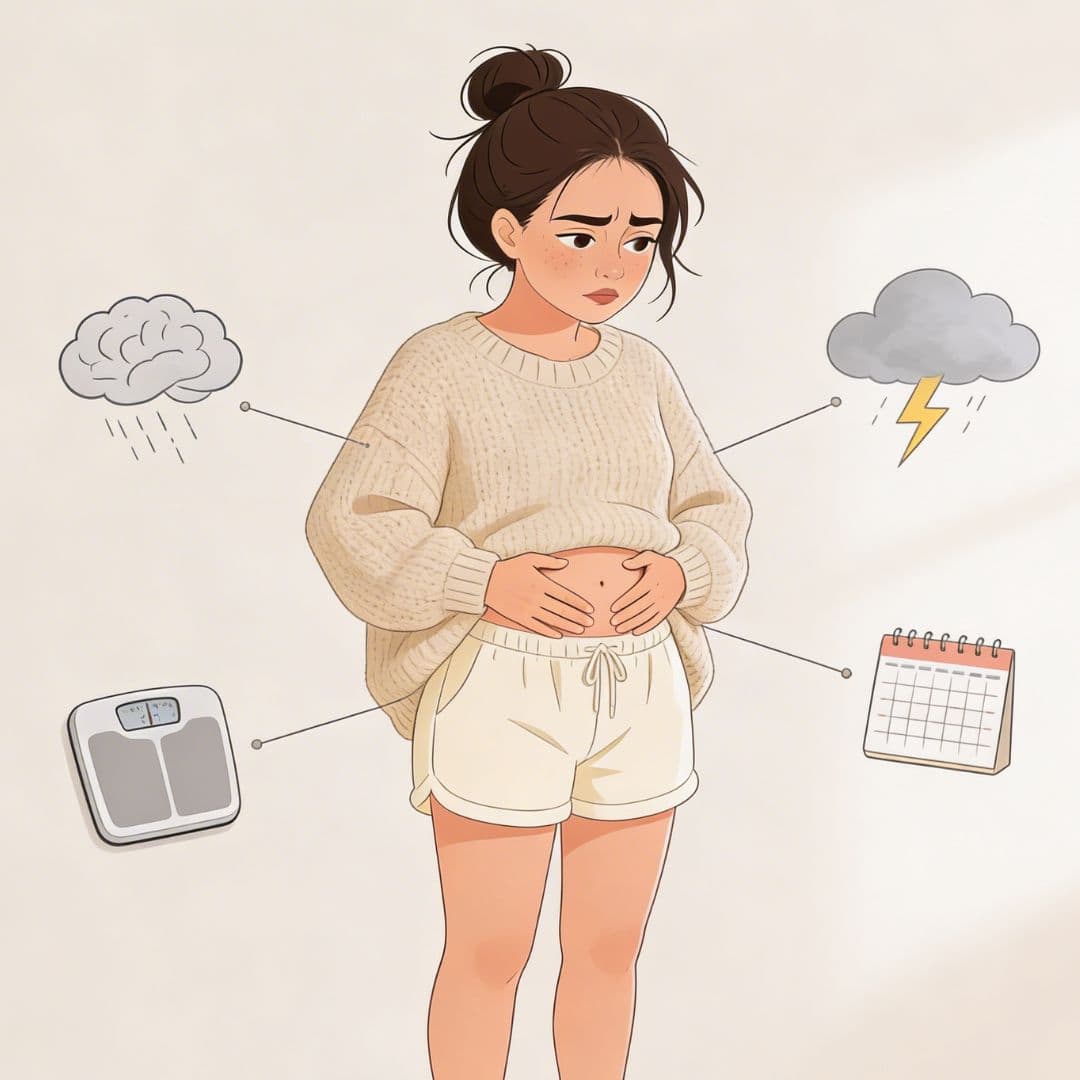
Polycystic ovary syndrome (PCOS) is a complex hormonal condition that can affect so many areas of the body. And because there are different types of PCOS, it doesn’t look or feel the same for every Cyster. That’s what makes it so confusing!
Symptoms of PCOS can be broad, including things like fatigue, irregular periods, anxiety, depression, sleep issues, weight gain, and acne. On top of this, some women primarily notice physical symptoms, while others experience more mental, emotional, and energy-related changes. This wide range is exactly why PCOS is often overlooked—and why up to 70% of women with PCOS go undiagnosed.
But here’s the good news: once you understand what’s happening in your body, everything starts to make more sense. In this post, I’m breaking down what PCOS actually feels like, why it happens, and how symptoms can shift over time. And as someone who’s been on this journey myself, I’m here to help you connect the dots and feel more in control of your health!
What Does PCOS Feel Like? The Truth No One Shares
PCOS isn’t just one symptom. It’s a cluster of symptoms driven by metabolic and hormonal imbalances.
You might experience one or two symptoms at first, like fatigue, an irregular menstrual cycle, or acne, and not think much of it. So many women brush it off as stress, lifestyle changes, or just “normal” age-related adjustments. But over time, those symptoms can start to connect.
The key is understanding what PCOS actually feels like and what’s happening to and in your body. Once you do, everything starts to click—and that’s when you can take control.
How PCOS Happens
Insulin Resistance
The main driver behind PCOS is insulin resistance—and up to 80% of Cysters deal with it. This happens when your body struggles to properly use glucose for energy. Instead of fueling your cells, that glucose gets stored as fat, leading to blood sugar spikes, stubborn weight gain, and hormone imbalances.
And here’s where it all connects…
When insulin levels stay high, it can interfere with ovulation—and even stop it altogether. And without ovulation, your hormones can’t stay balanced. That’s when symptoms start piling up. However, when you target insulin at the root, everything else—your hormones, cycle, and weight—starts to fall back into place.
Elevated Androgen levels
Another major piece of the PCOS puzzle? Elevated androgens (AKA male hormones like testosterone). And here’s the thing—this doesn’t just happen randomly. It’s often driven by insulin resistance and chronic inflammation.
With PCOS, your ovaries tend to produce more androgens than your body actually needs. This can disrupt ovulation because your follicles don’t fully mature. And when they don’t mature, your ovary can’t release an egg. Instead, those immature follicles can build up and appear as small cysts, which are fluid-filled sacs on the ovaries.
But high androgens don’t just affect what’s happening internally. You’ll see it too. Think acne along the jawline, excessive hair growth on the face or body, and hair loss on the scalp. This is why it’s so frustrating, though: it’s a cycle.
High insulin levels increase androgens, which disrupts ovulation. When your ovulation is disrupted, it worsens the hormone imbalance. And when your hormones are off, it worsens insulin resistance. It just keeps lopping! That’s why focusing on the root—like improving insulin sensitivity and lowering inflammation—is key to finally breaking the cycle.
Irregular Ovulation
Irregular ovulation is one of the key features (and symptoms) of PCOS. When you ovulate regularly, your hormones rise and fall the way they’re supposed to. That’s what keeps your cycle predictable and your body in balance.
But when ovulation doesn’t happen… everything gets thrown off. Your hormones don’t shift properly, which can worsen the imbalance and trigger those root issues I always talk about. Plus, cycle irregularity can contribute to infertility, making it more difficult for some people trying to conceive.
And here’s the tricky part—a lot of Cysters don’t even realize they’re not ovulating consistently. You might still be getting a “period,” but that doesn’t always mean ovulation is happening. That’s why understanding your cycle is so powerful.
If you want to understand this on a deeper level, I break it all down in these posts:
Why PCOS Feels Different for Everyone
There are different types of PCOS.
So, why exactly does PCOS feel different for everyone? It’s because there isn’t just one type of PCOS—there are a few different root issues behind it. And depending on which one you’re dealing with, your symptoms can show up in totally different ways.
Here’s a simple breakdown:
- Inflammatory PCOS: Driven by chronic low-grade inflammation. You might notice bloating, IBS, constant fatigue, joint pain, weight gain, or skin issues.
- Insulin-Resistant PCOS: The most common type. High insulin levels can lead to energy crashes, stubborn weight gain, irregular cycles, and even skin tags.
- Adrenal PCOS: This one is stress-driven. Elevated cortisol (your stress hormone) can cause fatigue, mood swings, weight gain, and increased inflammation.
- Thyroid-Related PCOS: Often linked to hypothyroidism, this can throw off estrogen, progesterone, testosterone, and insulin. Most women experience symptoms like hair loss, depression, fatigue, and irregular periods.
The key to reversing your PCOS? Understanding your type (or types). Because when you know what’s actually driving your PCOS, you can stop guessing and start targeting the root causes in a way that actually works for your body.
Find out what your PCOS type is with my free quiz.
PCOS operates on a spectrum.
When it comes to women’s health, there’s something so important to understand. PCOS isn’t one-size-fits-all. It exists on a spectrum. Think of it as a range of hormonal imbalances that can overlap in different ways. That’s why treating PCOS as just one condition doesn’t work—you have to focus on your specific root causes.
For example, many Cysters deal with insulin resistance and a higher BMI. But others experience lean PCOS, where weight isn’t the main issue at all. Same condition, very different experience. And that’s exactly why PCOS can feel so confusing! It’s also why it’s often missed or misdiagnosed. There’s no single test (or cure) for PCOS. Instead, it’s about looking at the full picture, ruling out other conditions, and understanding how your unique symptoms connect.
Once you see PCOS as a spectrum, everything starts to make a lot more sense. And that’s where your healing plan becomes so much more effective.
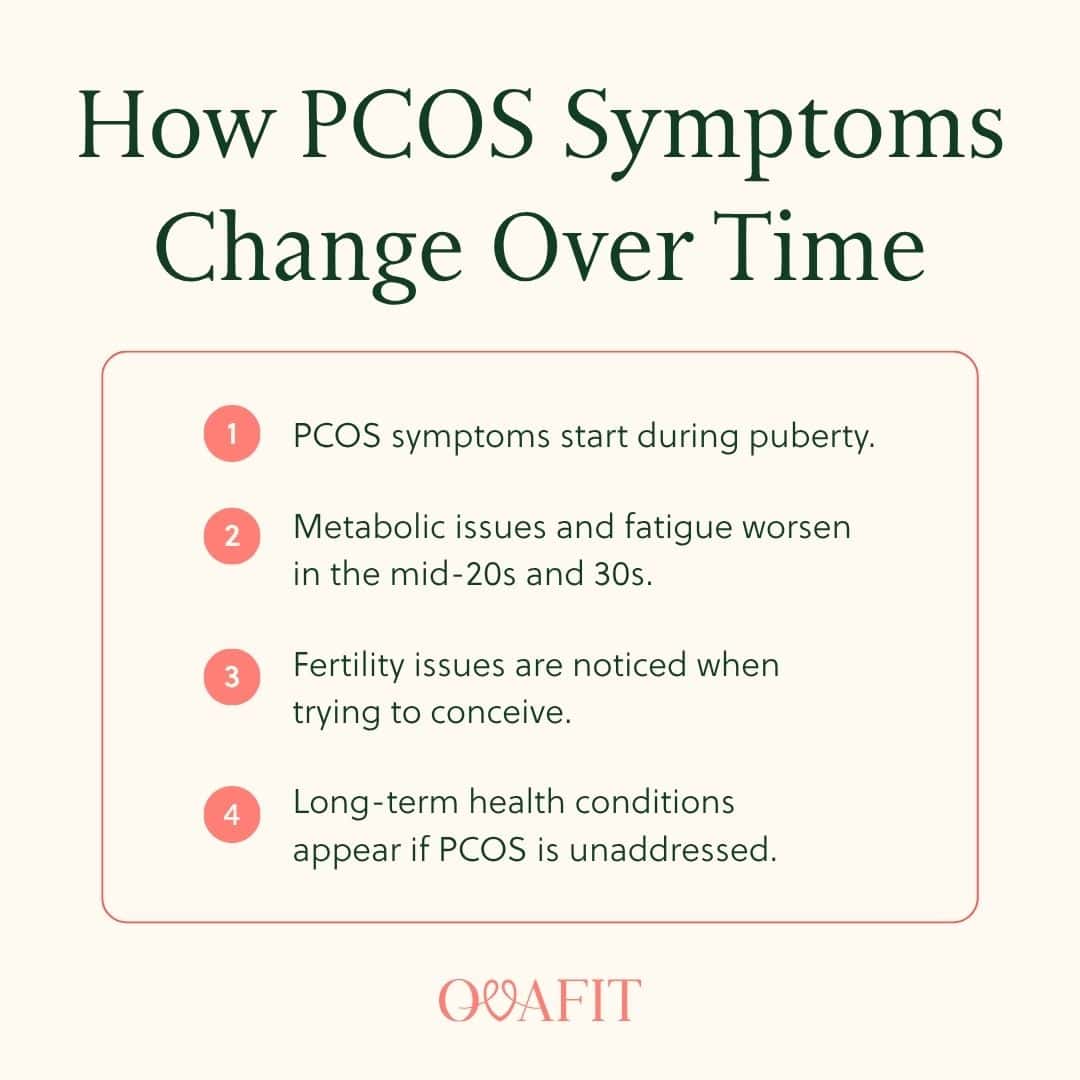
How PCOS Symptoms Change Over Time
PCOS symptoms start during puberty.
PCOS usually starts showing up around puberty. But here’s where it’s tricky—most girls don’t realize what they’re experiencing is actually PCOS.
During those early years, your body is already undergoing so many changes. So symptoms like acne, excess hair growth, or heavy periods often get brushed off as “just puberty.” And honestly? That makes sense. But it also means PCOS can go unnoticed for years.
Now add this in. Many women start birth control pills in their late teens. While it can help manage symptoms, it can also mask what’s really going on beneath the surface. Essentially, everything seems fine until you come off the pill. That’s when symptoms can suddenly show up more clearly, and you start realizing something’s not right.
Metabolic issues and fatigue worsen in the mid-20s and 30s.
As you move into adulthood with PCOS, symptoms often start to shift. This is where metabolic health comes into play.
You might notice things like stubborn weight gain, constant fatigue, anxiety, mood swings, depression, or even gut and digestive issues popping up more frequently. This is usually when insulin resistance and chronic inflammation start becoming more obvious.
And for many Cysters, this is the turning point. It’s when you start making intentional changes—like following a gluten- and dairy-free anti-inflammatory diet, incorporating low-impact workouts, and adding targeted PCOS supplements. Because once you address those root issues, everything starts to improve.
If fatigue is something you’re struggling with, I explain more in my post “Does PCOS Make You Tired?”
Fertility issues are noticed when trying to conceive.
For some women, PCOS doesn’t fully come into focus until they start trying to get pregnant. And that can feel really confusing.
One of the biggest signs of PCOS is anovulation, which means your body isn’t consistently releasing an egg. But you might not realize that unless you’re actively tracking your cycle or trying to conceive. However, you may notice you’re not having a full 12 periods a year, or your timing feels off. And that’s your sign that your cycle needs a little extra support.
A lot of women think, “Did I develop PCOS later in life?” In reality, PCOS starts way earlier during puberty. This is just the moment where you’re finally putting it all together.
The good news? Once you understand what’s going on, you can take the right steps to support ovulation, balance your hormones, and move forward with a clear plan. For more information and advice about conceiving with PCOS, read my post “Supplements to Boost Fertility.”
Long-term health conditions appear if PCOS is unaddressed.
A lot of women don’t even realize they have PCOS. But when the root issues go unaddressed, it can lead to more serious, long-term health problems.
I’m talking about things like:
- Type 2 diabetes from ongoing insulin resistance.
- High blood pressure is driven by inflammation and elevated cortisol.
- Heart disease is often linked to high cholesterol and androgen imbalance.
- Endometrial cancer because women with PCOS are 5x more likely to develop endometrial cancer.
I know… it sounds scary. But this is exactly why awareness matters. When you understand what PCOS feels like, what’s causing it, and how it shows up in your body, you can take action early. And that changes everything.
What Living with PCOS Feels Like Day to Day
I’ve walked you through why PCOS happens, the symptoms, and how it can show up over time. But let’s get real for a second. What does it actually feel like to live with PCOS day to day?
For a lot of Cysters, it looks something like this:
- You wake up exhausted—even after a full night of sleep.
- First thought? Coffee… and something sugary.
- You notice bloating and puffiness when getting ready.
- There’s more hair than usual in your brush or shower.
- You eat breakfast, but still don’t feel satisfied.
- An hour later, cravings hit again (usually sugar or carbs).
- You sit down to work but can’t focus—hello, brain fog.
- Even with caffeine, your energy feels low.
- After lunch, you feel sluggish or ready for a nap.
- That afternoon crash hits hard… and cravings come back.
- You feel irritable, anxious, or overwhelmed by simple things.
- You start noticing acne or excess hair more.
- Dinner comes, and somehow you still want something sweet after.
- Nighttime cravings kick in (again).
- You feel “wired but tired” at night.
- And sleep? Not as easy as it should be.
Sound familiar? It’s exhausting. And more importantly, it’s not normal to feel this way every single day. If this feels like your reality, it might be time to have a conversation about PCOS with your doctor. Because once you understand what’s going on, you can actually start fixing it.
Start reversing your PCOS with easy lifestyle changes and feel like yourself again.
After reading all of that, does it sound like what you’ve been dealing with? If it does, I want you to know that you’re not alone. And more importantly, that there is a way forward. Once you get clarity and a proper diagnosis, you can start taking intentional, effective steps to rebalance your hormones and feel like yourself again. That’s exactly why we created Ovafit.
Our supplements to target the root issues behind PCOS—not just mask symptoms. Some of my go-to favorites are Inositol Complete 40:1 and Berberine Advanced, which help support insulin sensitivity, reduce inflammation, and improve fertility.
And when you pair that with a PCOS-friendly diet and low-impact workouts inside The Cysterhood app? You’re giving your body everything it needs to finally start healing from the inside out.