

When I was diagnosed with PCOS (now called PMOS) at 18, a doctor told me to “just lose weight” and sent me on my way. No explanation of what was actually driving my symptoms. No plan. If you’ve been handed that same non-answer, you’re in the right place, and I want you to know something first: your body isn’t broken, it just works differently.
Lately I’ve seen so many of you asking about the different types of PMOS, and honestly, I love that you’re digging into it. Understanding the pattern behind your symptoms changes everything. It helps you make sense of your labs, your cycle, and your symptoms, and it makes those conversations with your doctor a whole lot more productive. As a Registered Dietitian who has PMOS myself, I’ve spent close to a decade helping women connect these dots.
So let me set expectations honestly. PMOS is complex, and it shows up differently from person to person. Two women with the same diagnosis can have completely different root causes, symptoms, and lab results. That’s not a flaw in your understanding. That’s just the nature of this condition, and it’s exactly why a one-size-fits-all approach so often fails.
Below, I’m discussing the 4 types of polyendocrine metabolic ovarian syndrome (PMOS), how they may show up, and how you can support your healing journey! This isn’t something you have to go through alone, or even blind-sided. Let’s dive in.
4 Types of PMOS: How to Spot Yours and What to Do About It
In this post, I’ll walk you through the different patterns associated with PMOS, what each one tends to look like, and how symptoms, blood tests, and metabolic factors can differ from one type to the next. My goal is that by the end, you’ll have a clearer sense of which pattern might fit your experience (and which questions to bring to your provider).
A quick heads-up before we dive in. These four “types” are functional patterns that many practitioners use to understand root causes, not official diagnostic categories. Individual experiences vary a lot, and your presentation might blend more than one. I’ll explain the mechanism behind each so you understand the why, not just the what.
Think of this less as a rigid box and more as a map. The map helps you see the terrain, but you’re still the one who knows your own body best. And if you want additional information, don’t forget to take my free “What’s My PMOS Type?” quiz. It’s a short questionnaire that can help lead you to answers about your own PMOS management journey.
Here’s why this matters for you specifically. PMOS is closely tied to how your body handles insulin, and that connection drives so many of the symptoms of PMOS you feel day to day: stubborn weight gain, cravings, irregular periods, and excess hair growth.
How Are PMOS Types Classified?
If you’ve spent any time researching PMOS, you’ve probably noticed different sources seem to categorize it in different ways. That’s because there are actually two common ways of talking about PMOS, and both serve a different purpose.
The first is the medical classification, which uses the Rotterdam criteria to diagnose PMOS. Healthcare providers look for at least two of three key features: higher androgen levels, irregular or absent ovulation, and polycystic ovaries on an ultrasound. Depending on which combination is present, PMOS is divided into four medical phenotypes: A through D. These aren’t “better” or “worse” types; they simply describe how the condition presents in different women.
The second is the functional classification, which is the system you’ll often see many people use. Instead of focusing on diagnosis, it groups PMOS according to what’s thought to be driving your symptoms, such as Adrenal PMOS, Insulin-Resistant PMOS, Inflammatory PMOS, and Hypothyroid PMOS. These functional types aren’t official diagnostic categories. Instead, they’re clinical patterns that help address root causes instead of just symptoms.
Both approaches have value, and they’re not in competition. Medical phenotypes help healthcare providers formally diagnose PMOS, while functional types can help you personalize a PMOS management plan. The most useful approach is the one that’s guided by your symptoms, medical history, and laboratory testing.
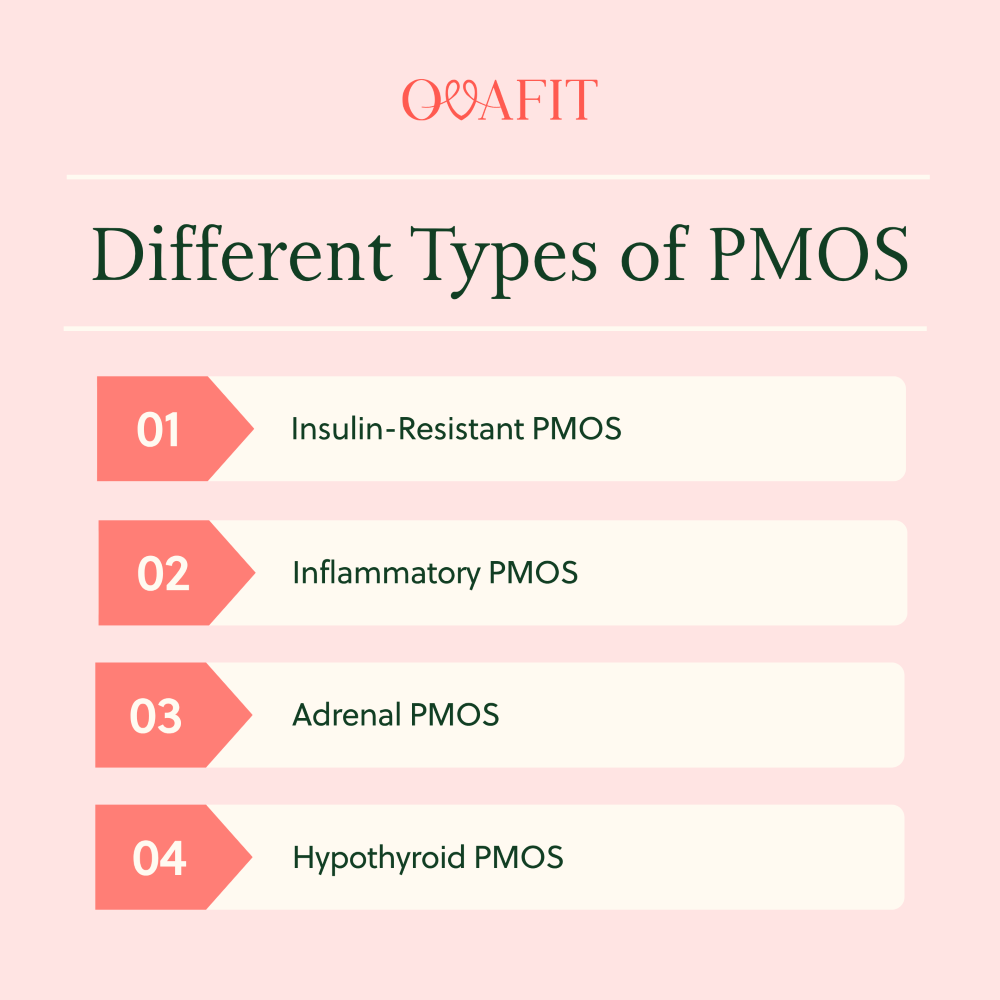
Different Types of PMOS
Below are the four functional types you’ll see described most often. I’ll cover the common symptoms of each, how they tend to get identified, and what may be driving them. Remember, these are patterns, not verdicts.
Insulin-Resistant PMOS
Insulin-resistant PMOS is the most common functional type, affecting an estimated 70% of women with the condition. At its core, it’s driven by insulin resistance, meaning your cells don’t respond to insulin as well as they should. To compensate, your body produces even more insulin.
Those elevated insulin levels don’t just affect blood sugar, though. They also signal the ovaries to produce more androgens, including testosterone, which can contribute to symptoms like acne, unwanted facial or body hair growth, scalp hair thinning, and irregular menstrual cycles. Healthcare providers often evaluate this pattern using tests such as fasting insulin, fasting glucose, and HOMA-IR alongside your symptoms.
Many women also notice weight gain (especially around the midsection), intense carb cravings, fatigue after meals, or energy crashes throughout the day. Left unaddressed, insulin resistance may increase the risk of developing type 2 diabetes, metabolic syndrome, and cardiovascular disease over time.
That’s why improving insulin sensitivity is at the heart of so much of what we do at Ovafit, from nutrition and movement to evidence-based supplementation that supports metabolic function. That’s also why we created our Inositol Complete 40:1 Myo & D-Chiro Inositol.
Made with 2,000mg of Myo-Inositol and 50mg of D-Chiro-Inositol, our formula uses a clinically-studied blend, is rigorously tested for purity and potency, and is manufactured in FDA-registered facilities. Because when it comes to supporting your PMOS management plan, you deserve to feel confident, not confused.
Interested in learning more? Check out “How to Eat for Insulin Resistance & PMOS” and “Best PMOS Insulin Resistance Supplements.”
Inflammatory PMOS
Inflammatory PMOS is thought to be driven by chronic, low-grade inflammation. While inflammation is a normal part of the immune response, when it sticks around for too long, it can disrupt hormone signaling and may contribute to higher androgen levels in some women.
Many women with this PMOS type notice symptoms beyond irregular cycles, including persistent fatigue, headaches, digestive concerns, skin flare-ups, or achy joins alongside acne or excess hair growth. Healthcare providers may look at inflammatory markers like C-reactive proteins, but there’s no single blood test that diagnoses inflammatory PMOS.
This is often where I recommend starting with nutrition. For many people with PMOS, gluten and dairy act as inflammatory triggers. While they aren’t a problem for everyone, trying out a gluten- and dairy-free anti-inflammatory diet can be a helpful way to see whether lowering inflammation supports better hormonal balance and symptom improvement. (I talk about all the how-tos in my podcast episode, “How to Start Gluten & Dairy Free for PMOS!”)
And this isn’t something you have to do on your own! Download the Cysterhood App, a resource dedicated to PMOS-friendly recipes, workouts, habit trackers, and meal-planning. Additionally, you can gain access to live coaching and a community of women who know what you’re going through.
And if you’re one of the (many) women told to take metformin to lower blood sugar levels or high blood pressure or Ozempic to lose weight, you’re not alone. You can learn more in the following guides:
Adrenal PMOS
Adrenal PMOS is considered one of the less common functional patterns. Instead of the ovaries producing excess androgen, the adrenal glands are thought to play a larger role.
Women with this pattern may have elevated DHEA-S levels while testosterone remains within normal range. Because stress hormones and adrenal function are closely connected, symptoms sometimes become more noticeable during periods of chronic stress. Some women continue to have relatively regular menstrual cycles, while others experience changes over time.
A DHEA-S blood test can help your healthcare provider determine whether the adrenal glands may be contributing to your symptoms. It’s also important to rule out other conditions that can look similar, like non-classic congenital adrenal hyperplasia.
Learn more about this PMOS type by reading “Common Symptoms of Adrenal Fatigue.” Additionally, explore Ovafit’s Testosterone Relief Tea. It contains…
- Spearmint: Studied for lowering free testosterone
- Cinnamon: Can help lower blood sugar and increase insulin sensitivity
- Leaf Balm + Chamomile + Lavender: Traditional ingredients used for promoting calmness and better sleep
- Nettle + Rosehip: Herbs studied for supporting skin and hair from the inside
USDA organic, caffeine-free, and made by a PMOS Dietician, Testosterone Relief Tea can be a meaningful way to support your PMOS management plan.
Hypothyroid PMOS
Hypothyroid PMOS refers to a pattern where an underactive thyroid may contribute to or overlap with PMOS symptoms. Your thyroid plays an important role in metabolism, energy, reproductive hormones, and menstrual function, so when thyroid levels are too low, the effects can show up throughout the body.
For some women, hypothyroidism can look a lot like PMOS. Irregular or absent periods, difficulty managing weight, fatigue, hair thinning, and fertility challenges can occur with both conditions. Thyroid dysfunction may also influence insulin sensitivity, adding another layer to symptoms when PMOS is already present.
That overlap is why testing matters. If you’re experiencing symptoms associated with PMOS, your healthcare provider may check thyroid function alongside other hormone and metabolic markers to determine what’s actually contributing to them. Identifying hypothyroidism is especially important because it requires its own medical treatment rather than being addressed as a PMOS type alone.
Can You Have More Than One Type of PMOS?
Yes, and honestly, a lot of women do. Your symptoms may not fit neatly into a single category, and that’s completely normal. Some women have features of more than one type, which is called a mixed or combination presentation, and testing helps clarify which type or types apply to your situation.
Many practitioners rank the types by priority. The types are listed in order of priority, so if you have insulin resistance, then you have insulin-resistant PMOS, even if you also have inflammation, for example.
In practice, that means insulin resistance is usually worth addressing first, because it tends to fuel the others. However, don’t stress overlap. It’s not a complication that means you can’t heal or reverse your condition. Instead, it’s useful information for building your plan.
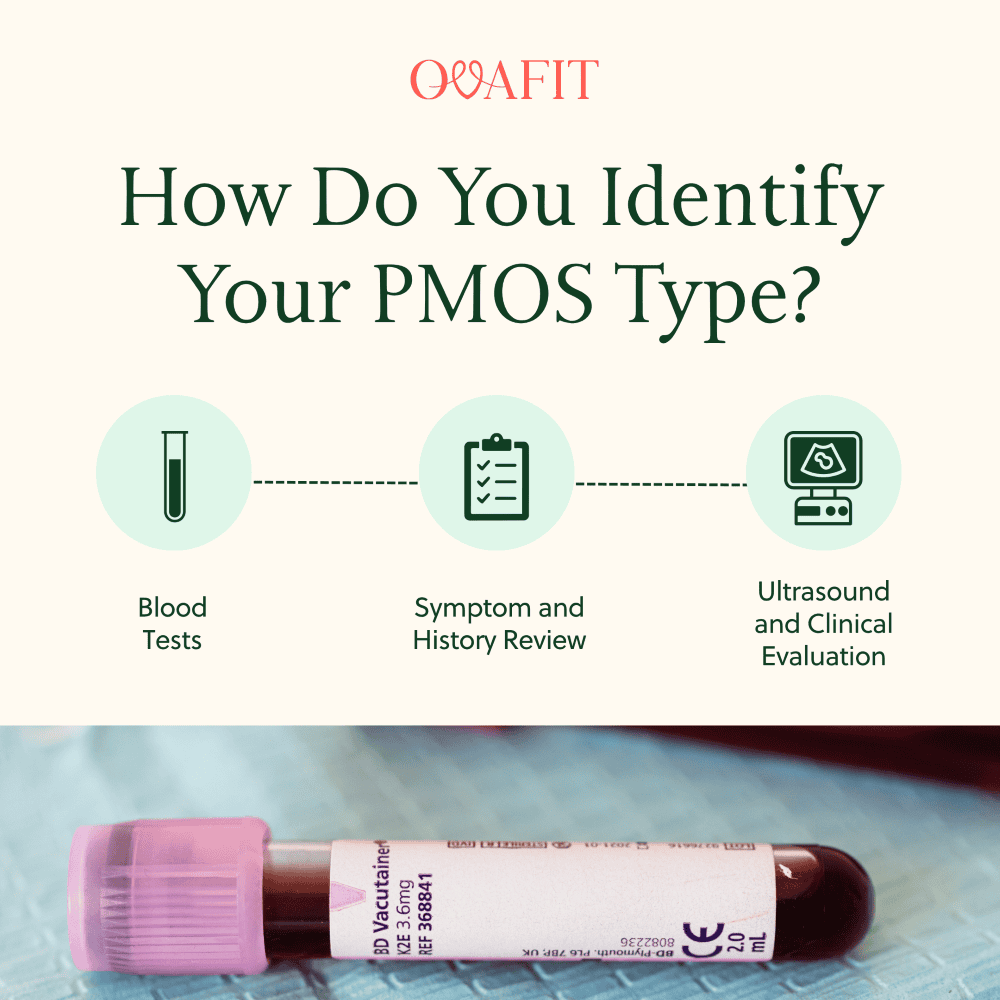
How Do You Identify Your PMOS Type?
You don’t have to figure out your PMOS type on your own. The best place to start is with a thorough evaluation from a healthcare provider who understands PMOS and takes your symptoms seriously. Here are the main ways your PMOS type may be identified:
Blood Tests
Blood work is one of the most helpful tools for understanding what’s happening beneath the surface. Tests like fasting insulin, fasting glucose, and HOMA-IR can help identify insulin resistance, while hormones such as total and free testosterone, DHEA-S, lH, and FSH provide a clearer picture of where excess androgens may be coming from.
Your provider may also check inflammatory markers like C-reactive protein (CRP) if inflammation is suspected. Beyond identifying your PMOS pattern, these labs can also uncover early metabolic changes so you can address them early.
Symptom and History Review
Your symptoms tell an important part of your PMOS story. When did they first begin? Did they appear after stopping birth control, or have they been present for years? Do you struggle the most with cravings and energy crashes, or do your symptoms seem to flare during stressful periods?
Looking at your menstrual cycle, symptom timeline, family history, and overall health helps put the lab results into context. It can also often reveal which pattern may be contributing to most of your symptoms.
Ultrasound and Clinical Evaluation
An ovarian ultrasound can identify polycystic ovarian morphology, one of the three features used in the Rotterdam criteria for diagnosing PMOS. Your healthcare provider will also look for physical signs such as acne, excess hair growth, or scalp hair thinning.
When your symptoms, medical history, physical exam, imaging, and blood work are considered together, you get the clearest picture of what’s driving your PMOS… and more importantly, where to focus your treatment plan.
Here’s where to remain hopeful: lifestyle changes and intentional supplementation can make a significant difference in your PMOS management plan. Gluten- and dairy-free diets, regular, gentle movement, and supplements formulated specifically for women with PMOS can all support hormonal balance, insulin sensitivity, and long-term symptom management.
Not sure where to start? Take our free PMOS quiz to get pointed toward the support that fits your pattern.
Support your PMOS journey with Ovafit.
PMOS doesn’t have to define your future. While it isn’t something you can cure overnight, many women experience dramatic improvements in their symptoms by addressing the underlying drivers. With intentional nutrition, movement, stress management, quality sleep, and targeted supplementation, it’s absolutely possible to support your body and feel like yourself again.
Remember, hormone changes take time, so give your body a few months to respond before making major shifts. And if you’d like support along the way, this is exactly what the Ovafit community is for. You don’t have to search for answers, relief, or support alone.
You’ve got this.
Tallene, RD
Medical disclaimer: This content is for educational purposes only and is not medical advice. It is not intended to diagnose, treat, cure, or prevent any disease or condition. Always consult your physician or qualified healthcare provider before making changes to your diet, supplements, or medications, especially concerning medications, fertility, or pregnancy.
These statements have not been evaluated by the Food and Drug Administration. Ovafit products are not intended to diagnose, treat, cure, or prevent any disease.