
While there’s no official “cure” for the hormonal disorder polycystic ovary syndrome (PCOS), many doctors prescribe metformin to help manage symptoms. Originally developed to treat type 2 diabetes, metformin is known for improving insulin sensitivity. Which, as many of you already know, seems especially helpful since insulin resistance is a common driver of PCOS.
And while metformin is one of the most commonly prescribed meds for Cysters, I’m a big believer in using natural tools to manage (and even reverse!) PCOS symptoms. They come with fewer side effects and support your body’s natural healing process.
But listen—every Cyster’s healing journey is unique. If metformin is part of your PCOS plan, that’s totally your choice. You know your body best!
That said, the most common side effect of metformin is bloating. In fact, studies show that up to 25% of people who take this medication experience bloating. Other side effects can include a metallic taste in your mouth, Vitamin B12 deficiency, and, in rare cases, lactic acidosis.
This is why I always encourage Cysters to do their research and feel confident in whatever choices they make—whether that’s medication, PCOS supplements, or both.
If you’re currently taking metformin and dealing with uncomfortable bloating, you’re in the right place. In this blog post, I’ll break down why metformin causes bloating for women with PCOS, what you can do to reduce it, and metformin alternatives to consider. Let’s get into it!
How to Reduce Bloating from Metformin with PCOS
If you have PCOS, you probably deal with bloating, especially around ovulation. That’s when estrogen and LH (luteinizing hormone) spike, which can lead to water retention and cause the scale to jump by up to 5 pounds (ugh, I know!)
It’s probably one of the most common (and super frustrating) symptoms of PCOS. But here’s the kicker—when you’re taking metformin, that bloating doesn’t just show up once a month. You might feel it throughout your entire menstrual cycle.
That’s exactly why I’m doing a deep dive into how metformin causes bloating, and more importantly, what you can do to beat the bloat. No Cyster should have to feel uncomfortable while working so hard to heal her body.
Does Metformin Cause Bloating If You Have PCOS?
Yes, metformin can definitely cause bloating, especially if you have PCOS.
People with PCOS are prescribed metformin because it tackles insulin resistance, which is the root issue for many Cysters. And while metformin can support weight loss, improve insulin sensitivity, and rebalance your hormones, the gastrointestinal symptoms that come with it? Not so fun.
I’m talking about that uncomfortable, puffy feeling that makes your jeans feel tight, your energy drop, and your motivation disappear. Sometimes it’s enough to keep you curled in bed, waiting for relief.
If you’re feeling frustrated by the bloat while trying to do everything “right,” you’re not alone. The good news? There are ways to ease the discomfort without pushing through side effects you weren’t prepared for.
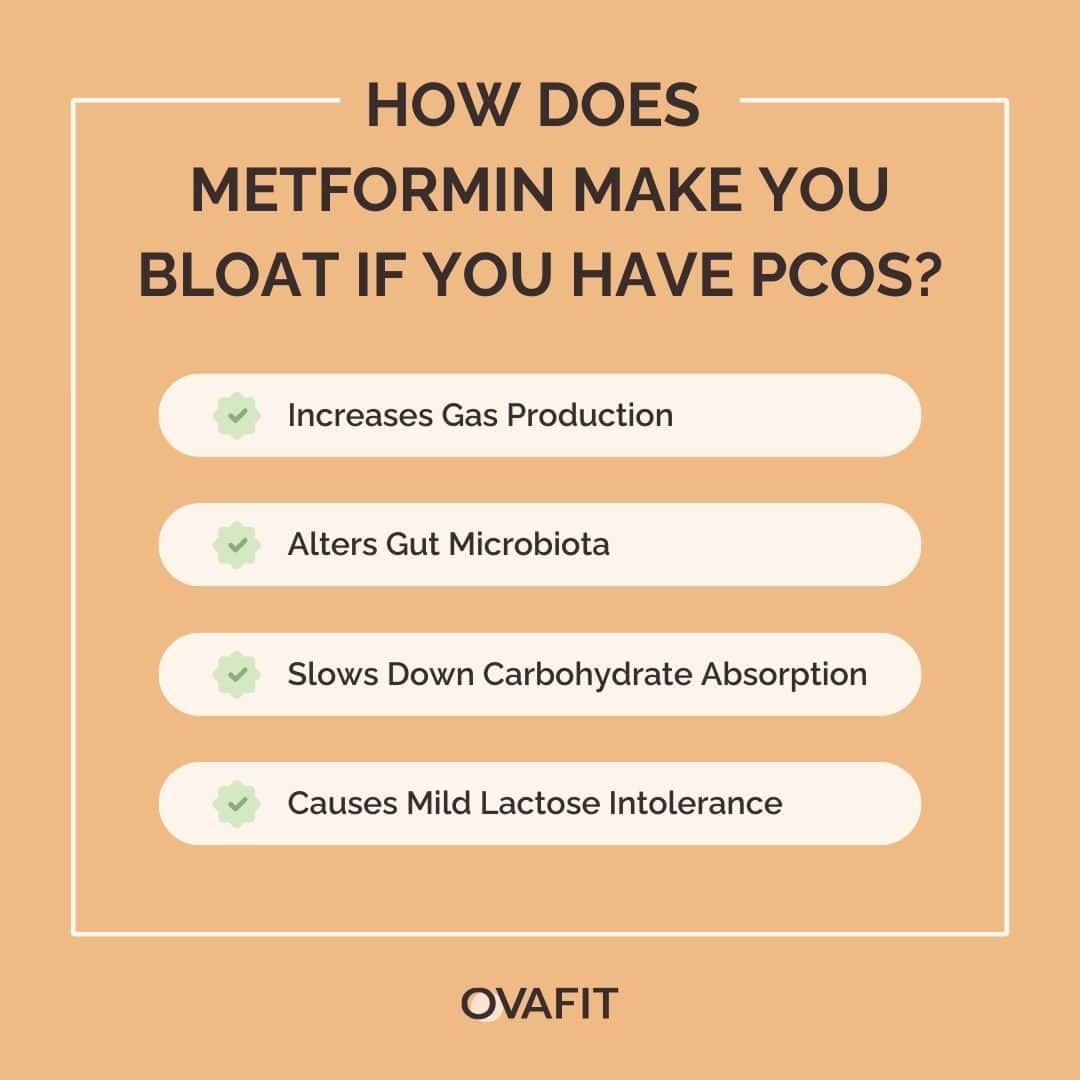
How Does Metformin Make You Bloat If You Have PCOS?
Increases Gas Production
When you take metformin, it changes the way your gut processes carbs after you eat. Instead of fully breaking them down, more undigested carbs make their way to your colon, where your gut bacteria start fermenting them.
That fermentation is what creates extra gas. And that gas can lead to bloating, cramping, and yep—more trips to the bathroom thanks to excess flatulence. It’s a totally normal reaction, but definitely not a fun one, especially when you’re already dealing with sensitive digestion from PCOS. For more on this, check out the A Cyster & Her Mister episode, “The Gut-Hormone Connection for PCOS with Dr. Robin Rose.”
Alters Gut Microbiota
If you’ve got PCOS, gut health should always be on your radar. Metformin may help improve insulin sensitivity, but it also changes the balance of your gut bacteria. And because it does alter the balance, it can disrupt things in the short term.
Certain strains start to grow more rapidly, and while that can be helpful for blood sugar, it comes with some uncomfortable side effects. Gas, bloating, and digestive upset are super common during the first few weeks.
To keep your gut feeling happy and balanced, try adding a high-quality probiotic to your daily routine. Also, make sure to pay close attention to your diet—especially when taking metformin. Your microbiome will thank you!
Slows Down Carbohydrate Absorption
When you eat complex carbs, your blood sugar naturally rises. But if you’re dealing with insulin resistance (like most Cysters are), your body struggles to keep up. Instead of converting all that glucose into energy, your insulin levels stay high—and that leads to fatigue, weight gain, and more symptoms.
Metformin helps by reducing the amount of glucose your small intestine absorbs. Instead, more of it moves to your large intestine, where your gut bacteria break it down. This process can help improve insulin sensitivity over time. But here’s the catch: it also creates extra gas, which can leave you feeling bloated and uncomfortable.
Causes Mild Lactose Intolerance
There isn’t a ton of research on it yet, but many people report suddenly becoming sensitive to dairy after starting metformin. Why? It could be because metformin may lower the activity of lactase, the enzyme your body uses to digest lactose (the sugar found in dairy).
If you’re already following my recommended gluten- and dairy-free anti-inflammatory diet, you’re in the clear here. But if you do eat dairy, don’t be surprised if you start noticing bloating, gas, or even diarrhea—even if you’ve never had a problem with lactose before.
Another good reason to ditch the dairy and support your gut while you manage PCOS naturally!
How to Stop Bloating from Metformin with PCOS
Take it with food.
If you’re taking metformin, make sure to take it with food—never on an empty stomach. Having it during or right after a meal helps reduce stomach irritation and minimize bloating.
It also helps you avoid blood sugar crashes (no thanks, shaky hands, extreme hunger, and sudden fatigue). The best combo? A balanced meal with protein, fiber, and healthy fats. That way, you’re stabilizing your blood sugar and keeping your digestion happy at the same time.
Little adjustments like this can make a big difference in how your body responds to metformin.
Avoid certain foods.
There are a few foods to avoid when taking metformin to minimize side effects, especially bloating and digestive issues.
High-sugar treats, fried foods, refined carbs, raw cruciferous veggies, artificial sweeteners, and saturated fats can all make metformin’s GI symptoms worse. And if you’re drinking alcohol while on metformin? That combo can increase your risk of lactic acidosis, which is definitely something you want to avoid.
Need help finding meals that actually work with your PCOS body? Head to The Cysterhood app! You can find meal plans and recipes made with smart swaps so your hormones get the support they need.
Support your gut health.
If you’re taking metformin, supporting your gut health is non-negotiable. One of the easiest ways to do that? Add in probiotics and fermented foods like sauerkraut, kimchi, or a little kombucha. These can help keep your gut bacteria balanced and make bloating way more manageable.
And honestly, giving your gut some love is always a smart move, especially when you’re managing PCOS.
Consider extended-release metformin.
If metformin is working for you but the bloating is too much, consider asking your doctor about switching to the extended-release version. Unlike the rapid-release kind, extended-release metformin is absorbed more slowly. This can be gentler on your gut and lead to fewer stomach issues.
It could be a great long-term option if you’re seeing results but want to feel more comfortable while taking it. Always worth the conversation!
Drink anti-bloating hormone-balancing teas.
When you have PCOS, bloating can feel like a constant struggle, especially around ovulation. Whether you’re on metformin or not, it’s one of those frustrating symptoms that just won’t quit.
One of my favorite ways to beat the bloat? Anti-bloating teas that also support hormone balance. Sipping on a cup or two each day can help calm your gut, ease the puffiness, and give your body the gentle support it needs.
It’s a simple, soothing way to show your gut (and hormones) some daily love.
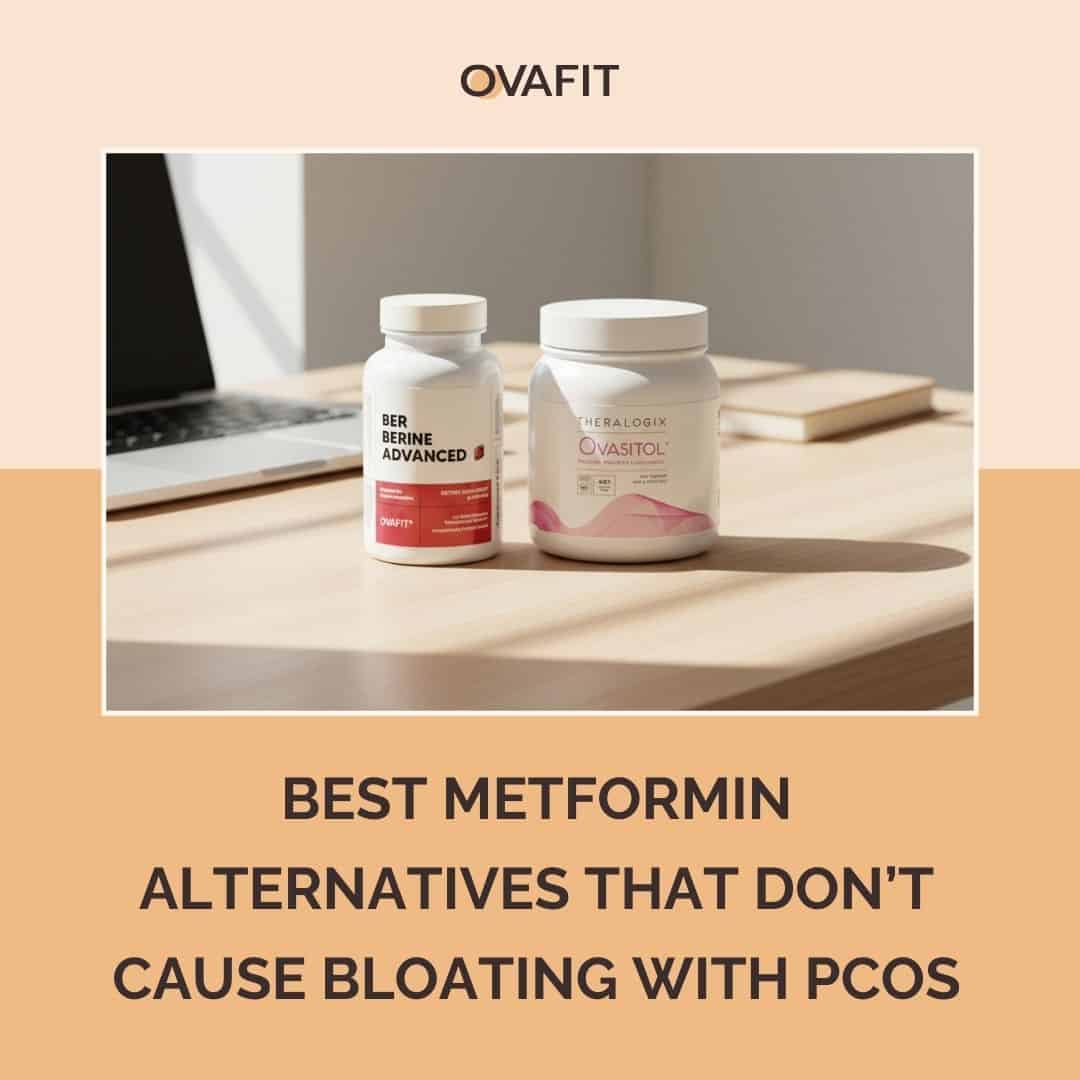
Best Metformin Alternatives That Don’t Cause Bloating with PCOS
Metformin might be the most commonly prescribed medication for PCOS, but it’s not the only way. There are natural, effective ways to get to the root of your symptoms and start reversing your PCOS—no prescription needed.
Berberine Advanced
If insulin resistance is standing between you and your PCOS healing, Berberine Advanced is one of my go-to natural solutions. It works as a natural GLP-1 booster, helping your body become more insulin sensitive. That means stabilized blood sugar, dropping stubborn weight (especially around the belly), and feeling more like yourself again.
Once you start getting insulin resistance under control, everything else starts falling into place—balanced hormones, better energy, fewer cravings, and more regular cycles. It’s the kind of domino effect we love to see!
Inositol Complete 40:1
I have to be honest—Inositol Complete 40:1 is hands-down my favorite natural supplement for PCOS. It’s like your hormone-healing sidekick, all packed into one easy scoop. From boosting insulin sensitivity and balancing androgen levels to improving egg quality and ovulation, Inositol Complete 40:1 checks all the boxes.
You’ll notice fewer cravings, easier fat loss, and a real shift in how you feel—all without the uncomfortable side effects that come with metformin.
Gluten- and Dairy-Free Anti-Inflammatory Diet
What you eat has a huge impact on your hormones—and how you feel every single day. Following a gluten- and dairy-free anti-inflammatory diet can do wonders for Cysters. Not only does it help balance your hormones, but it also reduces bloating and supports better gut health.
That’s because gluten and dairy can trigger inflammation and digestive issues in many women with PCOS. By focusing on anti-inflammatory, whole foods, you’ll feel less puffy, more energized, and more in control of your symptoms.
Need some recipe inspo? You’ll find hundreds of easy, delicious, PCOS-friendly meals inside The Cysterhood app made just for you!
Low-Impact, Slow-Weighted Exercises
We all know that exercise is important for staying fit. However, when you have PCOS, how you move matters just as much as how often.
Low-impact, slow-weighted workouts are one of the best ways to gently support your hormones while targeting the root issues of PCOS, like insulin resistance and chronic inflammation. Yep—it really works!
Think walking, Pilates, cycling, swimming, and strength training with slow, controlled movements. These workouts are gentle on your cortisol levels yet still powerful enough to help you build muscle (which improves insulin resistance), burn fat, reduce inflammation, and prevent bloating.
Want to get started? Download The Cysterhood app! That’s right, it’s not just full of recipes. It’s also packed with PCOS-friendly workouts that can help you feel strong, balanced, and in control again.
Heal your PCOS naturally through supplements and lifestyle changes—no uncomfortable side effects required.
Reversing your PCOS takes time, and no two journeys look the same. Some Cysters find relief with medications like metformin, while others lean into a more natural approach. And guess what? You’re not alone in any of it.
Whether you’re exploring our line of NSF-certified PCOS supplements, trying new lifestyle shifts, or doing a mix of both, Ovafit is here to support you every step of the way. And so is our amazing community inside The Cysterhood app.
You’ve got this—and we’ve got you. Let’s heal, together.