
Polyendocrine metabolic ovary syndrome (PMOS) affects 1 in 10 women of reproductive age. It’s a complex hormonal and metabolic condition that touches virtually every part of your body, including your metabolism, reproductive system, gut health, and even how you respond to stress.
And while managing PMOS (formerly known as PCOS) symptoms can feel overwhelming, there’s one place you can start today: your protein intake.
Getting enough daily protein can help balance your hormones, support stable blood sugar levels, and regulate your appetite. For women dealing with insulin resistance and weight gain, this is one of the most powerful accessible tools you have.
The tricky part is that hitting your protein goals every day isn’t always easy. That’s where protein supplements can help fill the gap! I’m going to break down everything you need to know about protein powder for women with PMOS. That includes why protein matters so much for reversing your symptoms and how to incorporate it into your daily meals.
By the end, you’ll know which protein powders are ideal for women and how to use them to support your health goals.
PMOS and Protein Powder Guide Every Woman Needs to Read
Many women underestimate just how much protein intake can do for their symptoms. Once you understand the link between protein, hormone balance, and insulin sensitivity, hitting your daily goal feels less optional. Instead, it feels like one of the most impactful things you can do to support your body.
The challenge is that getting enough protein from food alone isn’t always realistic. That’s why so many women with PMOS turn to protein powder to help them stay consistent. And consistency is the key part here. Steady protein intake supports stable energy levels and better nutrition over time, both of which are super important for managing PMOS.
But not all protein powders are the same, and some can actually work against your hormones rather than with them. That’s exactly why I want to help you navigate this common frustration in today’s post.
Is a High-Protein Diet Good for PMOS?
A high-protein diet can be super transformative for women with PMOS. When you’re getting enough protein throughout the day, your body is better able to regulate and stabilize blood sugar. And that matters more than most women realize.
Up to 70% of women with PMOS also deal with insulin resistance, arguably the most common type of PMOS. However, consistent protein intake can help improve insulin sensitivity over time. This then sets off a ripple effect that helps balance the rest of your hormones. It’s one of the most accessible root-cause tools available to you!
The benefits of a high-protein diet go beyond blood sugar, too. Adequate protein helps you feel fuller for longer, which can make a real difference for women with a weight loss goal. It also supports muscle growth and maintenance, which plays an important role in keeping your metabolism functioning well. Pair that with low-impact, slow-weighted strength training, and you’re building a really solid foundation for feeling your best with PMOS.
Why Is Protein Important for PMOS?
Getting the right amount of protein in your daily diet can have a real impact on your symptoms. Here are some of the ways it helps:
- Supports stable blood sugar levels
- Helps regulate hunger hormones such as ghrelin
- Reduces cravings for high-sugar foods
- Supports muscle maintenance and metabolic health
- Helps improve meal satisfaction and fullness
How Much Protein Should PMOS Women Eat?
Most research points to a daily target of 1.5 to 2 grams of protein per kilogram of body weight. So, for a 60 kg woman, that works out to roughly 90 to 120 grams per day. A simpler way to think about it, though, is to aim for at least 30 grams of protein at each main meal.
But what about the days when all you’re craving is carbs and sweets (hello, luteal phase!)? Or the days when you’re traveling and three balanced meals just aren’t happening? That’s exactly where protein powder can help.
What Is Protein Powder?
Protein powder is a concentrated source of protein derived from foods like dairy, eggs, soy, peas, rice, hemp, or whey. It’s one of the quickest and most convenient ways to get extra protein, especially on days when a full meal just isn’t happening.
But not all protein powders are equal, and for women with PMOS, what’s on the label really matters. The Clean Label Project found that many top-selling protein powders contain heavy metals. That’s a serious concern for anyone focused on hormone balance and long-term health.
The protein source matters too. Whey protein is the most common option, but it can irritate the gut issues that many women with PMOS already deal with. That’s why I recommend looking for plant-based protein powders with a short, clean ingredient list. Your body deserves to know exactly what it’s getting.
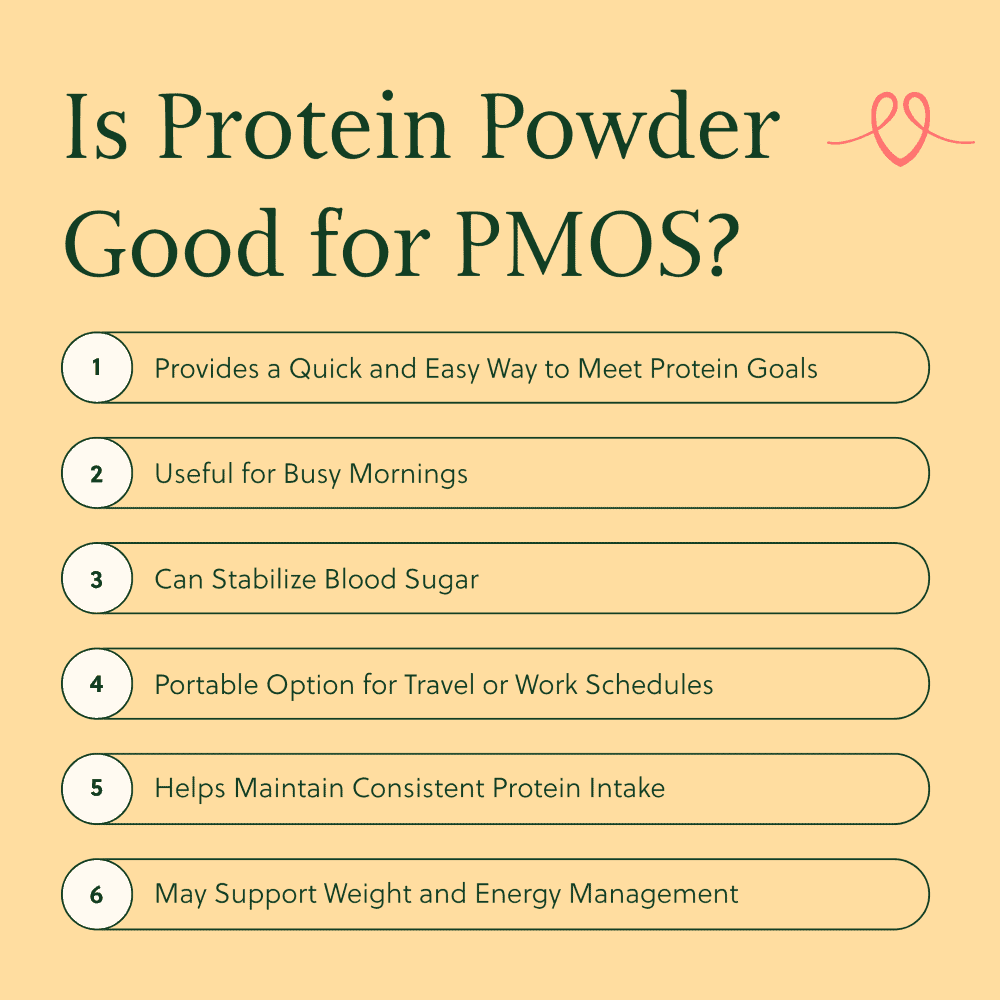
Is Protein Powder Good for PMOS?
Provides a Quick and Easy Way to Meet Protein Goals
Life gets busy, and there will be weeks when meal prep just doesn’t happen. A good protein powder means you can still hit your daily protein goals without needing to cook a full meal. For women with a packed schedule, that kind of flexibility can make consistency a lot more achievable.
Useful for Busy Mornings
Not every morning allows for a full, balanced breakfast. On the days when you’ve overslept or have an early meeting, a protein shake and a banana can be enough to carry you. And between the two, you’re already getting close to a full meal’s worth of protein.
For the days you do have time to make yourself breakfast, check out my post “PMOS Breakfast Recipes.”
Can Stabilize Blood Sugar
Prioritizing protein in your diet, especially when paired with carbohydrates and fiber, can help stabilize blood sugar levels. For women dealing with insulin resistance, that’s not something to just overlook. Keeping blood sugar steady means insulin stays more balanced, which creates the right conditions for your other hormones to follow.
Portable Option for Travel or Work Schedules
Protein powder is one of the most portable nutrition tools you have. You can keep a serving in a shaker bottle or a small bag so you always have a quality protein source within reach. It’s perfect for travel days or a packed workday.
That also means it’s a lot easier to make a PMOS-friendly choice when hunger hits. Instead of reaching for whatever is available in the breakroom, you have a hormone-friendly option.
Helps Maintain Consistent Protein Intake
Protein isn’t a once-a-week consideration. For us, it can be essential for slowing digestion, preventing rapid spikes in blood sugar, and reducing hormonal imbalances. That said, having a reliable protein powder in your routine makes it easier to stay consistent. And consistency is really where the results happen. That’s when your hormones and your health start to shift.
May Support Weight and Energy Management
Getting enough daily protein is closely linked to weight management. Because protein takes longer to digest than carbohydrates, it helps you stay fuller for longer. That means it keeps cravings more manageable throughout the day. It also supports lean muscle mass, which plays an important role in maintaining a healthy metabolism.
For women who have experienced weight gain from PMOS, consistent protein intake can make a major difference over time.
Which Protein Powder Is Best for PMOS?
Crave Control Protein Powder
Most protein powders are for everyone. Crave Control Protein Powder was specifically created for women with PMOS and is the best protein powder for PMOS.
While it delivers 30 grams of plant-based protein per serving, protein is only one part of the formula. Crave Control also contains DygloFit®, therapeutic chromium, and organic cinnamon, ingredients selected to support appetite regulation, blood sugar balance, and metabolic health.
This distinction matters because many of the symptoms we struggle with, including persistent cravings, energy crashes, difficulty feeling full, and insulin resistance, aren’t caused by low protein intake alone. They’re often linked to underlying metabolic dysfunction.
Rather than focusing exclusively on protein supplementation, Crave Control was designed to support some of the root drivers behind common PMOS symptoms, while also helping women reach their daily protein goals.
For women looking for a protein powder that aligns with their broader PMOS management strategy? That targeted approach makes it stand out from many other options on the shelves.
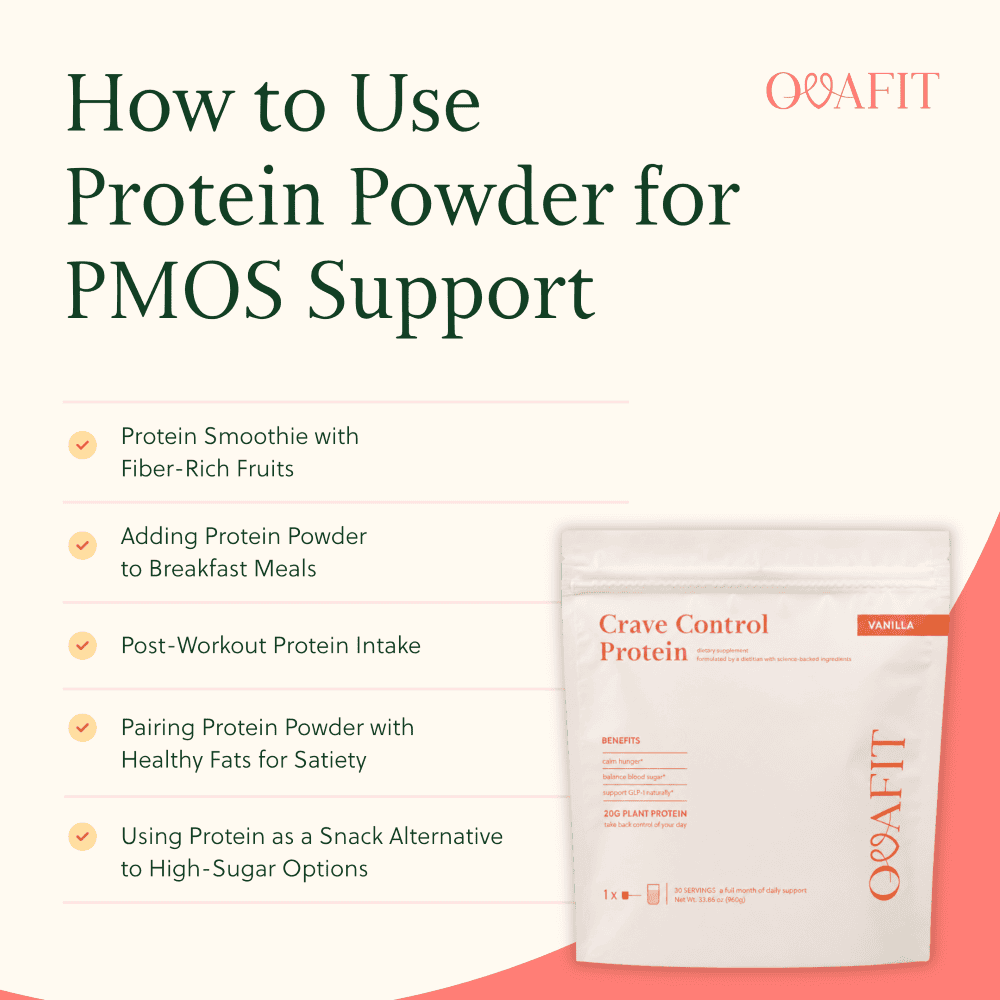
How to Use Protein Powder for PMOS Support
Protein Smoothie with Fiber-Rich Fruits
Adding protein powder to your morning smoothie is one of the simplest upgrades you can make for your PMOS routine. And when you pair it with fiber-rich fruits like berries, something really useful happens.
Both protein and fiber slow digestion, meaning your blood sugar rises gradually rather than spiking and crashing. For women navigating insulin resistance, that combination in a single glass makes a real difference to your energy and hunger.
Want some PMOS-friendly smoothie ideas to get started? Check out my “Gut Health Smoothie for PMOS” for recipes that are tried, tested, and PMOS-approved.
Adding Protein Powder to Breakfast Meals
For many women, breakfast is the hardest meal to hit that 30-gram protein target. It’s early, time is short, and the easiest options like toast, fruit, or cereal don’t come close. That’s where a scoop or protein powder can change things. Stirred into water, blended into a smoothie, or mixed in a yogurt bowl, it closes the gap without adding complexity.
Post-Workout Protein Intake
After a low-impact workout, a protein shake is one of the best things you can do for your body in that recovery window. Protein supports lean muscle growth and helps reduce soreness that can show up the next day.
And for women, this matters more than you might think. Building and maintaining lean muscle improves how your body processes glucose. But here’s another thing: you don’t need to be doing intense workouts to benefit from post-workout protein. In fact, most women with PMOS should avoid high-intensity exercises. Instead, they should focus on low-impact movement like Pilates, yoga, walking, cycling, or strength training.
Pairing Protein Powder with Healthy Fats for Satiety
I love to pair my protein powder with a healthy fat like nut butter, coconut milk, or chia seeds. That combination supports lasting fullness, which naturally reduces the urge to snack throughout the day. And when you choose something like chia seeds, you’re also getting omega-3 benefits. This can be an excellent approach for lowering inflammation and supporting healthier androgen levels over time.
Using Protein as a Snack Alternative to High-Sugar Options
When a snack craving hits, a protein smoothie is one of the best swaps you can make. It helps you meet your protein goals, supports hormone balance, and keeps you fuller longer. And that’s all at the same time!
Plus, protein powder doesn’t have to mean the same smoothie every day. You can get creative with it in the kitchen. The Cysterhood app has hundreds of PMOS-friendly recipes that are both delicious and high in protein. It’s the answer you’ve been searching for, so your routine never feels repetitive.
Crave Control Protein Powder makes it easy for women with PMOS to meet their protein goals and balance hormones.
Protein powder can be a genuinely powerful tool for women who want to take a more active role in managing their symptoms. Consistent protein intake supports insulin sensitivity, helps curb cravings, and balances hormones over time. And on the days when hitting your goals through food alone just isn’t realistic, it fills that gap.
But for us, the ingredients inside your protein powder matter just as much as the protein itself. That’s why Crave Control Protein Powder is my go-to recommendation. We formulated it specifically for women with PMOS, meaning it goes beyond protein to address the root drivers of symptoms that other powders simply don’t touch.
Ready to take your healing journey further? Explore our full line of PMOS supplements designed to support hormone balance and help you feel in control of your health.
For additional information, see our post “Best Supplements for PMOS Backed By Research.”