
Supplements can play an important role in supporting overall health. Some are used to help fill in nutritional gaps, while others may support energy levels, gut health, hormone health, and more.
Maybe you’re taking supplements to help manage PMOS (polyendocrine metabolic ovarian syndrome), formerly known as PCOS. If so, you may have found yourself asking, how long until supplements work? As a Registered Dietitian who also has PMOS, I know first-hand how important supplements can be for some women. But I also know how easy it is to stop taking them just before they could potentially help.
Every supplement works on its own timeline. How fast you notice benefits depends on three things. These are your baseline nutrient levels, how well your body absorbs it, and how consistently you take it.
In this post, I’ll share how long until each supplement works and what affects how quickly supplements may work. I’ll also show you how to tell if one is working for you. You deserve clarity here, not another bottle you’re not sure about.
Key Takeaways
> – Some supplements (like magnesium for sleep) may work within days to a couple of weeks.
> – Most supplements take 8 to 12 weeks to work.
> – Supplements that impact egg quality, ovulation, and your cycle usually take 3 months or more to work.
> – Individual results vary. Your starting levels, nutrient absorption, and consistency affect results.
> – These are general timelines. Pay attention to how you’re feeling, and ask your healthcare provider about labs to see if a supplement is working.
How Long Until Each Supplement Works: A Realistic Timeline at a Glance
Wondering how long until supplements work? The short answer is it depends.
Some supplements, like magnesium for sleep, may work within days. Most supplements take 8 to 12 weeks to work. And supplements that impact egg quality, ovulation, and your cycle usually take 3 months or more. That’s how long those processes take in the body.
The timeline below lays out how long until each supplement works so you know what to expect.
Keep in mind, these are general timelines based on available research. How your own body responds may vary based on your baseline level, diet, and other health conditions.
| Supplement | Commonly taken for | When people may notice improvement |
| Magnesium | Sleep, muscle relaxation | Days to a couple of weeks |
| Vitamin B12 | Energy, low B12 | Blood levels in 1 to 2 weeks, energy later |
| Probiotics | Digestion, gut health | Digestion in 1 to 2 weeks |
| Iron | Energy, low iron | A few weeks, fuller correction in months |
| Vitamin D | Low vitamin D, mood, immunity | About 8 to 12 weeks |
| Omega-3 fatty acids | Inflammation support | About 8 to 12 weeks |
| Berberine | Insulin, metabolism | About 3 months |
| Zinc | Skin, immune support | Several weeks to a few months |
| Spearmint tea | Androgen support | Hormones by about 30 days, impact on hair growth much longer |
| Inositol | Insulin, cycles | About 12 weeks for insulin, longer for cycles |
| CoQ10 | Egg quality support | About 3 months |
| Folate and prenatals | Preconception | Start before trying to conceive |
Supplements That May Work Within Days to Weeks
While most supplements take time to work, there are a few you may notice within days to a couple of weeks.
Keep in mind you’re more likely to notice these effects sooner if you’re already deficient or low in that nutrient.
Magnesium
Many women take a magnesium supplement to support sleep, muscle relaxation, and help “unwind” at night.
Magnesium may be one of the more “quick” supplements to work. In general, it can take about one to two weeks of taking magnesium consistently at night. That’s when you may start to notice improvement in your sleep. If you’re significantly low or deficient in magnesium, you may notice some benefits sooner.
For example, in this study, adults who reported having trouble sleeping took 1 g a day of magnesium L-threonate or a placebo. The study ran for 21 days. Sleep quality and daytime function stayed about the same in the magnesium group, but decreased in the placebo group.
If sleep is a challenge for you with PMOS, magnesium may be worth a try. Learn more in my full guide to magnesium for PCOS.
Vitamin B12
Some women take a vitamin B12 supplement to support energy levels, especially if they know their B12 levels are low.
If your goal is to increase your vitamin B12 levels, they may increase within one to two weeks of supplementation. But it may take longer to notice more energy. Your body has to build up its levels first and then use the B12.
So don’t give up on B12 if you’re not feeling more peppy after the first week or two.
Probiotics
Probiotics are commonly used to support digestion and gut health.
You may notice some initial digestive improvements (think: less bloating, more regularity) within one to two weeks of taking a probiotic. Bigger changes in the gut microbiome happen more gradually over months of consistent probiotic use.
Iron
Many women take an iron supplement to support energy, especially if they know their iron levels are low.
Your energy may increase within a few weeks of taking an iron supplement. However, it can take three to six months of consistent iron supplementation to restore low iron levels.
Get your iron levels checked before and after taking an iron supplement. Chat with your healthcare provider too, especially if you have other health conditions.
Supplements That Usually Take 8 to 12 Weeks
Most supplements take about 8 to 12 weeks before you notice results. Supplements in this category support things that take time, like building up vitamin levels or decreasing inflammation.
Vitamin D
Low vitamin D is common in women with PMOS. Many women take a vitamin D supplement to support their vitamin D levels, immune health, and mood.
It takes about 8 to 12 weeks of consistent vitamin D supplementation to see the full effects on vitamin D levels. That’s because 25-hydroxyvitamin D (the form your labs measure) has a half-life of about two weeks. It takes multiple half-lives for a vitamin or medication to build up in the blood and reach its full effect.
If your vitamin D levels are really low, it may take even longer to fully replenish them. In this study, adults with low vitamin D saw their levels rise after 12 weeks of a daily vitamin D supplement.
Omega-3 Fatty Acids
Some women take an omega-3 fatty acid supplement (aka fish oil) to help with inflammation. Inflammation may play a role in PMOS.
It can take about 8 to 12 weeks of consistent use to see some of the anti-inflammatory effects. That’s because omega-3 fatty acids build up gradually in the body and slowly change the fatty acid composition of cells.
For example, in one study in women with PMOS, testosterone was lower after eight weeks of omega-3s than with a placebo. More women in the omega-3 group also had regular periods.
Berberine
Berberine is a popular supplement for supporting insulin and metabolism. I think of it as a natural GLP-1 booster, not a replacement for GLP-1 medications. It’s the same lens I use in my post on berberine and PCOS.
Many berberine studies in women with PMOS see changes after about three months (aka 12 weeks) of supplementation. They track metabolism and insulin, as well as weight and other markers. So hold off on calling it ineffective until you’ve given it at least that long.
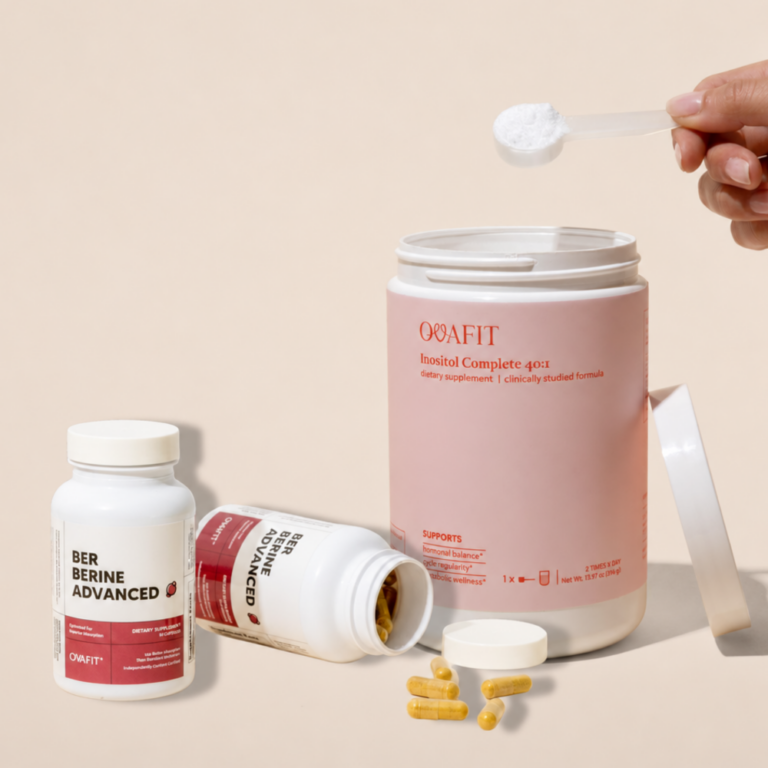
For example, one 90-day study in women with PMOS used berberine phytosome. Ovafit’s Berberine Advanced uses that same form, with 550 mg of berberine phytosome per capsule.
Interested in metabolic support? Read my list of the best PCOS supplements for weight loss, too.
Note: Always check with your doctor before starting berberine if you take metformin or other blood sugar-lowering medications.
Zinc
Some women take a zinc supplement to support immunity and skin. Others take it for symptoms related to androgens (like testosterone), such as skin and hair changes.
It can take several weeks to notice the effects of a zinc supplement. The full effects on things impacted by cell turnover, like skin and hair, likely take longer.
Want the deets on dose and the best type of zinc to take? Read my guide to the zinc supplement for PCOS.
Spearmint Tea
Spearmint tea may help lower androgens in some women with PMOS.
In this 30-day study, testosterone levels decreased after drinking spearmint tea twice a day. However, you’re not going to see effects on hair in just 30 days. Hair takes much longer to grow, and even medications for unwanted hair take months to show results.
Bottom line: It may take a month to see some hormone effects of spearmint tea. Effects on unwanted hair take longer.
Curious if spearmint tea is right for you? Read all about spearmint tea benefits for PCOS.
Not sure which of these (or any other supplement) is right for you? Take the this PMOS Supplement Quiz to get a personalized supplement routine.
Supplements That Take 3 Months or Longer
Some supplements take at least three months (and sometimes longer) to see the full effects. Why? The final stage of egg development takes about three months. And hair growth cycles take even longer than that.
So maybe you’re hoping a supplement will support your cycle, ovulation, or egg quality. If so, give it at least three months to notice any potential effects.
Inositol
Insulin resistance plays a key role in many PMOS symptoms, so improving insulin sensitivity may help support more regular cycles. Inositol may help with this. When insulin binds to a cell, inositol helps relay insulin’s message inside the cell. This helps your body respond to insulin more effectively.
Most inositol studies last between 12 and 24 weeks. Many studies have found improvements in insulin resistance markers by about 12 weeks. Here’s what the research shows on how long it takes inositol to work:
- Some studies found improvements in insulin markers after about 12 weeks.
- Other studies ran for 16 to 24 weeks, and some hormone changes only showed up in those longer studies.
Other benefits, like changes in cycle regularity and testosterone, can take longer. I’d expect cycle regularity to improve over two to three cycles. Changes in testosterone levels may take three to six months.
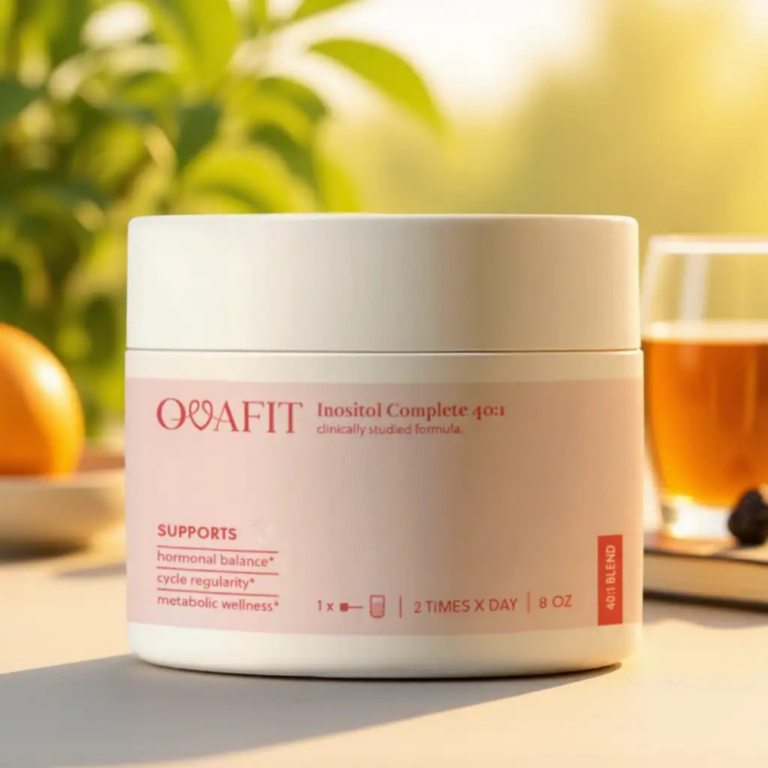
The ratio of myo-inositol to D-chiro-inositol can have an effect on inositol’s benefits, too. The 40:1 ratio is a widely studied physiological ratio, which is why I chose it for Ovafit’s Inositol Complete 40:1. Want to learn more about finding an effective inositol supplement? See my guide to the best inositol supplement.
CoQ10
CoQ10 is thought to support egg quality. Egg maturation typically takes about three months, so I recommend starting CoQ10 ahead of time if you’re trying to conceive.
In one small study, women going through IVF took 200 mg of CoQ10 a day for about 30 to 35 days. They had higher CoQ10 levels in the fluid around their eggs, and the researchers think it may support egg quality. Another study gave CoQ10 for 60 days before IVF to women under 35 with low ovarian reserve. They had more eggs and better-quality embryos.
Curious about the right CoQ10 dose for PMOS? Learn more in my post on how much CoQ10 for PCOS. If you’re actively trying to conceive, chat with your healthcare provider too. They can help make sure you’re taking the right supplements for your preconception care plan.
Folate and Prenatal Vitamins
There’s not a set timeline for when folate will start working. I recommend starting folate and prenatal vitamins before you start trying to conceive, as part of preconception care. Folate helps protect your baby’s early development, even before you know you’re pregnant.
Trying to conceive, or think you may be soon? Chat with your healthcare provider about a preconception care plan that includes prenatal vitamins. Wondering what preconception supplements may help? Check out my guide to the best supplements for fertility.
NAC
Similar to inositol, cycle-related benefits from NAC (N-acetylcysteine) for PMOS may take several months. NAC is often taken alongside inositol to support antioxidant function and ovarian health.
In one study, women with PMOS took a combination of NAC, inositol, and folic acid. Researchers compared women with and without insulin resistance. Ovulation rate significantly increased in both groups. Researchers also checked insulin resistance markers at 6 and 12 months.
Supplements for Hair Regrowth
Hoping to regrow hair you’ve lost with PMOS? Unfortunately, hair growth supplements are another one of those things that may take several months to show results. Changes in hair growth occur slowly over time, so it’s hard to see changes day to day. I recommend taking regular photos to see if there’s been any hair regrowth over time.
What Affects How Quickly Supplements Work
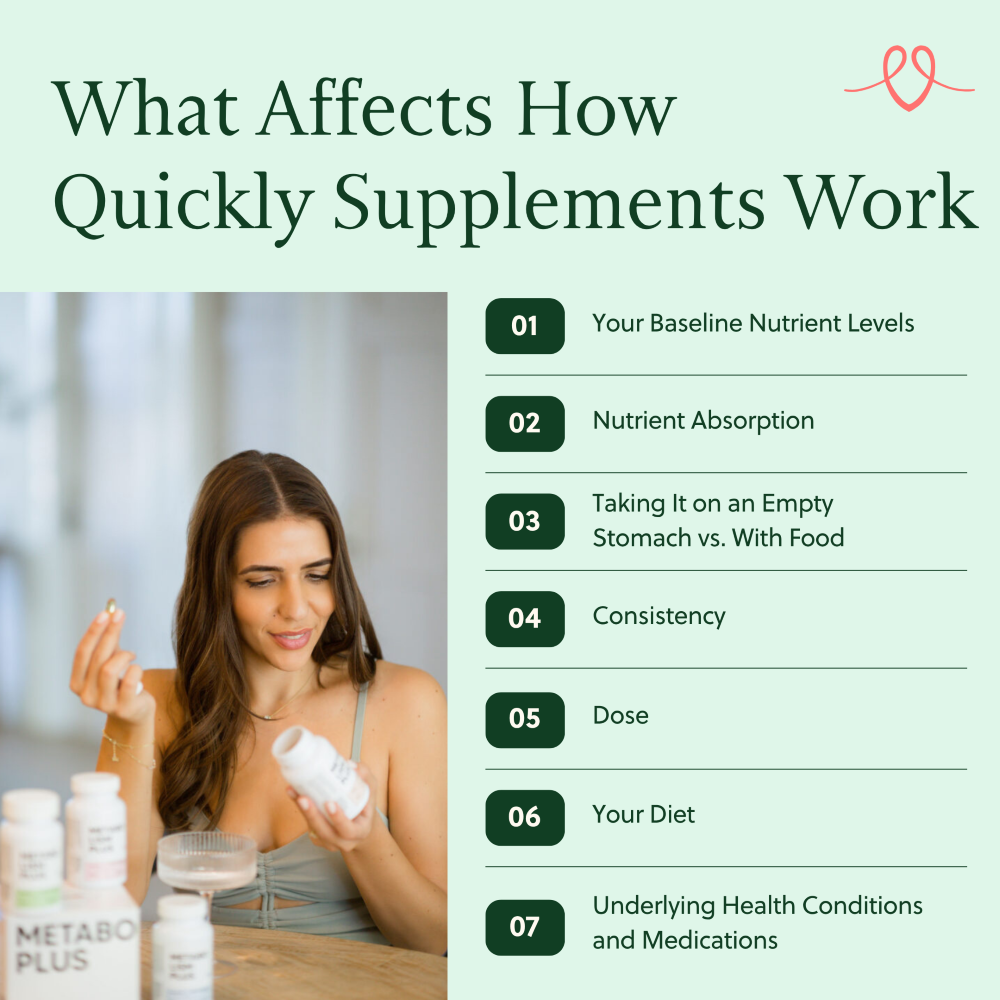
Everyone’s body is unique, so you may see benefits faster or slower than other women with PMOS. Here are some factors that may affect how quickly you notice benefits.
Your Baseline Nutrient Levels
If you’re deficient in a nutrient (like vitamin D or iron), you may notice benefits more quickly as your levels increase. If your baseline nutrient levels were already in a healthy range, you may not notice as big of a change.
Not sure where your vitamin and mineral levels are at? A good multivitamin can help cover gaps. See my guide to PCOS vitamins for the ins and outs.
Nutrient Absorption
How and when you take your supplements can affect nutrient absorption, too. For example, fat-soluble vitamins like vitamin D absorb better when you take them with dietary fat. Taking vitamin D with black coffee won’t be as effective as taking it with a breakfast that has some fat.
Some vitamins (especially water-soluble vitamins) don’t get stored in the body in large amounts. So it’s important to replenish them consistently for the best benefits.
Taking It on an Empty Stomach vs. With Food
Some vitamins and minerals are best taken on an empty stomach. Others are best taken with food, like vitamin D and other fat-soluble vitamins. Some people also take iron with food to avoid an upset stomach. If your vitamins upset your stomach, try taking them with food.
Consistency
It’s important to take your vitamins and minerals consistently, rather than only on the days you remember. To make it a habit, pair your supplements with something you already do, like when you brush your teeth.
Dose
Taking more of a vitamin or mineral than you need won’t help it work faster. High doses may even increase your risk of side effects or impact other vitamin and mineral levels in your body. I recommend sticking to the studied dose unless your healthcare provider tells you otherwise, especially if you have other health conditions.
Your Diet
While vitamins and supplements can be helpful, they can’t make up for what’s missing from your diet. For PMOS, I recommend a gluten- and dairy-free diet for my clients. Dairy and gluten can be inflammatory for some people with PMOS and may make symptoms worse. Reducing inflammation with diet can set you up for success, so your body responds better to vitamins and supplements.
Underlying Health Conditions and Medications
Other health conditions and medications you take can also affect how well vitamins and supplements work. Thyroid disorders, gut conditions, and certain medications can all play a role. Always check with your healthcare provider before starting any new supplement. This is especially true if you’re taking medication, pregnant, trying to get pregnant, or have other health conditions.
How To Tell If a Supplement Is Working
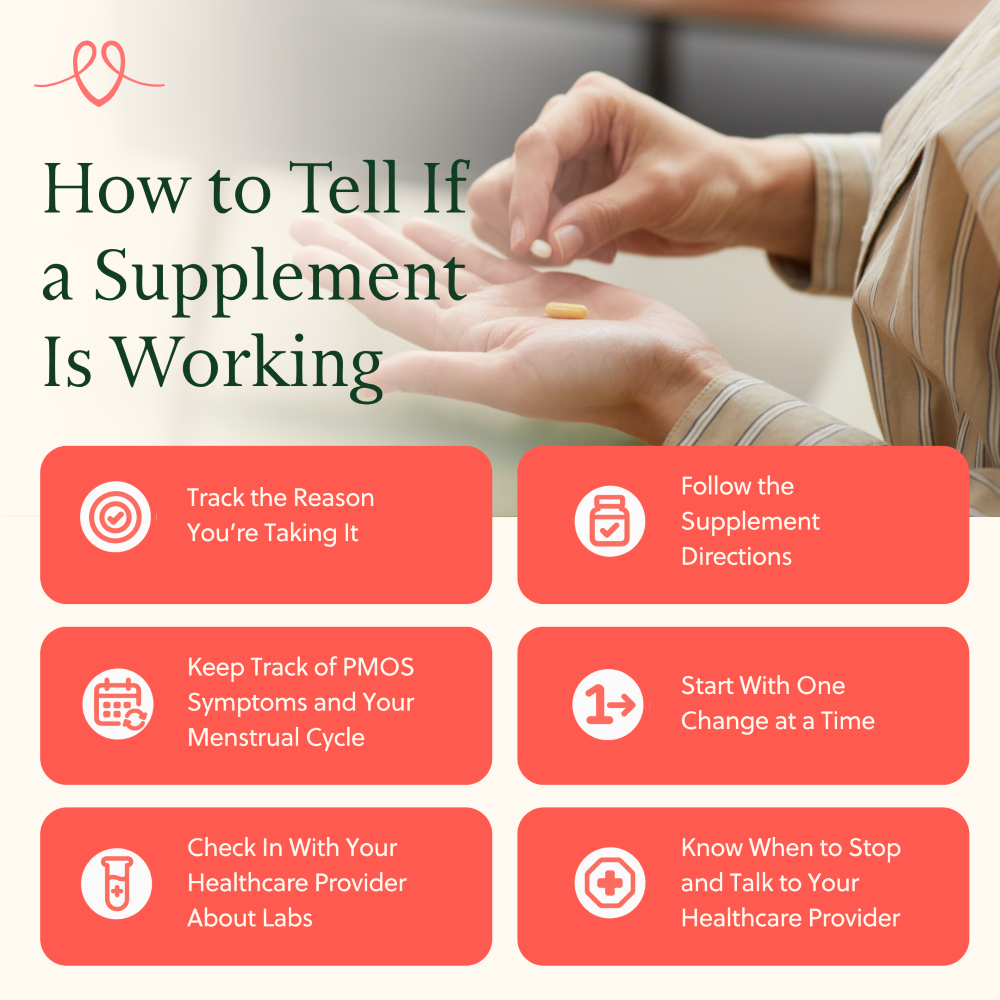
Wondering how you can tell if your supplements are having an effect? Here are some tips to help you monitor the impact.
- Pay attention to the reason you’re taking the supplement in the first place. Are you taking inositol to support your PMOS symptoms? Or vitamin B12 to support your energy levels? Track that and see if you notice any changes over time. For example, jot down your cycle length each month if you’re taking a supplement to support more regular cycles. You might see your cycle shorten from 45 days to 34 days.
- Keep track of your PMOS symptoms and menstrual cycle (if you have periods). This can help you see changes in your hormonal health over the course of two to three cycles.
- Check in with your healthcare provider about getting labs. Having labs drawn before starting a new supplement and again 12 weeks later helps. It can show if your vitamin D, iron, or vitamin B12 levels are increasing.
- Follow the directions on the supplement. If you only take your supplements four days a week for three weeks, you haven’t given them a fair chance.
- Don’t jump the gun. It can be tempting to try a slew of new supplements at once. I recommend starting with one change at a time. Give it the recommended amount of time to see how you respond.
- Know when to stop and when to talk to your healthcare provider. Not noticing any changes after the recommended amount of time? Experiencing side effects? Hold off on the supplement and check in with your healthcare provider.
Different supplements have different time frames for when you’ll notice changes. Some changes may happen in as little as a few days. Other benefits can take 8 to 12 weeks. Changes related to hormones and your menstrual cycle can take 3 months or more. Be patient, because your body is working hard behind the scenes.
Not sure where to begin? Start by taking the What’s Your PMOS Type quiz. Then you can discover which vitamins and supplements may be helpful for you. Prefer real-time support and tracking? Check out the Cysterhood app.
You’ve got this,
Tallene, RD
The information Tallene provides is not intended to be used for the diagnosis or treatment of any health condition or as guidance for specific medications or supplemental recommendations. Please consult your healthcare provider before making any changes to your current treatment plan, stopping or starting any medications or supplements, or before making any decisions about your health. Statements on this website have not been evaluated by the Food and Drug Administration. Products mentioned are not intended to diagnose, treat, cure, or prevent any disease and Tallene makes no guarantees as to specific results. Results will vary from person to person. Time frames mentioned are not promises; they are intended to be general time frames that have been Tallene’s experience working with clients. Always talk to your healthcare provider before starting any new vitamin or supplement, especially if you’re pregnant, trying to conceive, taking medications, or have any other health conditions.