
Wondering which supplements you can and can’t take together? A handful of vitamins and minerals can impact each other when taken together. Others synergize well. Some should be taken with food, some on an empty stomach, and some can even impact prescription medications.
This is especially important if you take multiple supplements, like many women with polycystic ovary syndrome (PCOS), now referred to as polyendocrine metabolic ovarian syndrome (PMOS).
Let’s simplify supplement timing for you.
As a Registered Dietitian with PMOS myself, I’m frequently asked if it’s okay to take multiple supplements at once. The short answer is yes. For the majority of dietary supplements, there’s no issue with taking them at the same time.
With that said, there are a few exceptions. In this post, I’ll cover supplement timing and which supplements you can and can’t take together. I’ll also cover which ones to take with food and which to chat with your prescribing clinician about first. You deserve clarity here, not a guessing game every morning.
Which Supplements You Can and Can’t Take Together: The Four Things That Matter
The good news is, for most people, it’s OK to take multiple dietary supplements at the same time. No complicated spreadsheet necessary.
There are only a few specific exceptions you’ll want to separate. There are also a few supplements you may actually want to take together. And a couple are worth a chat with your healthcare provider first.
So, what matters when it comes to figuring out if certain supplements can or can’t be taken together? Absorption, timing with food, dosage, and medication interactions. Let’s go through each one:
- Absorption. Some vitamins and minerals are absorbed using the same pathways. This means if you take a large dose of both at the same time, you may absorb less of one or both.
- Timing with food. Some supplements are better absorbed with food, others on an empty stomach. Some are just easier on your tummy with (or without) food.
- Dosage. One vitamin or mineral can inhibit the absorption of another if one is taken in a high enough dose. This is mostly an issue with isolated, high-dose vitamin and mineral supplements. If you’re eating a variety of gluten- and dairy-free whole foods, this is unlikely to be an issue for you.
- Medication interactions. Some supplements can increase or decrease the effects of certain prescription medications.
With that in mind, let’s talk about which supplements you can and can’t take together.
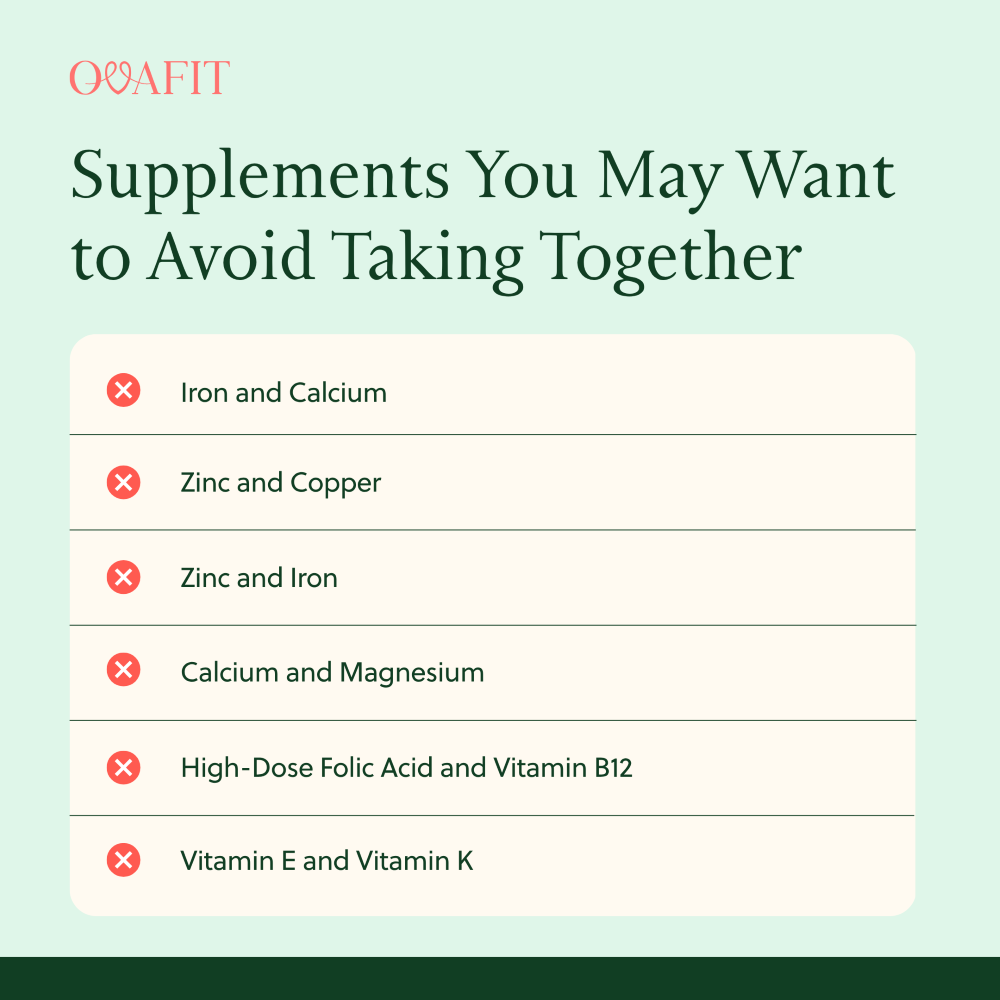
Which Vitamins and Minerals Should You Avoid Taking Together
Let’s start with which vitamins and minerals you can’t take together. Note: these combinations aren’t harmful for most people. They just may inhibit the absorption of one another (meaning you’ll absorb less of them). This is particularly important if you’ve been diagnosed with a deficiency in one (or both) of the nutrients. It also matters if you’re taking high-dose forms of either one.
Iron and Calcium
Probably the most well-known combo to separate. Studies have shown that taking iron and calcium together (think, in the same meal) can decrease the amount of iron you absorb. This is why the general advice is to space out an iron supplement and calcium supplements by at least two hours. The same goes for food that’s very high in calcium. That said, other research has indicated that there may be compensating mechanisms. This effect may not be as impactful long-term as short-term studies suggest.
What to do: Take your iron in the morning and calcium in the afternoon or evening.
Zinc and Copper
Studies have shown that excessive use of zinc supplements over time can lead to copper deficiency. Markers of copper status have decreased in people taking about 60 mg of zinc per day for up to 10 weeks. This is one reason the upper limit for zinc intake in adults is 40 mg/day. That’s also why many zinc supplements contain some copper, to keep copper and zinc in balance.
Want to learn more about using zinc for PCOS?
Zinc and Iron
Similar to the above, zinc and iron can also inhibit each other. Studies have shown that taking 25 mg or more of iron at the same time as zinc supplements can reduce zinc absorption. This is unlikely to be an issue if you’re just taking a multivitamin with zinc and iron. But if you’re taking higher doses of both, consider taking them at different times of day.
Calcium and Magnesium
Very high doses of calcium may inhibit magnesium absorption and vice versa. Nevertheless, there is mixed research on this subject, so I wouldn’t worry too much about separating the two. See my explanation of the right magnesium dosage for PCOS if you want the complete picture.
High-Dose Folic Acid and Vitamin B12
Another combination that is worth highlighting. Make sure you’re keeping an eye on your vitamin B12 levels if you regularly take large dosages of folic acid or folate supplements. Both are essential for the production of healthy red blood cells. But folic acid can mask a vitamin B12 deficiency by correcting the anemia. Meanwhile, other B12 deficiency symptoms (particularly those affecting the nerves) progress.
Vitamin E and Vitamin K
Vitamin E is a fat soluble vitamin that can interfere with vitamin K-dependent processes at high doses, including normal blood clotting. Unless you’re taking high doses of vitamin E, this likely won’t be an issue. But it’s another one to chat with your doctor about if you’re taking any medications that affect bleeding.
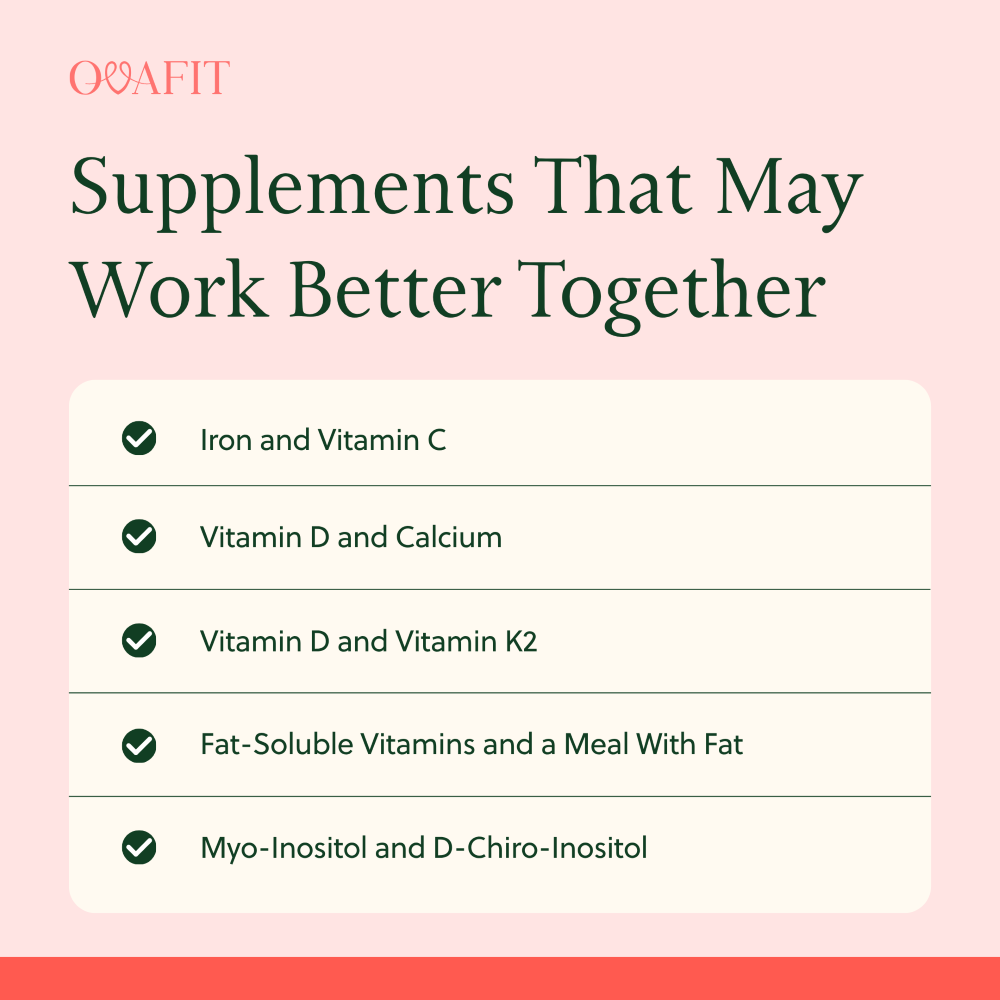
Which Supplements Work Better Together
Now for the good news. Just as some vitamins and minerals can inhibit the absorption of one another, there are also a few that work better together.
Iron and Vitamin C
Want to optimize your iron status? Make sure you’re eating vitamin C-rich foods (citrus fruits, strawberries, sweet peppers, tomatoes, broccoli, etc.) with plant-based iron-rich foods. Vitamin C (aka, ascorbic acid) has been shown to increase the bioavailability (aka, absorption) of iron. This also applies to iron supplements. Take them with a vitamin C supplement or a glass of OJ for optimal absorption.
Vitamin D and Calcium
Another easy one. Vitamin D can help with calcium absorption, which is why you’ll commonly see the two packaged together. If you take calcium supplements for bone health, make sure you’re also getting enough vitamin D.
Vitamin D and Vitamin K2
This is yet another typical combination of supplements. It makes sense physiologically, much like calcium and vitamin D. K2 may assist the body in directing calcium where it is required. Nevertheless, there is currently little data to support this. Therefore, I wouldn’t claim that everyone needs to take K2 and D3 supplements. But it’s not a bad combo if that’s what you’re using.
Fat Soluble Vitamins and a Meal With Fat
As you might guess from the name, fat soluble vitamins (A, D, E, and K) are better absorbed with fat. To optimize your absorption of these vitamins, take them with the largest (or fattiest) meal of the day.
Myo-Inositol and D-Chiro-Inositol
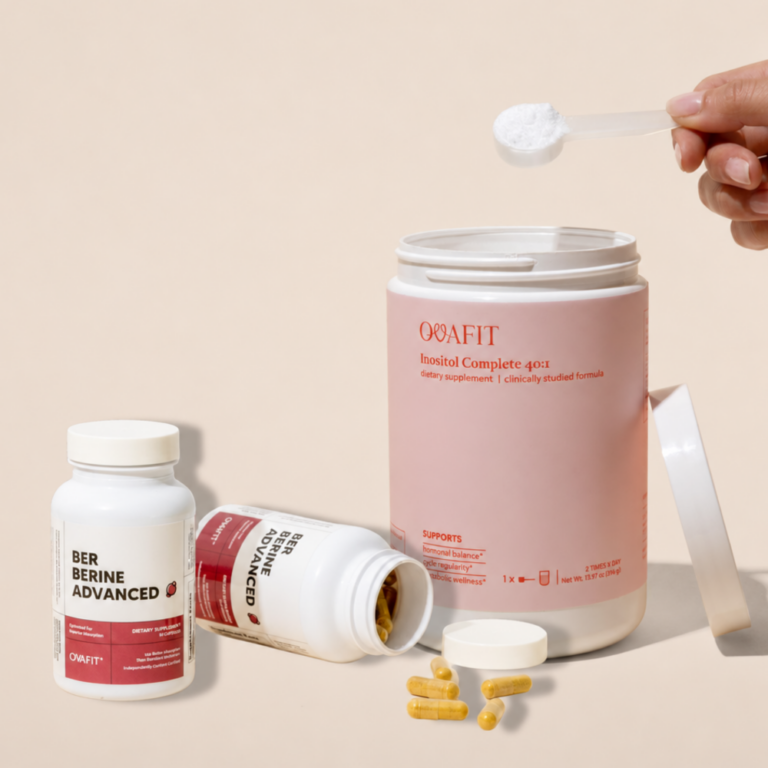
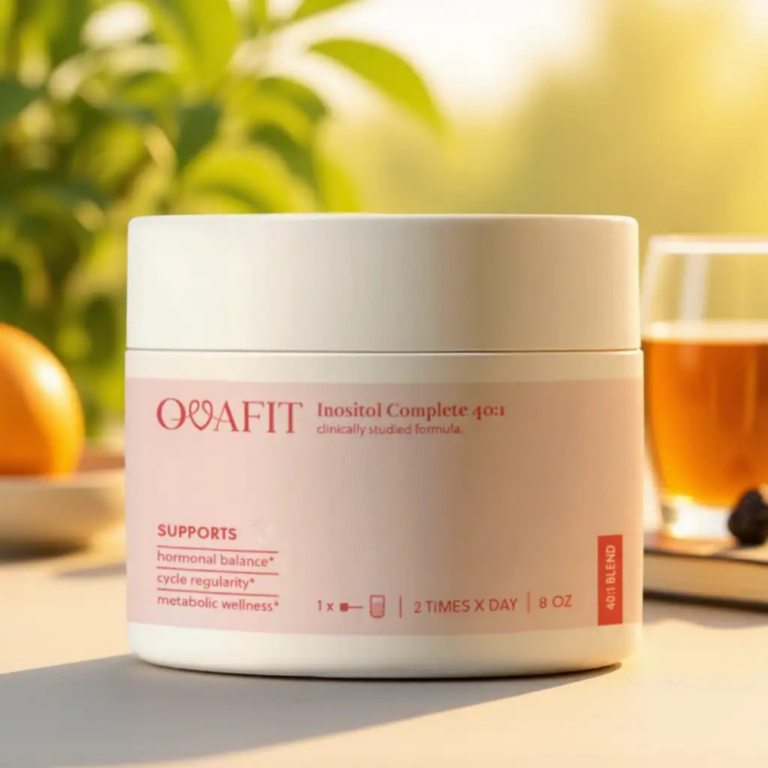
This one holds a special place in my heart. One of the basic supplements I suggest to the majority of my PMOS customers is inositol. The body contains both myo-inositol and D-chiro-inositol, two forms of inositol. There is still little research. Nevertheless, research utilizing both at a 40:1 ratio appears to have the greatest potential for promoting ovulation in PMOS. I use Ovafit’s Inositol Complete 40:1, which is 40 parts myo-inositol to 1 part D-chiro-inositol.
Each scoop contains 50 mg of D-chiro-inositol and 2,000 mg of myo-inositol. Remember that this ratio is not used in many inositol products. Are you trying to conceive? Consult your doctor first. If insulin resistance is your primary concern, I go into more detail in my guide to the best insulin resistance supplements.
Just to give you an idea of what to expect, it typically takes three months to notice changes in your hormones and cycle while taking supplements. PMOS cannot be magically cured with supplements. However, if you take them regularly, they can support your general health.
Not sure which supplements fit your symptoms? My free What’s Your PMOS Type? quiz is a good place to start.
Which Supplements Should You Take on an Empty Stomach or With Food
Depending on the supplement, taking it with food can affect either its absorption or GI tolerability. Always follow the dosing instructions listed on the bottle (absorption and tolerability can vary among brands). Here are some general recommendations:
Iron
Iron is optimally absorbed on an empty stomach, and medications that decrease stomach acid can decrease nonheme iron absorption. That said, iron commonly causes GI side effects. If that’s the case for you, it’s fine to take it with food. Either way, I recommend avoiding taking it with coffee, tea, or dairy, as these can interfere with iron absorption.
Water-Soluble Vitamins Like B Vitamins and Vitamin C
In general, it’s fine to take water-soluble vitamins (think: vitamin C, B vitamins) with or without food. B vitamins can sometimes cause mild nausea on an empty stomach. If that’s the case for you, I’d recommend taking them with food.
Fat Soluble Vitamins
Similar to above, vitamins A, D, E, and K are best taken with a meal that contains some fat.
Magnesium
This is often better tolerated with food, and many folks find they tolerate it best in the evening. Feel free to anchor it to dinner.
Berberine
This is generally taken with meals, which seems to optimize GI tolerability and its effects on blood sugar. Want to learn more about berberine and PCOS?
Omega-3s and Fish Oil
Take with food for optimal absorption and to limit GI side effects (looking at you, fishy burps). Ideally, take them with a meal that contains some fat.
Probiotics
Depending on the strain and product, some should be taken on an empty stomach while others can be taken with food. Follow the instructions on the label.
Which Supplements Can Interact With Prescription Medications
This next section is especially important. Be sure to always run your supplement list by your prescriber or pharmacist to make sure there aren’t any concerning supplement-medication interactions. Some supplements can increase or decrease the effects of medications or increase your risk for side effects. Don’t discontinue your medications without speaking with your prescriber first.
Calcium, Iron, and Magnesium With Thyroid Medication
This is especially relevant for the many women with PMOS who also deal with a thyroid disorder. Calcium and iron can interfere with levothyroxine absorption and should be taken at least four hours apart. In general, levothyroxine is taken in the morning. Take calcium, iron, or multivitamins at least four hours later.
Want to learn more about hypothyroidism and PCOS?
Vitamin B12 and Metformin
Long-term metformin use can decrease your vitamin B12 levels. B12 is important for healthy red blood cells and nerve function, among other things. For this reason, your prescriber may periodically check your B12 levels while you’re on metformin. Want to learn more about what to eat (and what foods to avoid when taking metformin)?
Berberine and Blood Sugar Medications
Berberine can lower your blood sugar. So using it with other blood sugar-lowering medications (metformin, insulin, Ozempic and other GLP-1 meds, etc.) could increase your risk for low blood sugar. It’s not a reason to avoid berberine, just one to discuss with your prescriber first. Can you take Ozempic and berberine together? I break it down in this post.
Potassium and Spironolactone
Spironolactone, often prescribed for PMOS symptoms, increases potassium levels. So you may need to avoid potassium supplements if you’re taking this medication. Ask your doctor if this applies to you.
St. John’s Wort and Birth Control
St. John’s Wort can speed up how your body breaks down hormones in oral contraceptives. That can lead to breakthrough bleeding and possibly ovulation. It can also decrease the effectiveness of some antidepressants. If you take hormonal birth control, check with your doctor before you start using St. John’s Wort.
Fish Oil, Vitamin E, and Vitamin K With Blood Thinners
Fish oil and vitamin E can impact your risk of bleeding, and vitamin K can impact the effectiveness of some blood thinners. Let your pharmacist know if you’re taking a blood thinner so they can keep an eye out for potential interactions.
Omega-3s and Blood Pressure Medications
Higher doses of omega-3s can decrease blood pressure slightly. Usually this isn’t an issue for people taking medications to control their blood pressure. But it’s worth checking in to make sure everyone’s on the same page.
Calcium, Iron, Magnesium, and Zinc With Certain Antibiotics
Minerals can bind to certain antibiotics and keep your body from absorbing them properly, decreasing the effectiveness of the antibiotic. Ask your pharmacist how to properly time antibiotics and mineral supplements so they don’t interfere with each other.
CoQ10 and Blood Thinners
CoQ10 is used for many different things (egg quality, metabolism support, etc.). But in some people, it may interact with blood-thinning medications. Ask before combining if you take a blood thinner. Wondering how much CoQ10 for PCOS you should take?
How Can You Take Supplements for Optimal Absorption
Now that you’re aware of some supplement-medication interactions, let’s talk about some simple tips to help you optimize your supplement routine.
Follow the Label First
Always follow the instructions on the label of the supplement you’re taking. Some supplements can be taken with or without food, and some should be taken on an empty stomach. Others should be taken with meals or at night.
Check for Overlapping Ingredients
Many people take multivitamins in addition to some standalone supplements. This is usually fine. Just be aware that you may be getting more of a vitamin or mineral than you realize. Pay attention to what you’re already getting from the multivitamin before adding standalone vitamins or minerals. Not sure what multivitamin to start with? I’ve got you covered in my guide to PCOS multivitamins.
Split Your Supplements Into Morning and Evening
Some nutrients compete for absorption. So if you’re taking multiple mineral supplements, I like to simplify things by splitting them up. For example, I recommend taking iron (with vitamin C) in the morning and calcium and magnesium in the evening.
Pair Fat-Soluble Vitamins With Your Biggest Meal
Vitamins A, D, E, and K are fat-soluble, meaning they’re best absorbed when taken with a source of fat. An easy way to remember to take these is to tie them in with your biggest meal of the day. It’s likely to include some fat.
Keep an Updated List of Every Supplement and Prescription Medication You Take
Make a list of all of the supplements and prescription medications you’re taking and the doses you’re taking them at. You can keep this list on your phone and add or subtract as needed. This comes in super handy for the next tip.
Review Your Routine With a Pharmacist or Doctor
I highly recommend bringing your list of supplements and doses to your pharmacist or doctor to review. This matters most before you add something new, or if you’re trying to conceive, are pregnant, or take any medications. This can take as little as 5 minutes and give you so much peace of mind. It’s the best way to avoid supplement-medication interactions. It will also give you personalized advice on how to best incorporate supplementation into your routine.
Want to dive deeper into specific supplement recommendations? Check out my posts on the best supplements for PCOS weight loss and supplements to improve fertility.
Want some personalized help creating a supplement routine that works for your unique symptoms? Take my free Supplement Quiz to learn which supplements may be a good fit for you. And if you’re looking for an inositol supplement, Ovafit’s Inositol Complete 40:1 uses a 40:1 ratio of myo-inositol to D-chiro-inositol. That takes the guesswork out of the ratio.
You’re not broken, you’re just different. Let’s create a supplement routine that works with your body, not against it.
This article is for informational purposes only and does not provide specific medical, nutrition, supplement, or medication advice for you. It represents my opinion as a Registered Dietitian but cannot be used to diagnose, treat, cure, or prevent any condition. Any time frames discussed are general ranges drawn from my experience working with clients. They do not represent any promised timeline or results, and everyone’s experience is unique. Talk to your doctor or pharmacist before beginning, combining, or discontinuing any supplements or medications. This is especially important if you take any prescription medications or are pregnant or trying to conceive. These statements have not been evaluated by the Food and Drug Administration. This product is not intended to diagnose, treat, cure, or prevent any disease.
You’ve got this,
Tallene, RD