
If you’ve spent any time looking into natural ways to support your hormones with PCOS, now called PMOS, you’ve probably come across spearmint tea. It’s one of those recommendations that comes up again and again, especially for women dealing with androgen-related PMOS symptoms like facial hair and acne. And unlike a lot of wellness trends, there is actually some research behind it.
But before you grab the first box of spearmint tea you see, it’s worth taking a closer look at what you’re buying. Some products contain pure spearmint, while others combine it with several different herbs. You’ll also find loose leaf options, organic varieties, tea bags, and products with different serving sizes.
As a Registered Dietitian who has PMOS myself, I’m always looking at the bigger picture: What’s actually in the product? Is the ingredient list transparent? Is it something you can realistically use consistently? And most importantly… Does the research support what we’re asking spearmint to do?
So, let’s talk about what spearmint tea may actually do for PMOS, the potential benefits of spearmint tea for women with PMOS, and the spearmint tea brands worth considering.
5 Best Spearmint Tea Brands for PMOS, Chosen By a Dietitian
Before we talk individual brands, there are a few things I look for when choosing spearmint tea. And these are the things I recommend you look at, too!
First things first: the ingredients list. If you want to use spearmint tea in a way that most closely resembles the available research, a tea made with spearmint as its only ingredient makes it easy to know exactly what you’re getting. But that doesn’t mean you NEED to stick with a spearmint-only recipe. A blend can have a place in your routine, especially if you’re interested in adding herbs alongside spearmint.
Form matters too. While some people prefer to make loose-leaf tea, others know that having a few extra steps will make them ditch the habit far sooner than if they can just toss a tea bag into a mug and boil some water. My opinion? The only useful option is the one you stick with!
I also want to make something clear before we go any further: spearmint tea is a complementary wellness option for PMOS. It isn’t a replacement for medical care, nutrition, movement, sleep, or other pieces of your individual PMOS management plan. Think of it as one more tool you can choose to add to the routine you already have.
Still trying to understand the condition itself? That’s exactly why I created my guide, “What Is PMOS?” Consider this your resource for breaking down a complex endocrine condition in easy-to-understand, supportive language.
What Does Spearmint Tea Do for PMOS?
Spearmint tea gets so much attention in the PMOS community because early research suggests that it may have anti-androgen effects. That’s especially interesting for women with PMOS because higher androgen levels can contribute to symptoms including acne, excess facial or body hair, female-pattern hair loss, and irregular periods.
Here’s what we actually know so far:
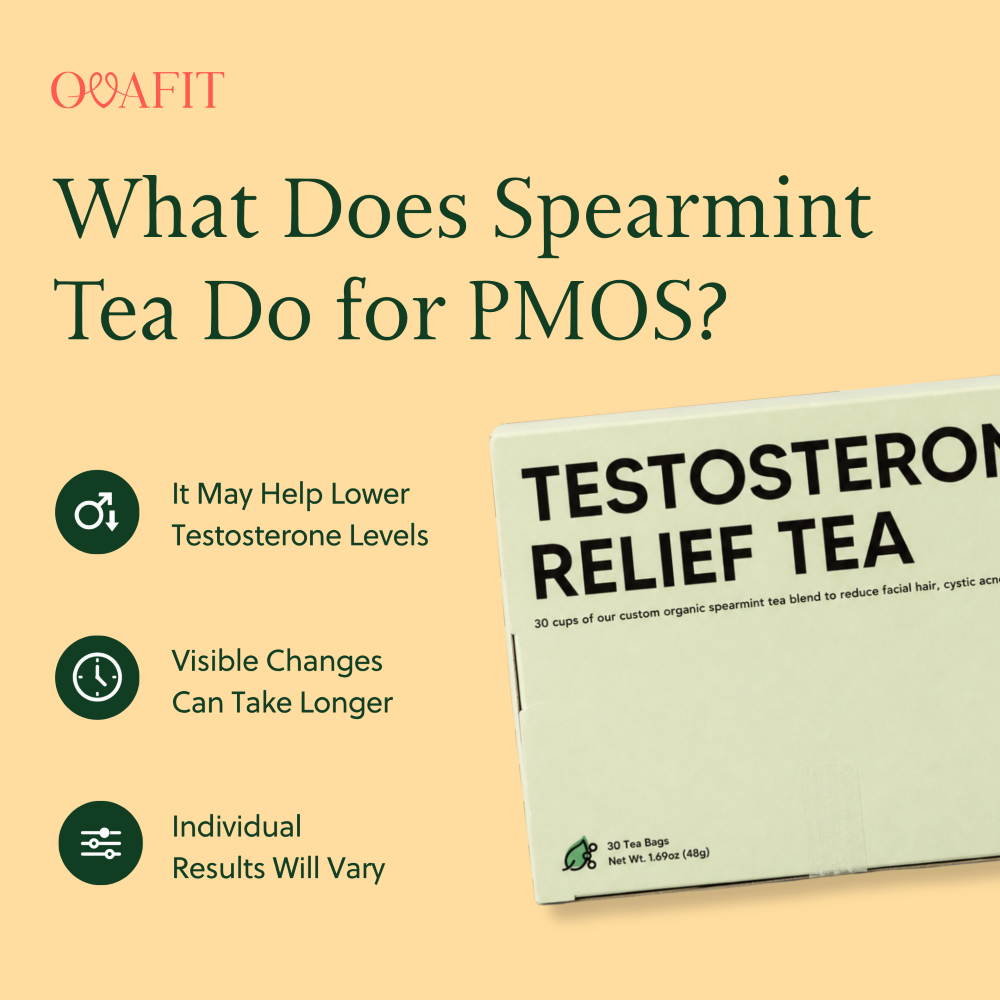
It May Help Lower Testosterone Levels
One of the most commonly referenced studies on spearmint tea and PMOS was a 30-day randomized controlled trial involving 42 women. Participants either drank spearmint tea or a placebo herbal tea twice a day. By the end of the study? Free and total testosterone levels had significantly decreased in the group drinking spearmint tea.
It’s incredibly promising, but I don’t want you to read that and assume spearmint tea will completely change your hormones overnight. This was a small study that lasted just one month, so we still need more research to understand exactly how useful spearmint tea may be over longer periods of time.
Visible Changes Can Take Longer
This is an important part of the research that, unfortunately, tends to get left out. Although the women drinking spearmint tea in the study above reported improvements in excess hair growth, researchers didn’t find a significant change in the study’s objective hirsutism scores over the 30-day period.
That doesn’t necessarily mean that spearmint had no effect. In fact, researchers specifically stated that the study may have just been too short for changes in noticeable hair growth, especially since hair grows in cycles.
And honestly, that’s a part in understanding the real research of natural treatments. Reducing excess facial hair isn’t something that you can fairly judge after a few cups of tea or even a few weeks. Changes you can actually see may take much longer than changes that show up in bloodwork.
This is why I always encourage women with PMOS to look at trends over time rather than expecting one new habit to create an immediate visible difference.
Individual Results Will Vary
It’s incredibly common that PMOS affects every woman differently. On that same note, every woman’s response to spearmint tea can look different, too!
Your androgen levels, insulin sensitivity, stress, nutrition, medications, genetics, and the specific symptoms you’re dealing with can all be different from someone else’s. This is why spearmint tea may be a helpful addition for one person and make very little noticeable differences for another.
And because I think this is a good time for a reminder: spearmint tea not impacting your symptoms doesn’t mean you did anything wrong. Instead, it reflects the fact that we can’t expect one food, supplement, or herbal tea to address every factor behind PMOS.
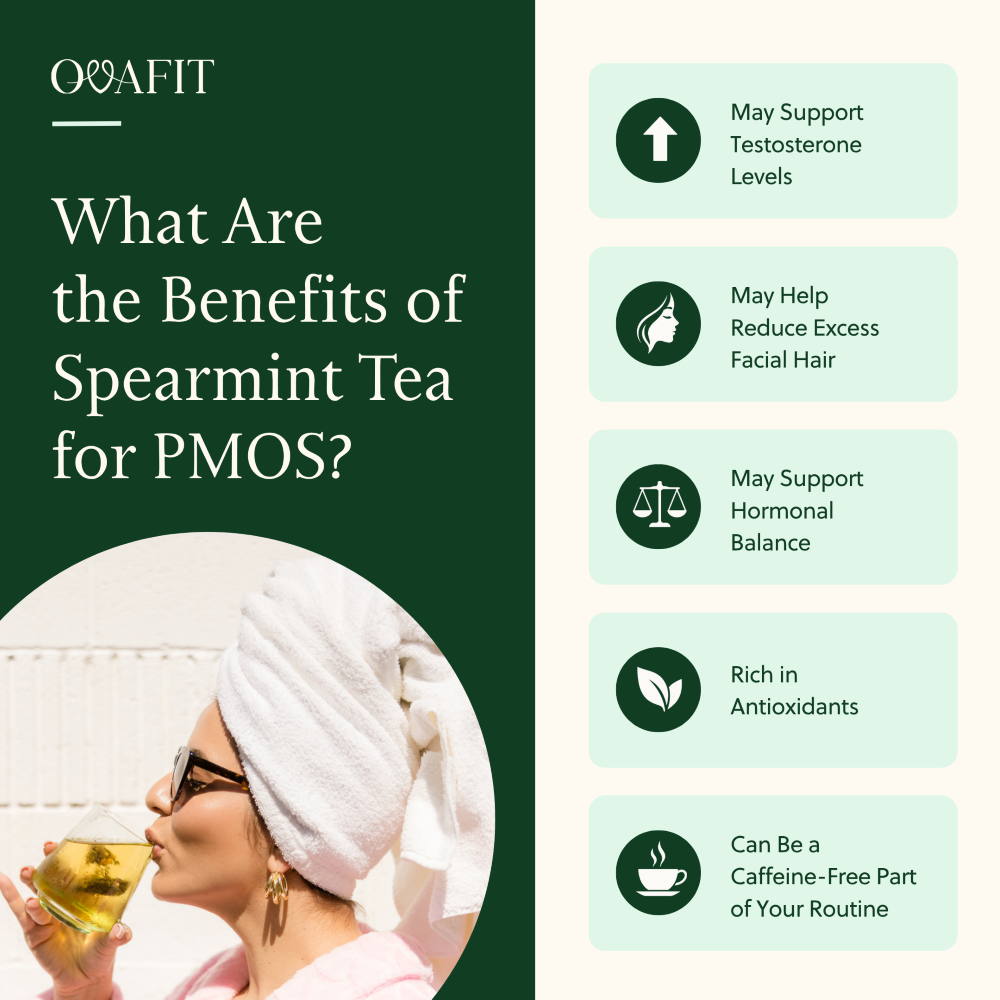
What Are the Benefits of Spearmint Tea for PMOS?
Most of the PMOS-specific interest in spearmint comes back to its potential effect on androgens, but there are a few reasons you may decide to include it into your routine:
May Support Testosterone Levels
Research suggests drinking spearmint tea regularly may help lower free and total testosterone levels in women with PMOS. Since elevated androgens are connected with several common PMOS symptoms, this is why spearmint tea gets so much attention in the first place.
I’ve said it once and I’ll continue saying it: it’s important to view spearmint tea as supportive rather than a treatment. It won’t address every reason you may be experiencing elevated testosterone, and it shouldn’t replace the rest of your PMOS management plan.
May Help Reduce Excess Facial Hair
If unwanted facial hair is one of your most frustrating symptoms, just know you’re not alone! Because excess facial and body hair can be influenced by elevated androgens, researchers have also looked at whether spearmint’s potential anti-androgen effects could help with hirsutism.
The early results are interesting, but this is another area where patience matters. In the 30-day trial I mentioned above, participants reported improvement, but researchers didn’t see a statistically significant improvement in the object hirsutism score during that timeframe.
May Support Hormonal Balance
I use the phrase “support hormonal balance” carefully because hormones aren’t something we can simply “balance” with one tea. What spearmint may do is support one piece of the picture by influencing androgen levels. For some women, addressing elevated androgens is an important part of managing their individual PMOS symptoms.
Your menstrual cycle and overall hormone health are influenced by many factors, though, including insulin, stress, nutrition, sleep, and other reproductive hormones. That said, I wouldn’t rely on spearmint tea alone to regulate imbalances.
Rich in Antioxidants
Spearmint is also naturally rich in antioxidants and plant compounds, including rosmarinic acid and flavonoids. Antioxidants help support overall cellular health by helping the body manage oxidative stress. That isn’t a PMOS treatment on its own, but it’s one more reason spearmint can fit nicely into an overall nutrient-rich diet.
Can Be a Caffeine-Free Part of Your Routine
One of my favorite things about spearmint tea is honestly how easy it is to add to your day. Pure spearmint is naturally caffeine-free, so you can have it without adding another source of caffeine. Sitting down with a warm cup of herbal tea can also be a simple way to slow down and promote relaxation, especially if you make it part of your evening routine.
No, one relaxing cup of tea won’t “fix” cortisol or hormones. But I’m a big believer in small routines that feel good and are realistic enough to actually stick with.
5 Best Brands of Spearmint Tea for PMOS
Now for the actual tea options! I looked at ingredients, form, transparency, preparation, quality, availability, and how practical each product would be to use regularly. Some are pure spearmint, while others combine spearmint with additional herbs. Needless to say, there’s an option depending on what you want from your daily cup.
Ovafit Testosterone Relief Tea
Of course, I have to start with the tea I formulated specifically for women with PMOS in mind. Ovafit Testosterone Relief Tea features a custom blend of spearmint, lemon balm, orange peel, camomile, rosehip, peppermint, cinnamon, nettle, lavender, and calendula. I chose this blend intentionally.
Spearmint is included for its potential anti-androgen benefits, lemon balm can help ease anxiety, calendula may reduce ovarian oxidative stress, and rosehip is known for its potential anti-inflammatory effects. (And those are just a few examples of the possible benefits.)
Because it’s a blend, it’s also important to understand that this isn’t the same thing as drinking a cup made exclusively from spearmint leaves. If your priority is getting only spearmint in every cup, one of the pure options may be equally important to consider. If you want a tea formulated specifically around the needs of women with PMOS, though, this is the one I created for exactly that reason. Ovafit’s Testosterone Relief Tea also is proud to be USDA organic, caffeine-free, and uses plastic-free bags!
Traditional Medicinals Organic Spearmint Tea
Traditional Medicinals Organic Spearmint Tea is a straightforward option if you want pure spearmint without any other herbs added. The ingredient list is extremely simple: organic spearmint leaf. It’s also caffeine-free and comes in individual tea bags, which can make it easy to work into your routine without measuring loose leaves.
Preparation is simple, too. Pour freshly boiled water over one tea bag, cover it, and allow it to steep before drinking. If ingredient simplicity is your biggest priority, that may be an option worth considering.
Buddha Teas Organic Spearmint Leaf Tea
Buddha Teas is another simple option made with organic spearmint leaf. Like Traditional Medicinals, this one is caffeine-free and comes in tea bags rather than loose leaf. This can make it especially practical if you’re trying to build a consistent spearmint habit but don’t want another complicated step in your day.
I also like that the ingredient is clearly identified as Mentha spicata, the spearmint species used in the research we’re discussing. For women who prefer a simple herbal tea without a long ingredient list, this is another easy one to compare.
FGO Organic Spearmint Leaf Tea
FGO Organic Spearmint Leaf Tea is worth considering if you drink tea often and prefer buying a larger quantity at once. It’s a pure spearmint option rather than a blend, so you know that all you’re getting is the single ingredient you may be interested in. It also comes in individual tea bags, which can make preparing a cup easy.
When comparing larger packs like this, I’d look beyond the total price and consider the cost per serving. If you’re planning to drink spearmint consistently, buying more at once may make more sense.
HANDPICK Spearmint Tea
HANDPICK Spearmint Tea is another tea-bag option for someone who wants spearmint without turning tea preparation into a project. Many people report that the tea is an even blend of minty and sweet, and the bags themselves are chemical-free.
As with any product you’re considering for regular use, check the ingredients label, serving information, and preparation directions before buying. Packaging and formulations can change, and I always want you looking at the actual product in front of you.
How to Choose a Spearmint Tea for PMOS
There are plenty of spearmint teas out there, so you don’t need to overcomplicate the decision process. Here’s what I’d actually compare before putting one in your cart:
Decide Between Pure Spearmint and a blend
Start with what you want from the tea. If you specifically want spearmint without an additional botanical blend, choose a product that lists spearmint leaf as the only ingredient. If you enjoy other herbs and want a tea that combines spearmint with additional, potential PMOS-friendly botanicals, a blend may be a better fit.
Read the Full Ingredient List
I want to know what I’m drinking, and I want you to know, too. A transparent tea brand should make its ingredients easy to find. This is especially important with herbal tea blends because a product can contain spearmint alongside several other ingredients. It also gives you a chance to check for anything you personally need to avoid due to an allergy, sensitivity, pregnancy, medication, or other health considerations.
Check the Preparation Instructions
Even something as simple as tea has directions! Check how much water the brand recommends, how long it should steep, and how many servings the package contains. Usually, you’ll boil water and steep the leaves or tea bag for several minutes, but the exact instructions can vary by product.
If you’re specifically interested in the PMOS research, it’s also worth remembering that the 30-day clinical trial had participants drink spearmint tea twice daily. That doesn’t automatically mean this serving amount is right for every person, so always talk with your healthcare provider if you’re unsure about what makes the most sense for you.
Consider Quality, Availability, and Sourcing
Finally, think about whether you can realistically keep buying and drinking the tea. A product doesn’t need the prettiest packaging or the highest price tag to be a good option. I’d rather see a clear ingredient list and a tea you enjoy enough to drink consistently.
Availability matters for the same reason. If you find something you love but it’s consistently sold out or difficult to reorder, maintaining the habit becomes harder than it needs to be. And if spearmint isn’t your thing? That’s okay! There are other herbal options you can explore in my guide to the best tea for hormone balance.
Where Spearmint Tea Fits in a Bigger PMOS Plan
I like spearmint tea because it’s simple. You can make a cup in a few minutes, it’s caffeine-free, and there’s some early research behind its potential effects on androgens in women with PMOS. But I don’t want one promise study (or one viral wellness recommendation) to make you feel like you’ve found the missing piece to your entire PMOS puzzle.
Spearmint tea is one tool. Nutrition, low-impact movement, a gluten- and dairy-free diet, stress management, sleep, and addressing factors like insulin resistance can all be important parts of a bigger PMOS plan.
And you don’t have to figure out your options for symptom relief alone. Download The Cysterhood app, where you can find PMOS-friendly meals, workouts, habit trackers, and a community full of women who know what you’re navigating. You can also take my free “What’s Your PMOS Type?” quiz to learn more about what may be driving your symptoms, helping you to figure out the best next steps for your PMOS management plan.
You’ve got this,
Tallene, RD
Medical disclaimer: This post is for educational purposes only and is not medical advice. It is not intended to diagnose, treat, or replace care from your healthcare provider. Always talk to your doctor before making changes to your diet, supplements, or medications, especially if you are pregnant, trying to conceive, or taking prescription medication.
These statements have not been evaluated by the Food and Drug Administration. This product is not intended to diagnose, treat, cure, or prevent any disease.