
If you’ve just been handed a metformin prescription for PCOS, now called polyendocrine metabolic ovarian syndrome (PMOS), you probably have more questions than answers. I get it. When I was diagnosed with PMOS at 18, I was told to “just lose weight,” and nobody explained the actual mechanism behind what my body was doing. So let me do for you what I wish someone had done for me: walk you through metformin the way a dietitian friend would, with the science and without the hype.
Metformin is one of the diabetes medications most often discussed as part of a personalized treatment for PMOS to help manage insulin resistance. Whether it belongs in your plan depends on your specific PMOS symptoms, your health history, and your goals. (That’s why this is never a one-size-fits-all conversation!) Your body isn’t broken; it just works differently. And understanding metformin helps you make a decision that fits how your body actually functions!
Below, I’m sharing what metformin is, how it works for PMOS, and the benefits some people see. Additionally, I’ll discuss how it may impact symptoms, what to ask before you start, and natural alternatives that can help support your PMOS management plan. As a Registered Dietitian and woman with PMOS myself, it’s so important that we cut through the noise and look at the facts, which is what I’m doing with you all today!
Let’s dive in.
What Is Metformin for PMOS?
Metformin is an oral medication from a class called biguanides. It’s widely used to manage type 2 diabetes, and it’s commonly prescribed in polycystic ovary syndrome (PCOS), now called PMOS, to address insulin resistance and associated metabolic and reproductive disturbances.
Here’s why that matters for you. Insulin resistance sits at the center of PMOS for a lot of women. Your body pumps out more insulin to keep blood sugar in check, and those high insulin levels can stimulate your ovaries (and other tissues) to produce more androgens like testosterone.
Those extra androgens are what drive so many of the frustrating symptoms, from irregular menstrual cycles to acne. Metformin enters the picture because it targets that root metabolic piece rather than just masking symptoms.
It’s worth saying plainly: metformin supports better blood sugar regulation and metabolic health, but it isn’t a cure. (As I like to say, every medication should have an exit plan!) Ultimately, it works best inside a bigger plan that includes regular movement, a gluten and dairy-free diet, and other intentional lifestyle habits. In my experience coaching women with PMOS, the medication conversation lands very differently once you understand the “why” behind it.
Recently discovered you may have PMOS but don’t know where to start? Take my free “What’s Your PMOS Type?” quiz. This short questionnaire can help you learn more about what symptoms are driving your condition and how you can start taking back control.
How Does Metformin Work for PMOS?
Metformin works mainly by improving how your body handles insulin. More specifically, it improves peripheral insulin sensitivity by reducing hepatic glucose production and increasing target tissue sensitivity to insulin. Lots of technical language, so let’s break it down.
Metformin essentially tells your liver to release less sugar and helps your cells listen to insulin properly again. As a result, this can lower your circulating insulin levels. So… How does it impact other PMOS symptoms? To put it plainly: insulin doesn’t just manage blood glucose.
When insulin levels stay elevated, they can encourage the ovaries to produce more androgens, including testosterone. Higher androgen levels are behind many PMOS symptoms, from fatigue and brain fog to inflammation and intense cravings.
This is why improving insulin sensitivity can have a ripple effect. As insulin levels come down, androgen levels may follow, which can support PMOS symptoms in the process. In other words, metformin isn’t treating PMOS; it’s addressing one of the underlying metabolic issues that can contribute to symptoms.
Here’s the thing, though: you may see benefits while taking the medication, but symptoms will likely return as soon as you get off. (Especially if you’re not supporting this change with a solid PMOS management plan!) But we’ll get to that below. For now, add “Pros and Cons of Metformin for PMOS” to your read-next list!
What Are the Benefits of Metformin for PMOS?
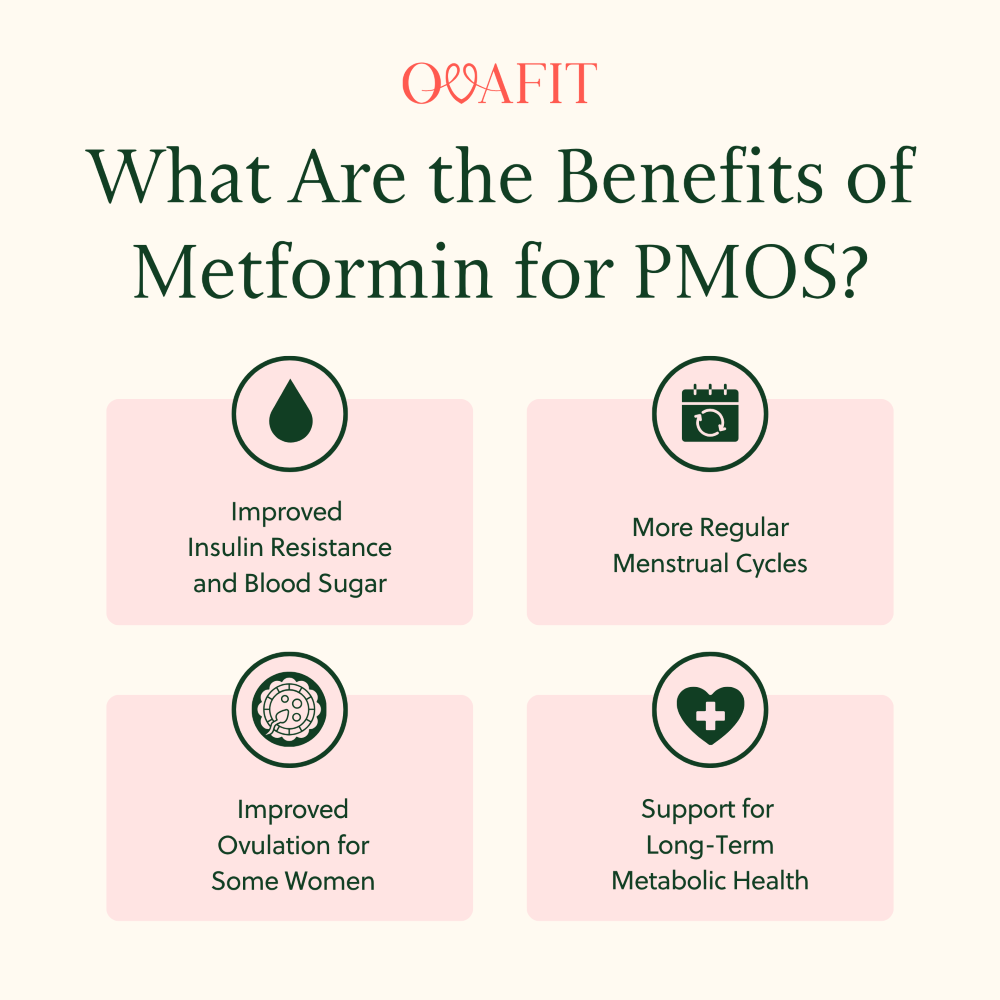
The honest framing here is “may,” not “will.” Metformin is commonly prescribed to women with PMOS, particularly when insulin resistance or elevated blood sugar is a concern. However, responses vary, and medication doesn’t necessarily address every factor that may be contributing to symptoms. Here’s what research suggests metformin may help with:
Improved Insulin Resistance and Blood Sugar
Metformin’s primary effect is metabolic. It triggers AMPK, the enzyme that stops gluconeogenesis (glucose production), helping the cells respond to insulin. More specifically, studies show that it can help reduce the amount of glucose released by the liver while improving the body’s response to insulin. For women with insulin-resistant PMOS, this may help lower circulating insulin and improve blood sugar regulation.
More Regular Menstrual Cycles
Because high insulin levels can contribute to elevated androgens and irregular menstruation, improving insulin sensitivity may indirectly support more regular cycles. Why? Because when your androgen levels come down, the hormonal signals involved in ovulation may become more balanced, giving the ovaries a chance to release an egg regularly. In turn, this may support a more regular menstrual cycle.
This doesn’t happen for everyone, and any hormonal changes generally take time. Learn more by reading my guide, “Types of Abnormal Menstruation Common with PMOS Explained.”
Improved Ovulation for Some Women
Research also suggests metformin may improve ovulation in some women with PMOS. However, that doesn’t mean it’s necessary, or the proper approach, for every woman experiencing irregular ovulation. If you’re trying to conceive, your individual hormones, metabolic health, and overall fertility picture all matter.
Most importantly, always talk with your healthcare provider about ovulation and trying to conceive. They know your history more intimately and are more equipped to give you personalized advice.
Support for Long-Term Metabolic Health
As insulin levels improve, some women may notice changes in symptoms connected to insulin resistance, such as blood sugar swings or intense cravings. Lower insulin may also help reduce excess androgen production, which could gradually influence symptoms over-time.
Here’s what’s important to understand: metformin isn’t considered a weight-loss medication, although some women do experience changes while taking it. Results vary significantly, and medication alone shouldn’t replace nutrition, movement, stress management, sleep, and other lifestyle habits that support metabolic and hormone health.
For additional support while taking this medication, read my guides like “How to Reduce Bloating From Metformin” and “Foods to Avoid While Taking Metformin.”
How Can Metformin Help Manage PMOS Symptoms?
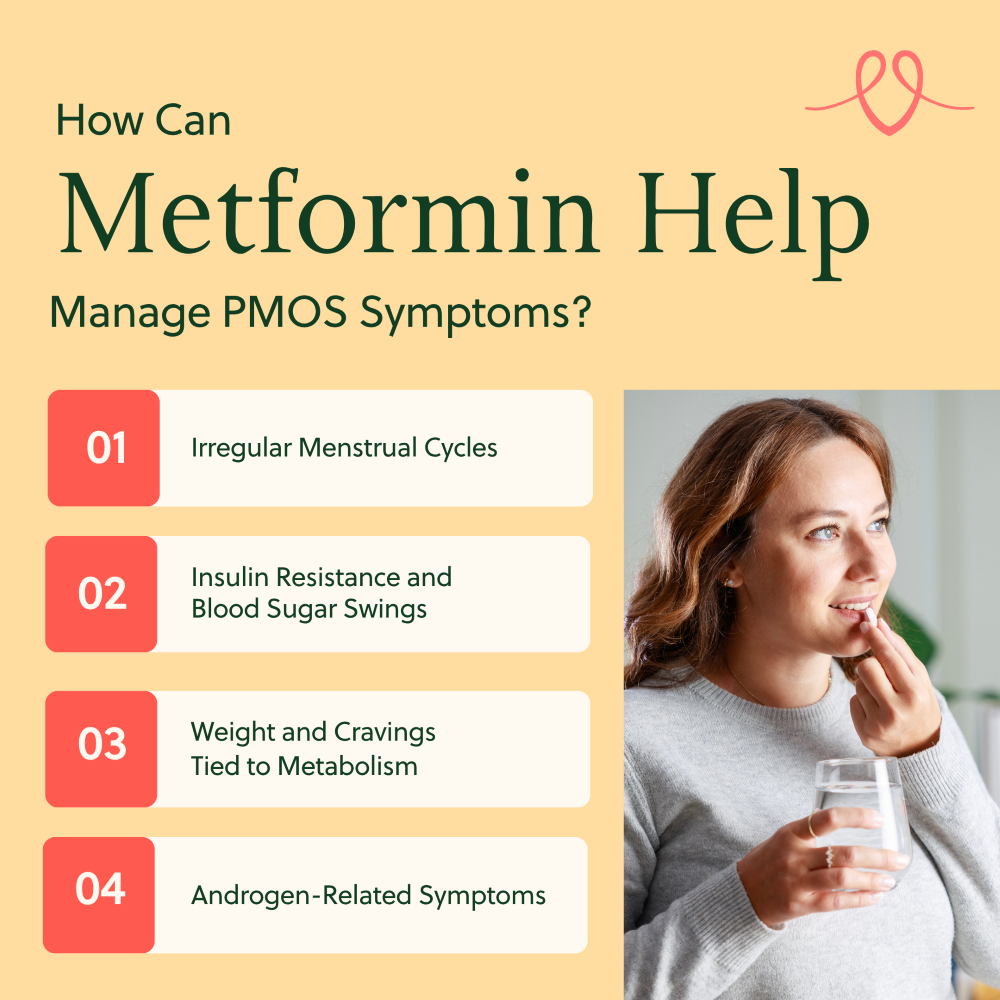
Metformin isn’t designed to address every PMOS symptom directly. Instead, most of its potential effects come back to one thing: insulin sensitivity. When high insulin is contributing to other hormonal imbalances, lowering it may have a ripple effect on certain symptoms. This can include…
Irregular Menstrual Cycles
As I discussed above, high insulin can contribute to elevated androgen levels, which can interfere with regular ovulation and menstruation. By improving insulin sensitivity, metformin may indirectly help some women experience more predictable cycles. Consider it a support, not a complete fix. When getting off the medication, it’s not uncommon for women to experience irregularities again.
If this sounds discouraging, trust me, I get it! But know this: there are ways you can help get your cycle on track, which I’ll discuss more about below. For now, make sure to check out “Can You Have Normal Periods with PMOS? The Surprising Truth.”
Insulin Resistance and Blood Sugar Swings
This is where metformin has its most direct effect. By reducing glucose production in the liver and improving insulin sensitivity, it may help stabilize blood sugar levels. For some women, that may also mean fewer of the energy crashes, intense hunger spikes, and carb cravings that can accompany insulin resistance.
Beyond this, though, your diet can have a considerable impact on both how you feel and how your symptoms affect you. (Don’t worry, I’d never tell you to crash diet, cut out the things you love, or count calories.) Instead, I’ll talk more about how a gluten- and dairy-free anti-inflammatory diet can help manage symptoms below.
Weight and Cravings Tied to Metabolism
Insulin resistance can make weight management more challenging while also contributing to persistent cravings. While metformin isn’t a weight-loss medication, some women do experience modest changes in weight while taking it. However, results vary, and medication doesn’t replace lifestyle changes that help address insulin resistance at its root.
Androgen-Related Symptoms
Because elevated insulin can stimulate excess androgen production, lowering insulin may also reduce androgen levels in some women. Over this, this could lead to improvements in high androgen-related symptoms, such as acne, unwanted face or body hair growth (hirsutism), oily skin, and scalp hair thinning.
Remember: metformin is only one piece of a much larger PMOS picture. Understanding why you’re experiencing insulin resistance, irregular cycles, cravings, or other symptoms can help you make more informed decisions about your long-term approach.
What to Know Before Taking Metformin for PMOS
Metformin is a prescription, so the most important step is a real conversation with your healthcare provider. Here’s what I’d bring to that appointment:
- Your blood tests. Ask about fasting insulin, blood glucose, and HbA1c so you and your doctor can see your starting point and track progress.
- Side effects. GI symptoms (nausea, bloating, loose stools) are the most common, especially early on. Ask whether an extended-release version or taking it with food might help.
- Your goals. Fertility, cycle regularity, and metabolic health can point to different plans, so be clear about what matters most to you.
- Your current medications. Never stop or change birth control, metformin, or any prescribed treatment on your own. Bring your full list.
- Fertility and pregnancy plans. If you’re trying to conceive or could become pregnant, flag it, because this affects dosing and monitoring decisions your doctor needs to make.
- Your long-term picture. Ask how long you might stay on it and how you’ll monitor progress over time.
Think of it this way: metformin isn’t a cure for PMOS; it’s a tool your doctor prescribes and oversees. It also doesn’t address the root of your issues. When reversing or managing PMOS, it’s important to look at what’s driving your symptoms… and to come up with a plan to effectively address them long-term.
What Are Alternatives to Metformin for PMOS?
Maybe metformin isn’t right for you, maybe you don’t tolerate it, or maybe you want to layer natural support alongside it. And, if you want my honest opinion as a Registered Dietitian and women with PMOS myself, I do believe there are more supportive ways to manage PMOS. (Ones that don’t require an exit plan, a lengthy list of side effects, or the return of symptoms months later!)
That said, I support every woman’s ability to choose what works best for her and makes her feel like herself again. To allow you to consider all of your options, here are natural alternatives to metformin worth discussing with your provider:
Inositol in the 40:1 Ratio
Inositol, a naturally occurring carbohydrate, is one of my favorite supplements for women with PMOS, particularly when insulin resistance is part of the picture. Myo-inositol and D-chiro-inositol both play roles in insulin signaling, and research has paid particular attention to using them together in a 40:1 ratio. And for good reason! This closely mirrors the natural balance found in ovarian tissue.
Some studies have even compared inositol 40:1 directly with metformin, with promising results for insulin sensitivity, hormone levels, and menstrual regularity. Think of it as restoring metabolic and reproductive issues from the inside out.
That’s exactly why I formulated Inositol Complete 40:1, with a 40:1 ratio of, you guessed it, myo-inositol and D-chiro-inositol. It’s designed to balance hormone and androgen levels, support menstrual cycle regularity, and help manage insulin resistance. Using a clinically-studied formula, manufactured in FDA-registered facilities, and formulated by an RD with PMOS, Inositol 40:1 can be an effective addition to your PMOS management routine.
Berberine
Berberine, also referred to as the natural GLP-1 booster, is another supplement that’s gained attention for its potential metabolic benefits. Research suggests it may support insulin sensitivity, blood sugar levels, lipid metabolism, and other metabolic markers in women with PMOS.
Some studies have also compared berberine with metformin and found similar improvements in metabolic measures. Berberine, a natural plant compound found in herbs like goldenseal and Oregon grape, also targets the same thing metformin does: insulin sensitivity. Through various studies, many of which we discuss in our guide on berberine and PMOS, researchers have demonstrated that berberine can…
- Manage insulin resistance
- Help lower androgens
- Assist in weight management
- Potentially improve gut health
- Support ovulation
Our Berberine Advanced is designed to provide additional nutritional support for healthy insulin sensitivity and metabolism. Using Berberine Phytosome™, this patented form is 10x more bioavailable, helping you see results faster. Of course, if you’re currently taking medication or trying to conceive, talk with a healthcare provider before adding berberine to your routine.
Diet and Lifestyle
Supplements aside, don’t underestimate the impact of what you do every day. Nutrition, movement, sleep, and stress management can all influence insulin sensitivity, inflammation, and hormone health. I personally recommend exploring a gluten-free and dairy-free diet, focusing on balanced meals that can support steady blood sugar.
Alongside this, consistent, low-impact movement can be equally beneficial. Think: walks, Pilates, yoga, or low-weight lifting. These types of exercises don’t raise cortisol (the stress hormone!), supporting sustainable weight management without overworking the body.
These are the kinds of habits we focus on inside The Cysterhood app, where I walk you through building a PMOS-friendly lifestyle step by step. You can receive access to hundreds of PMOS-friendly recipes and workouts, as well as live coaching, a habit tracker, and meal planning. Consider it your PMOS Dietitian on demand.
Support your PMOS journey by learning more about what’s driving your symptoms.
Metformin can be a genuinely helpful tool for insulin resistance, blood sugar, cycles, and long term metabolic health, and whether it’s right for you is a conversation for you and your doctor. What I want you to walk away with is this: your symptoms have a mechanism, that mechanism usually traces back to insulin, and you have options. Consistency over perfection is what changes things, and metformin certainly isn’t your only option.
If you’re looking for natural support alongside (or instead of) medication, Ovafit’s Inositol Complete 40:1 is formulated in the research-backed 40:1 ratio to support healthy insulin sensitivity and hormone balance, and Berberine Advanced is there for insulin support too. Whatever you choose, know that your body isn’t broken, it just works differently, and you can absolutely learn to work with it.
Not sure which type of PMOS you have yet? Take my free PMOS quiz to find out. It’s a great starting point for building a supplement routine that’s actually right for your body.
You’ve got this,
Tallene, RD
This article is for educational purposes only and is not medical advice. Always talk to your healthcare provider before starting, stopping, or changing any medication, supplement, or treatment, especially anything involving medications, fertility, or pregnancy.
These statements have not been evaluated by the Food and Drug Administration. These products are not intended to diagnose, treat, cure, or prevent any disease.