

One of the signs often associated with polycystic ovary syndrome (PCOS) is the presence of cysts on the ovaries. These can show up on an ultrasound as a pattern commonly called a “string of pearls.” They can have a major impact on fertility and reproductive health.
But here’s something important to know: not all ovarian cysts mean you have PCOS. There are several types of cysts that women can develop, even if they don’t have this condition. In fact, research shows that about 7-18% of women will have benign, symptom-free cysts at some point in their lives. However, this raises the same question for a lot of young women: “How do I know if I have a cyst and whether it can affect other parts of my reproductive health?”
In this post, I’m breaking it all down. I’ll talk about ovarian cysts, Pap smears, and whether cysts can cause abnormal test results. Plus, I’ll go over how to recognize the signs of ovarian cysts and when to follow up with your doctor.
Can Ovarian Cysts Cause Abnormal Pap Smears?
Understanding what a Pap smear (or Pap test) is, what it checks for, and how it works is an important part of taking charge of your health. And that’s exactly why you’re here! So many women feel confused by their Pap smear results or aren’t sure what the test looks for. That uncertainty can create unnecessary stress.
Today, we’re going to clear that up together. I’ll walk you through the difference between cervical screenings and the tests used to detect ovarian cysts. By the end, you’ll have a clear understanding of what each test does and the right questions to ask your doctor.
What Is a Pap Smear?
A Pap smear is a simple screening test that collects cells from the cervix to check for abnormal cells. It’s one of the most important preventative tools we have for detecting cervical cancer early, which is when it’s most treatable. Plus, testing cervical cells can identify other potential health concerns before they become serious.
Most women begin receiving Pap smears at age 21, typically every three years, depending on their health history and sexual activity. The physician will perform the test during a routine pelvic exam and send the collected cells to a lab for evaluation.
If you ever receive an abnormal Pap smear result, don’t panic. It doesn’t automatically mean you have cancer. It simply means your doctor will take a closer look and guide you through the next steps to keep your health on track.
What Does a Pap Smear Test For?
When you have a Pap smear done, it checks for several important things related to your cervical health. While the main goal is to detect abnormal cervical cells, it can also identify other issues that may need attention.
A Pap test can detect:
- Precancerous or cancerous cervical cells
- Human papillomavirus (HPV) infection
- Cervical inflammation or certain infections
That’s why staying consistent with Pap tests is so important. Persistent HPV infections can cause a high risk of cervical cancer. Because of this, catching changes early makes a big difference.
Early detection gives you and your doctor the opportunity to monitor your health closely and take action if needed. Think of these screenings as a powerful form of prevention. They help identify potential issues before they become more serious.
Get a head start on symptom relief by reading my post, “Vitamin D and PCOS.” This essential nutrient plays a powerful role in lowering inflammation, supporting your immune system, and improving insulin sensitivity.

Does Pap Smear Detect Ovarian Cyst?
No, Pap smears do not detect ovarian cysts. And don’t worry; that’s completely normal.
Here’s why: ovarian cysts develop on the ovaries, which sit higher up in the pelvis. A Pap smear, on the other hand, collects cells from the cervix. Since the test only looks at cervical cells, it simply can’t show whether cysts are present on the ovaries.
In very rare cases, ovarian cells may appear near the cervix, which could raise additional questions. But this is not a reliable or standard way to detect ovarian cysts.
If your provider suspects a cyst, they’ll usually recommend more accurate tests, like a pelvic exam or an ultrasound. These provide a clearer picture of what’s going on inside your body, making it the best way to get answers and move forward with confidence.
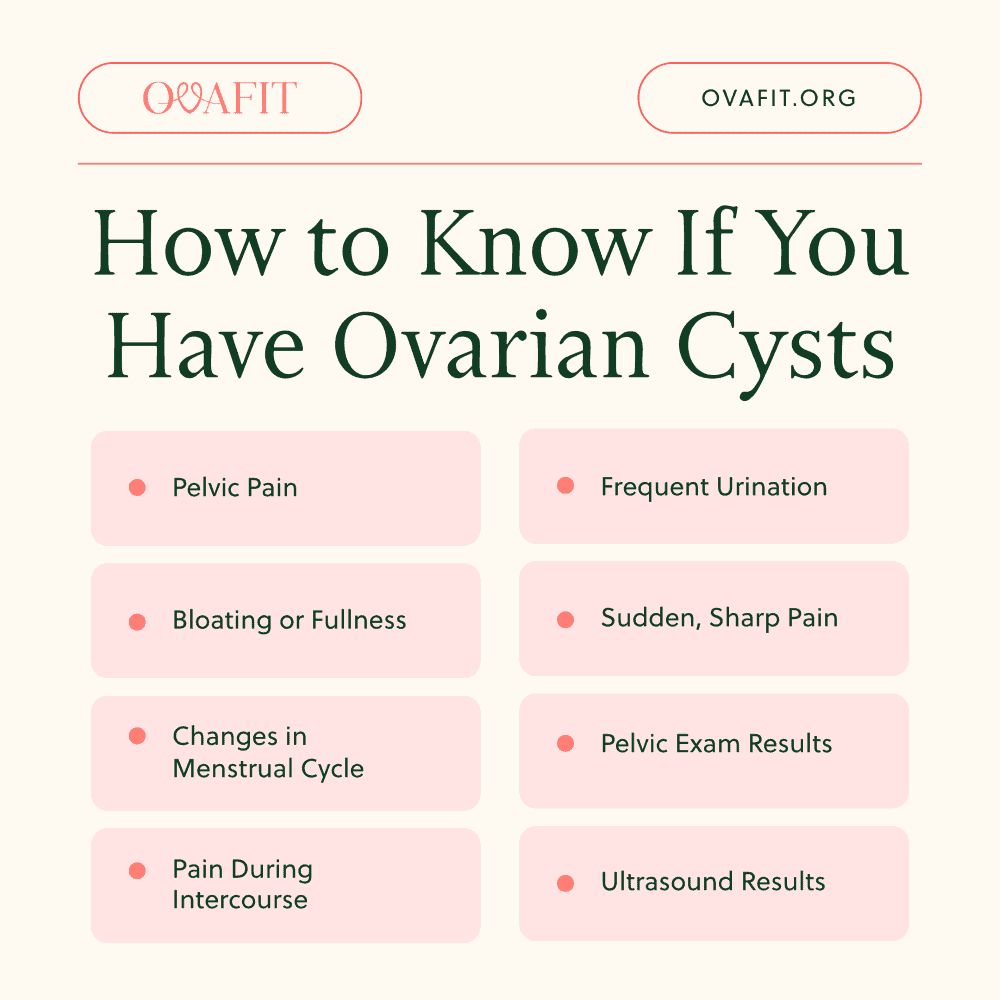
How to Know If You Have Ovarian Cysts
Pelvic Pain
Pain in your abdomen, especially persistent pain on one side, is a common sign of an ovarian cyst. Many women describe this sensation as a dull ache or pressure in the lower abdomen. It may come and go, or it can linger for a while. Additionally, you might notice it at different points in your cycle. But ultimately, it can feel more noticeable around ovulation or during your period.
Bloating or Fullness
When an ovarian cyst grows larger than 5 cm, it can start to create noticeable pressure in the lower abdomen. Many women describe this as feeling bloated, heavy, or unusually full. You might notice that your lower belly feels a bit “puffy.” Or maybe your clothes feel tighter than usual, even if your eating habits haven’t changed.
Now, some bloating during your cycle is completely normal, especially for women with PCOS. But if the bloating feels persistent or different from usual, it could be a sign of an ovarian cyst.
Changes in Menstrual Cycle
Ovarian cysts can definitely affect your menstrual cycle. This is especially true for functional cysts, which can produce hormones and disrupt your body’s normal rhythm. And if you’ve been learning about PCOS and hormone balance, you already know how important that rhythm is.
When hormones get thrown off, your cycle can change in noticeable ways. Women with ovarian cysts may experience:
- Irregular periods
- Heavier-than-usual bleeding
- Spotting or bleeding between periods
- Skipped periods for several months
These changes don’t always mean something serious, but they are signals worth paying attention to. Tracking your cycle and noticing patterns can help you better understand what’s happening with your body.
Pain During Intercourse
During intercourse, an ovarian cyst can sometimes cause deep pelvic pain during penetration. This discomfort may only show up in certain positions, especially when there is direct pressure on the ovary. You’re more likely to feel this type of pain if the cyst is large or sits lower in the pelvis. However, it’s important to note that this can also be present if you also have endometriosis.
And here’s something many women don’t realize: it is possible to have both PCOS and endometriosis at the same time. If you’re not dealing with both endo and PCOS, though, the pain may be a result of a simple, benign ovarian cyst. That’s why listening to your body and speaking with your doctor is so important. Getting clarity on what’s actually happening allows you to create the right treatment plan.
Frequent Urination
If a larger ovarian cyst presses against your bladder, you might use the bathroom more than usual. You may also feel like you can’t fully empty your bladder, even right after you go.
While this might seem like a minor symptom, it’s still an important signal from your body. Paying attention to these small changes can help you catch potential issues early.
Sudden, Sharp Pain
While many ovarian cysts cause a dull ache, some can trigger sharp, sudden pain on one side of the pelvis. This happens if a cyst ruptures or if ovarian torsion occurs, in which the ovary twists and cuts off its own blood supply.
These situations are less common, but they are medical emergencies. Your body is sending you a clear signal that something needs urgent attention. If you experience any of the following symptoms, seek medical care right away:
- Severe, sudden pelvic or abdominal pain
- Nausea or vomiting
- Fainting or feeling dizzy
- Fever
- Pain that keeps getting worse
Taking quick action can protect your reproductive health and prevent serious complications.
Pelvic Exam Results
During a routine pelvic exam, your doctor may be able to suspect the presence of an ovarian cyst. They might feel a sense of fullness or a small mass in the pelvic area. This can be an early clue that a cyst is there.
However, a pelvic exam alone can’t tell you everything. It cannot determine the type, size, or cause of the cyst. That’s why imaging tests are usually the next step.
Ultrasound Results
The most reliable way to confirm the presence of an ovarian cyst is through imaging tests like an ultrasound. This simple, noninvasive test gives your doctor a clear view of your ovaries, so they can see exactly what’s going on. With an ultrasound, you can identify where the cyst is located, how large it is, and what type it may be.
Understanding whether a cyst is functional, nonfunctional, endometriosis-related, or associated with PCOS is incredibly important. It helps guide the next steps and ensures your treatment plan targets the real root cause, not just the symptoms.
Understanding ovarian cysts and their role in PCOS can help you make more informed choices regarding your healing and health.
While regular Pap smears can’t detect ovarian cysts, the good news is that pelvic exams and ultrasounds can! After identifying a cyst, you and your doctor can work together to create a treatment plan that fits your diagnosis. And yes, it really does depend on the type of cyst you have.
But when you begin addressing root causes with lifestyle changes and supportive nutrients, your body can truly heal. And if you’re ready to take the next step, explore Ovafit’s line of PCOS supplements. They’re designed to support hormone balance, reduce inflammation, and help you feel more in control of your health.