Polycystic ovary syndrome (PCOS) and Endometriosis are two of the most common conditions that affect women of reproductive age. About 1 in 10 women live with either PCOS or Endometriosis. And here’s the reality: both conditions are complex, often misunderstood, and can feel incredibly frustrating to navigate.
Because they both affect reproductive health, PCOS and Endometriosis can sometimes be mistaken for each other. They share symptoms like irregular periods, fertility challenges, and pelvic discomfort. But the root causes, and the way you support your body, are very different. That’s why getting the right diagnosis is so important before starting any treatment plan.
But what if you have both at the same time? Is that even possible? That’s what I’m here to talk about today.
I’m going to break down PCOS and Endometriosis for you and explain what each condition is, how you can tell the difference between the two, and explore whether you can have both. Plus, I’ll share natural, effective strategies that can help you actually start feeling better!
Once you understand what your body is telling you, you can finally support it in all the right ways.
Can You Have PCOS and Endometriosis? How to Tell the Difference
Even though PCOS and Endometriosis are very common, they’re still widely misunderstood by both healthcare providers and women themselves. In fact, they’re so misunderstood that people sometimes confuse one for the other.
But here’s the key takeaway: the root causes behind these conditions are very different. (Don’t worry, I’m explaining more soon!) And understanding those differences is essential when you’re trying to support your body and truly heal.
If you want to dive deeper into how to tell them apart, listen to my podcast episode “PCOS vs. Endometriosis: How to Tell the Difference” on A Cyster and Her Mister.
What Is PCOS?
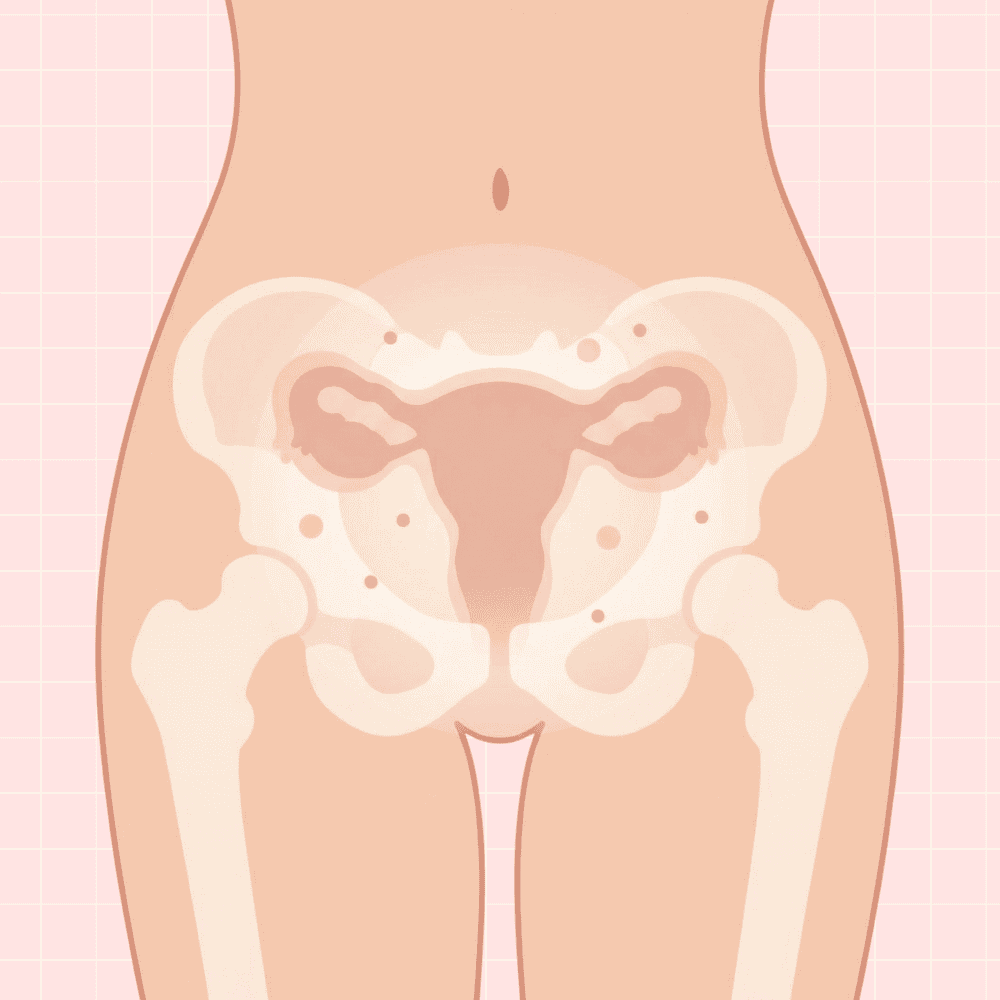
Polycystic ovarian syndrome is a hormonal and metabolic condition that affects how your ovaries function. That’s not all, though; it also affects how your whole body feels day to day. Most women with PCOS are dealing with a few core root issues, including insulin resistance, chronic inflammation, and excessive androgens (male hormones like testosterone).
When those imbalances are present, they can lead to a wide range of PCOS symptoms, including:
- Irregular menstrual cycles
- Infertility
- Polycystic ovaries
- Hair loss
- Excessive hair growth on the face or body
- Fatigue
- Stubborn weight gain
In other words, PCOS doesn’t just affect your reproductive system and ovulation; it can impact your energy, metabolism, mood, and overall well-being.
But once you identify the root driver behind your PCOS, you can build a plan that actually works for your body! Many women, see meaningful improvements through a PCOS-friendly diet, consistent low-impact movement, stress management, and targeted supplements.
Not sure which type of PCOS you might have? Take the quiz to find out and start building your personalized healing journey.
What Is Endometriosis?
Endometriosis is a condition in which cells similar to those lining the uterus or endometrium grow outsideof the uterus. More specifically, that tissue can attach to the ovaries, fallopian tubes, pelvic lining, bladder, bowel, and abdominal walls. Not only can this trigger inflammation and pelvic pain, but in some cases, it may reduce the chances of conceiving.
The most common symptom women diagnosed with Endometriosis notice is very painful periods. Because this tissue acts like the uterine lining, it thickens, breaks down, and bleeds during your cycle. But unlike during a normal period, the blood has nowhere to go. As a result, this can lead to inflammation and nerve irritation.
Other common symptoms include severe menstrual cramps, pain during sex, ongoing pelvic discomfort, and pain with bowel movements or urination. Now, here’s something important to know: there isn’t one single cause of Endometriosis. Most experts believe it develops from a combination of genetic, immune, hormonal, and inflammatory factors.
One theory is retrograde menstruation, in which menstrual blood flows backward through the fallopian tubes and into the pelvic cavity. Another potential contributing factor is elevated estrogen, which can fuel the growth of the endometrial lining.
Overlapping Symptoms of PCOS and Endometriosis
Even though PCOS and Endometriosis are very different conditions, they can share some similar symptoms. And that overlap is one of the main reasons it can be tricky to tell them apart at first.
Below are the frequent symptoms PCOS and Endometriosis have in common and how they may appear differently:
- Irregular Menstrual Cycles: Both conditions can disrupt normal hormone signaling, which can make your periods feel unpredictable. With PCOS, cycles are often skipped or delayed because ovulation doesn’t happen regularly. With Endometriosis, cycles may become irregular due to inflammation and hormone shifts.
- Pelvic Pain: In Endometriosis, the pain is usually more intense and often tied closely to your cycle. With PCOS cramps, pain may be milder and linked to ovarian cysts or hormonal fluctuations.
- Hormonal Imbalances: Hormones are at the center of both conditions. PCOS is commonly associated with higher androgens, while Endometriosis is more strongly influenced by estrogen and inflammation.
- Fertility Challenges: Both conditions can make getting pregnant more difficult, but for different reasons. PCOS can interfere with ovulation, while Endometriosis can affect the pelvic environment, fallopian tubes, or implantation.
- Fatigue: Chronic inflammation, pain, disrupted sleep, and ongoing hormonal stress can leave you feeling exhausted. Many women with either condition report feeling drained, even when they’re getting enough rest.
Similar symptoms don’t always mean the same condition. Understanding the root cause of what you’re experiencing is what helps you choose the right path forward. And, ultimately, this can help you finally achieve real relief.
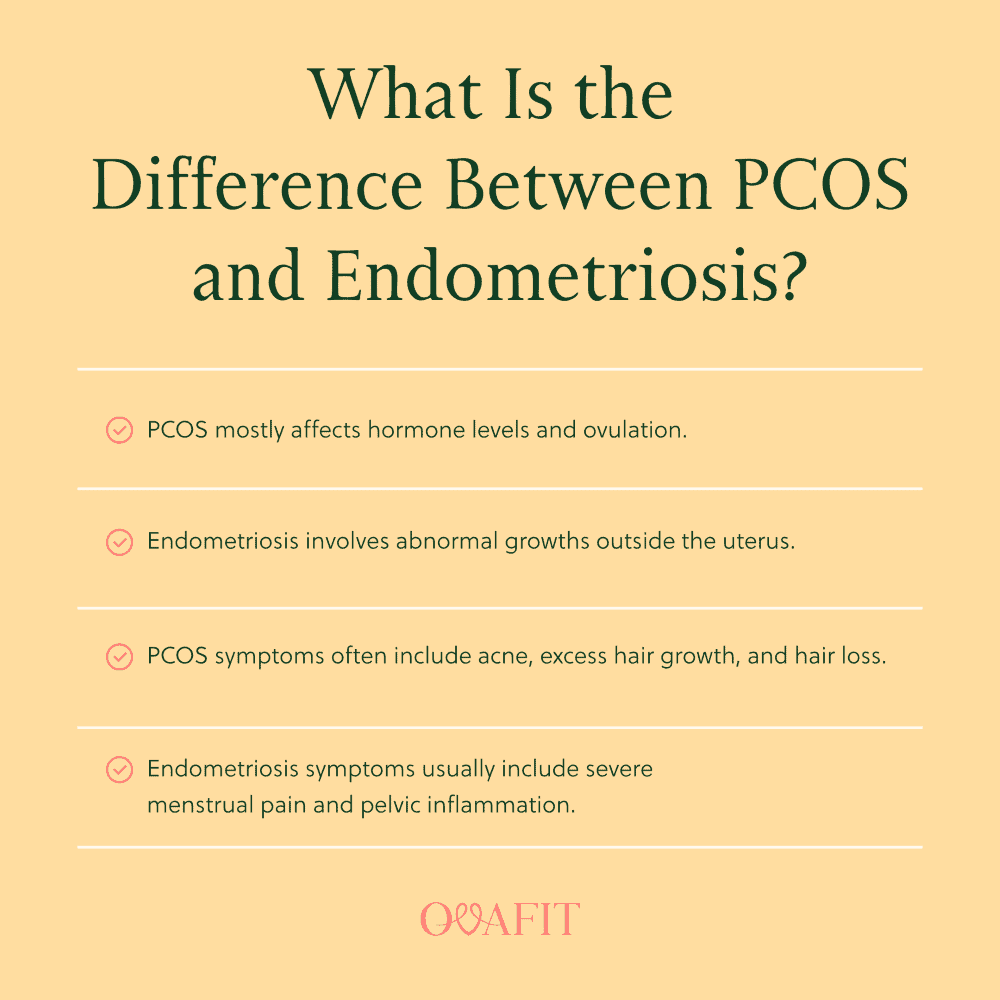
What Is the Difference Between PCOS and Endometriosis?
PCOS mostly affects hormone levels and ovulation.
The root of PCOS comes down to hormonal imbalances that interfere with ovulation. Two of the biggest drivers are high insulin and elevated androgen levels. When insulin stays high, it signals the ovaries to produce more androgens. And those excess androgens can make it harder for follicles to mature and release an egg.
When ovulation is delayed or doesn’t happen at all, it creates a domino effect. Hormones fall out of sync, cycles become irregular, and symptoms start to build. That’s why understanding the root behind PCOS is so important in your healing journey.
Endometriosis involves abnormal growths outside the uterus.
The hallmark sign of Endometriosis is the growth of tissue outside the uterus that acts like the uterine lining. This tissue is often fueled by elevated estrogen, which encourages those lesions to grow and become more active.
Because they act like the uterine lining, they thicken and break down during your cycle, just like a period. However, they don’t have a way to exit the body. That’s why the pain can feel especially intense during menstruation.
The only way to confirm the presence of these growths is through medical imaging or diagnostic procedures. That’s why getting the right evaluation is so critical if you’re experiencing persistent pelvic pain or severe periods.
PCOS symptoms often include acne, excess hair growth, and hair loss.
Some of the most noticeable PCOS symptoms don’t actually start in the reproductive system. They show up on your skin and hair. Because of elevated androgens, many women with PCOS experience things like hormonal acne, excess hair growth on the face or body, and hair thinning on the scalp.
And here’s the tricky part… You can have these symptoms and still get a normal period. That’s why PCOS can be so easy to miss. If you’re only looking at your cycle, you might assume everything is normal. But your hormones are trying to tell you otherwise!
Endometriosis symptoms usually include severe menstrual pain and pelvic inflammation.
Because Endometriosis involves tissue growth outside the uterus, one of the major symptoms is severe menstrual pain and pelvic inflammation. Many women describe the pain as sharp, deep, or stabbing in the pelvis. It can even radiate into the lower back, hips, or legs, making daily activities much more difficult.
And here’s something important to know: the pain isn’t always limited to your period. For some women, it can become chronic, showing up on many days throughout their cycle. It’s often more noticeable during sex and bowel movements or right before your period.
Now, while women with PCOS can also experience abdominal pain, usually related to ovarian cysts or hormone fluctuations, it tends to be milder. It’s also more occasional compared to persistent, intense pain seen with Endometriosis.
Can You Have Endometriosis and PCOS at the Same Time?
Yes, it is possible to have both Endometriosis and PCOS at the same time. Even though these two conditions are very different, research shows that about 1 in 20 women may be living with both. And because many symptoms overlap, diagnosing the conditions can feel even more difficult. That often means treatment gets delayed, which can feel incredibly frustrating.
But the good news? Once you understand what’s really going on in your body, you can create a much more effective healing plan.
If you want to dive deeper into these conditions, listen to my podcast “Is It PCOS, Endometriosis, or Both?”
How to Get Tested for PCOS and Endometriosis
Symptom Review
The very first thing your medical provider will look at is your symptoms. This is your opportunity to share everything you’ve been noticing in your body. That can include irregular periods, abdominal or pelvic pain, unexplained weight gain, fatigue, unusual hair growth or hair loss, or persistent acne. All of these clues matter.
Once your doctor reviews your symptoms, they can start connecting the dots and decide which tests will give the clearest picture of what’s going on. And remember, the more detailed you are, the easier it is to get the answers and support your body needs.
Blood Tests
Blood tests are a powerful tool for looking at your hormone levels and inflammation markers when evaluating PCOS and Endometriosis.
Now, one important thing to remember: a single blood test can’t diagnose either condition on its own. But it can provide valuable clues about what’s happening inside your body, helping your provider see the bigger picture.
Ultrasounds
Ultrasounds are another key tool for proper diagnosis. They can help identify polycystic ovaries or endometrial growths, which are important visual clues for these conditions. Seeing what’s happening inside the body gives your provider a clearer understanding of what might be driving your symptoms.
Laparoscopy
In some cases, women who are suspected of having Endometriosis may need a procedure called a laparoscopy. This is a minimally invasive procedure where a small camera is inserted into the pelvic area, allowing your doctor to look for tissue growth. It allows them to see what imaging tests sometimes can’t.
Because of this, laparoscopy is considered the gold standard for diagnosing Endometriosis. It provides the clearest confirmation and helps you create the most accurate treatment plan.
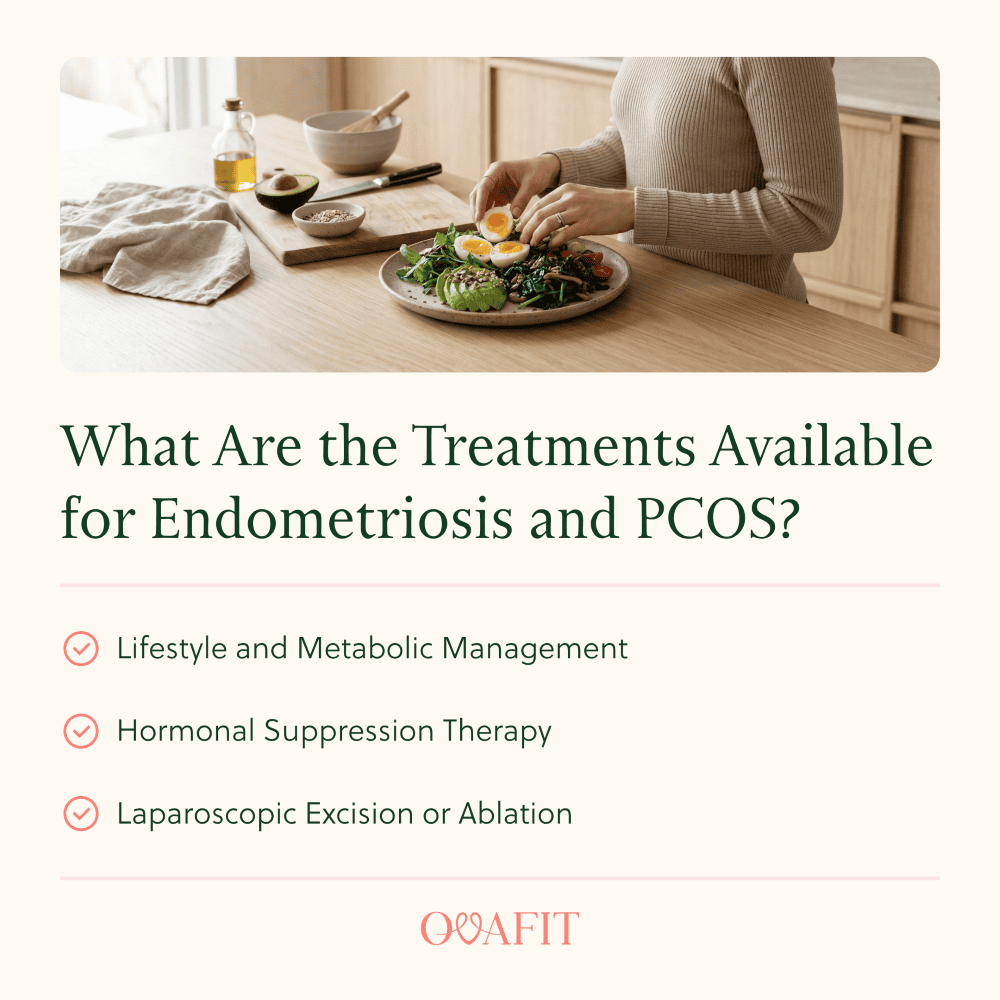
What Are the Treatments Available for Endometriosis and PCOS?
Lifestyle and Metabolic Management
One of the most powerful ways to reserve PCOS and Endometriosis discomfort is to focus on the basics. I always recommend a gluten- and dairy-free anti-inflammatory diet and consistent low-impact movement.
These simple lifestyle habits can make a big difference! They help support your metabolic health, balance your hormones, lower inflammation, and help you feel more like yourself again.
And the best part is that you don’t have to do it all on your own. If you’re not sure where to start, join The Cysterhood app. You’ll find hundreds of PCOS-friendly recipes and workouts, plus easy-to-use tools to plan your meals and exercises. This helps staying consistent feel doable rather than overwhelming.
Hormonal Suppression Therapy
For Endometriosis, hormonal suppression therapy is one treatment option that can help slow the growth of endometrial tissue. It works by lowering estrogen levels or preventing ovulation. When you do this, it can help shrink lesions, reduce inflammation, and ease pelvic pain.
Some of the most common hormonal suppression therapies include:
- Birth control pills
- Progestin therapy
- GnRH agonists or antagonists
By suppressing ovulation and reducing menstrual bleeding, these treatments can limit the effect of estrogen and relieve painful symptoms. However, many women also find additional relief when medical treatment is paired with supportive lifestyle habits. Think anti-inflammatory diet, stress management, and gentle movement to help calm inflammation and support overall hormone balance.
Laparoscopic Excision or Ablation
In some cases of Endometriosis, doctors may recommend surgery to remove or destroy excess tissue growth. This is usually done through a minimally invasive procedure and performed on an outpatient basis.
After surgery, many women experience meaningful improvements, like reduced pelvic pain, slower disease progression, and improved fertility outcomes. But there’s something important to keep in mind: Endometriosis can return over time.
That’s why pairing surgery with supportive treatments and lifestyle habits can make a big difference. By pairing medical care with daily habits that lower inflammation and balance hormones, you give your body the best chance to heal.
Reverse your PCOS Symptoms naturally with Ovafit and The Cysterhood.
When it comes to figuring out what’s happening with your reproductive health, it’s completely normal to feel a little confused. Symptoms can overlap, and conditions like PCOS and Endometriosis are complex and still not fully understood.
But the more you educate yourself, the better you can advocate for your body and have confident, informed conversations with your doctor. And once you have a diagnosis, you can finally build a treatment plan that truly works. That’s exactly where Ovafit and The Cysterhood come in.
We’re here to support you every step of the way with lifestyle strategies that help balance hormones, reduce inflammation, manage stress, and help you feel your best again. And with our line of targeted supplements, you can give your body the extra support it needs to reverse PCOS.