
If your mom, sister, aunt, or grandmother has polycystic ovary syndrome (PCOS), now referred to as polyendocrine metabolic ovarian syndrome (PMOS), you probably know all the hallmark symptoms; Irregular menstrual cycles, stubborn weight gain, unwanted hair growth, random fatigue, constant sugar cravings… But maybe you started experiencing them yourself, leading you to ask: is there ANY way that PCOS (PMOS) could be genetic?
In short, maybe. In recent years, researchers have found that PMOS does have a strong genetic component alongside genetic and environmental factors. But that doesn’t mean this complex condition shows up the same way from person to person. Your sister might struggle with insulin resistance, while your mom deals with hirsutism and weight gain.
I’m Tallene, a Registered Dietitian who has PMOS myself, and I spent years learning the ins and outs of this condition so I can give the Ovafit community the answers we’ve all been asking for far too long. Today’s topic? PMOS (PCOS) and genetics. Here’s what you need to know:
Is PCOS Genetic?
PMOS is partly genetic, but it isn’t caused by a single gene mutation. Instead, several different genes can play a role, with each one having a small influence on how likely someone is to develop the condition. But when I say genetics, think less along the lines of inheriting your eye color and more like inheriting a tendency. You essentially get a combination of small genetic nudges that, combined with your environment, shape how your hormones behave.
Twin research helps explain this a little better. Studies that looked at identical and fraternal twins found that genetics may account for about 72% of a person’s risk of developing PMOS. What they also found is that PMOS isn’t caused by a single gene or passed down like other inherited conditions.
In the general sense, PMOS isn’t typically considered a condition you’re born with, even though you can be born with genetic traits that increase your risk of developing it later in life. This is actually something I wrote about before in my post about whether you can develop PCOS later in life. While we don’t have all the answers yet, research is putting us on the path of learning, understanding, and discovering more.
How Is PCOS Passed Down?
So if there’s no single “PMOS gene,” how is the condition passed down? Well, you inherit a collection of gene variants, each one influencing a different part of how your hormones and metabolism work.
Genome-wide association studies have identified around 30 loci linked to PMOS, including genes involved in hormone production, ovulation, and how your body processes blood sugar. Several of those genes connect directly to insulin, which may help explain why insulin resistance is so common in women with PMOS. Researchers have also found genetic connections to inflammation and the way your body responds to certain hormones.
And here’s something interesting: these genetic patterns aren’t limited to just the women in your family! Research has found that men with a close female relative who has PMOS are also more likely to experience metabolic health issues.
In other words, your dad’s or brother’s metabolic health history may be just as relevant as your mom’s, sisters’, or daughters’. Having a close female relative with PMOS can increase your own likelihood of developing the condition.
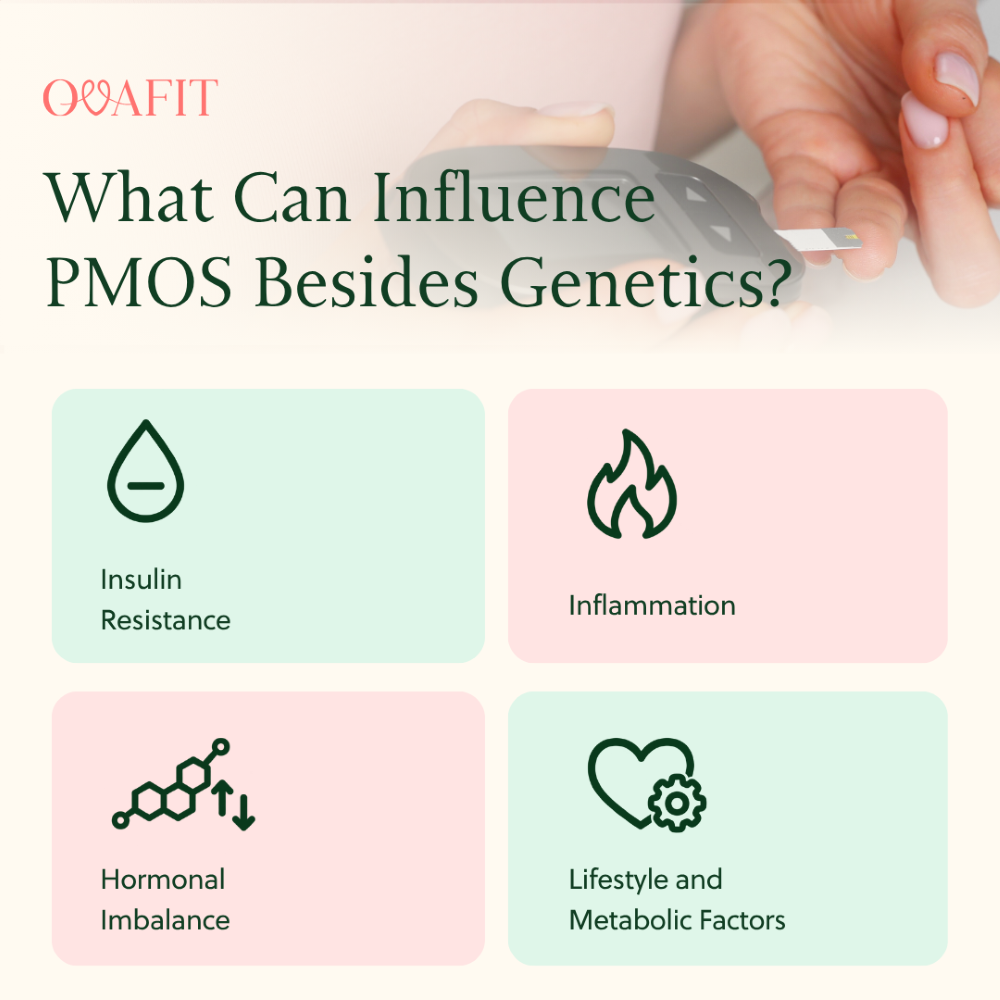
What Causes PCOS Besides Genetics?
We can’t point the finger at just genes, here. They work with several other factors, some of which include:
- Insulin resistance. Insulin resistance is common with PMOS, and when your body produces extra insulin to compensate, it may also trigger your ovaries or adrenal glands to produce more androgens (male-type hormones).
- Hormonal imbalance. Elevated androgens (male-pattern hormones) and disrupted signaling between your brain and ovaries drive many of the symptoms you experience.
- Inflammation. Chronic, low-grade Inflammation is common with PMOS and can make insulin resistance worse. Excess body fat can also contribute to inflammation, which may make PMOS symptoms harder to manage.
- Lifestyle and metabolic factors. Things like activity level, sleep, stress, and nutrition all interact with your genetic tendency and can influence how strongly symptoms show up.
This is where nutrition can really make a difference alongside other habits. If you’ve been following me for a while, you know I encourage a gluten- and dairy-free diet, because both can be inflammatory triggers for some women. And as I explained above, lowering inflammation supports more stable hormone levels. Combined with movement, sleep, and stress management, it’s one meaningful way to address your symptoms at the root.
Is PCOS Inherited from Mother or Father?
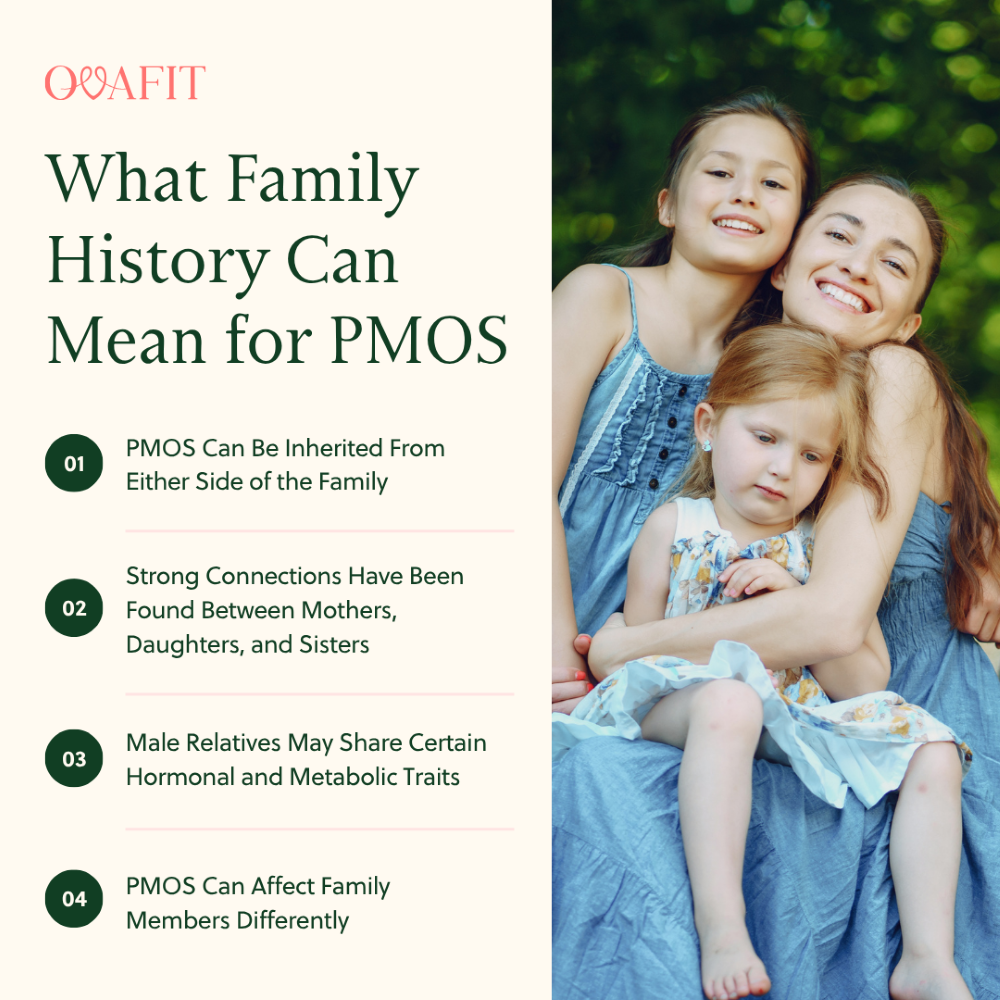
This is one of the most common questions I get, and the answer is that PMOS can be inherited from either side of your family. That said, research has found particularly strong connections between mothers, daughters, and sisters.
Some studies have found that as many as 35% of mothers and 40% of sisters of people with PCOS (PMOS) also have the condition. Researchers have even estimated that up to 70% of daughters of women with the condition may develop it themselves, although the specific percentage varies between studies.
But don’t overlook your dad’s side of the family! Even though men can’t develop PMOS in the same way women do, they can still inherit some of the genes associated with it. In fact, researchers have found that male relatives of women with PCOS (PMOS) may share certain hormonal and metabolic traits.
One family study even found a possible connection between PCOS and early male pattern baldness in male relatives. Researchers suggested that the two traits might share an inherited genetic component, although that doesn’t mean having a father or brother with early hair loss automatically puts you at risk for PMOS.
And remember: just because PMOS runs in families doesn’t mean everyone will experience it the same way. You and your sister might share the same genes but still experience PMOS totally differently.
What Are the Risk Factors for PCOS?
We’ve talked about how genetics can increase your chances of developing PMOS, but family history isn’t the only thing worth paying attention to. There are also certain health or lifestyle factors that can affect your metabolic health or make existing PMOS symptoms more noticeable, including:
- Family history of PMOS. As I discussed in the research above, a mother or sister with PMOS increases your risk for developing the condition.
- Insulin resistance or type 2 diabetes. Insulin resistance is common among people with PMOS, and the condition shares some genetic and metabolic connections with type 2 diabetes. A family history of blood sugar problems may be worth discussing with your doctor.
- Weight fluctuations. Weight gain can make insulin resistance and certain PMOS symptoms more difficult to manage. However, the condition also affects women at lower body weights, too.
- A history of hormonal imbalance. Persistent acne, excess facial or body hair, and irregular periods can all be signs of elevated androgen levels. These are often symptoms rather than risk factors, but they’re important to recognize.
- Sedentary lifestyle factors. Low activity can worsen insulin resistance, one of the key drivers connecting your genes to your symptoms.
It’s also important to understand why managing these symptoms matters. People with PMOS have an increased risk of developing certain long-term health conditions, like type 2 diabetes and high blood pressure. Research has also linked PMOS to a higher prevalence of fatty liver disease and endometrial cancer.
This is why I talk so much about supporting healthy glucose levels and menstrual cycle regularity. Both are important parts of managing PMOS, along with getting the medical care that’s right for you.
Can You Prevent PCOS If It Runs in Your Family?
You can’t fully prevent PMOS when there’s a genetic component, since you can’t change the genes you inherited. There is also currently no cure for PMOS. But lifestyle changes, supplements, and intentional habits can make a difference in how your symptoms show up.
For a complete routine that covers insulin, cravings, cycles, and metabolism together, my Daily Ritual Bundle brings the core formulas into one simple daily system. And if you’d rather start with understanding your pattern first, the What’s Your PMOS Type? quiz is a great first step. Of course, don’t forget to download the Cysterhood App for support every step of the way.
You can’t rewrite your genes, but you have real influence over how PMOS plays out in your life. That’s the part no one told me when I was diagnosed, and it’s the part I most want you to carry with you.
You’ve got this,
Tallene, RD
—
Medical disclaimer: This content is for educational purposes only and is not medical advice. It is not intended to diagnose, treat, cure, or prevent any disease. Always talk with your doctor or a qualified healthcare provider about your individual health, any symptoms, medications, fertility plans, or before starting a new supplement.
These statements have not been evaluated by the Food and Drug Administration. This product is not intended to diagnose, treat, cure, or prevent any disease.