
If you’ve been researching supplements for polycystic ovary syndrome (PCOS), now called polyendocrine metabolic ovarian syndrome (PMOS), you already know that picking an inositol supplement can be confusing. One bottle promises hormone balance, another shouts about a special ratio, a third barely tells you what’s inside. And when you’re dealing with irregular cycles, cravings, and lab results nobody explains, that noise is exhausting.
I’m Tallene, a Registered Dietitian with a Master’s in nutrition, and I have PMOS myself. I spent years recommending supplements to the women I work with before I formulated my own, because I couldn’t find inositol products made for PMOS bodies at the right doses and ratios. So when I talk about how to pick the best inositol supplement for PMOS, it’s coming from both the clinical side and the lived-in side.
The difference between inositol products isn’t marketing, it’s chemistry. The form, the dose, and especially the myo-inositol to D-chiro-inositol ratio can change what the supplement actually does in your body.
In this post, I’ll walk you through what inositol is and how it relates to compounds your body already makes. I’ll cover the types of inositol, what the research says it may do for PMOS, and whether it works. Then I’ll show you exactly what to evaluate when you compare brands, so you can decide what fits your goals.
4 Best Inositol Supplement for PMOS (And How to Choose One)
Before we get into specific products, let’s talk about what actually separates different inositol supplements from each other. The best option for you depends on your health goals, the ingredients and formulation, and guidance from your healthcare provider. But there are a few non-negotiables I’d look at every time.
Start with the two forms inside the bottle: myo-inositol and D-chiro-inositol. Both matter, but so does the balance between them. Research has explored combining these two forms in a 40:1 ratio, which reflects their physiological ratio in the body and has become an important point of comparison when evaluating different supplements.
When you’re weighing options, look for:
- Both myo and D-chiro-inositol
- The 40:1 ratio
- Cleary listed amounts so you know exactly how much you’re getting
- Research-backed ingredients and formulations
- Third-party testing for purity and label accuracy
These details make it easier to understand what you’re actually getting and compare products more meaningfully. Inositol is intended to support your overall approach to PMOS management, not serve as a cure, so look for a product that’s transparent about its formulation, dosing, and testing.
What Is Inositol?
Inositol is a naturally occurring sugar alcohol your body already produces and also gets from foods like fruits, beans, and grains. It isn’t a stimulant or a hormone. It’s a compound your cells use behind the scenes, which is exactly why it shows up in so many PMOS conversations.
The two forms that matter most for PMOS are myo-inositol and D-chiro inositol. Both play a role in how your cells respond to insulin. More specifically, myo-inositol helps activate glucose transporters and cells’ response to blood sugar, while D-chiro-inositol prioritizes downstream glycogen synthesis and storage.
When you read about incorporating inositol supplements into a PMOS management routine at a meaningful dose, it’s because researchers suggest they’re involved in insulin signaling and hormonal signaling in the body.
In simple terms: the machinery your cells use to “hear” insulin can get thrown off with PMOS, and inositol is one of the raw materials that machinery relies on.
Types Of Inositol Supplements
Not all inositol supplements are formulated the same way. Here are some of the main options you’ll come across:
- Myo-inositol (MI): Myo-inositol is the most abundant form of inositol in the body and is commonly used on its own in supplements. It’s also one of the most widely studied forms for PMOS.
- D-chiro-inositol (DCI): D-chiro-inositol is another form involved in insulin signaling and is available on its own, although it’s often combined with myo-inositol in PMOS supplements.
- Combined MI + DCI: These supplements provide both forms of inositol in a specific ratio. The 40:1 MI-to-DCI ratio is commonly used in PMOS formulations and has been studied for outcomes such as ovulation and other hormonal and metabolic markers.
- Inositol with folate: Some inositol supplements also include folate or folic acid, particularly in formulas designed with reproductive health and fertility support in mind.
When comparing your options, look beyond the word “inositol” on the label. The forms included, their amounts and ratios, and any additional ingredients can all help you understand how one formula differs from another.
What Do Inositol Supplements Do for PMOS?
Inositol has been studied for several PMOS-related concerns. Here’s where the research points, symptom by symptom:
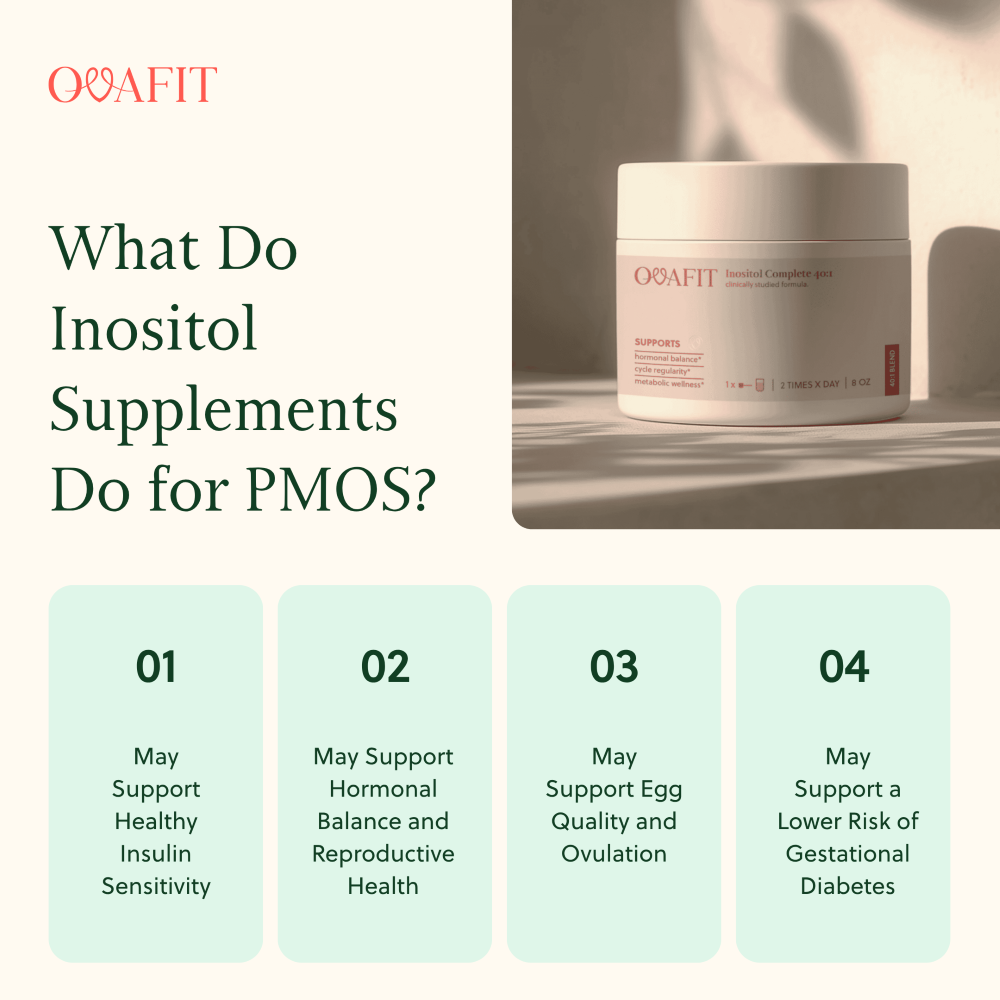
May Support Healthy Insulin Sensitivity
Insulin resistance sits at the center of PMOS for many women. When your cells don’t respond to insulin as effectively, your body may produce more of it, which can contribute to higher androgen levels and other metabolic changes.
In one randomized controlled trial, people with PMOS received MI and DCI in a 40:1 ratio (550 mg MI and 13.8 mg DCI with folic acid, twice daily) or a placebo for 6 months. Researchers observed improvements in several metabolic and hormonal measures in the inositol group.
The takeaway isn’t that inositol “fixes” insulin resistance, but that research suggests it may support insulin sensitivity and glucose metabolism.
May Support Hormonal Balance and Reproductive Health
Because insulin and androgen levels are so closely connected in PMOS, changes in insulin sensitivity may also be reflected in hormonal and reproductive measures. Think: irregular cycles, unwanted facial or body hair growth, acne, or hair thinning on the scalp.
In a 12-week randomized controlled study of 50 women with PMOS, supplementation with 2 g of myo-inositol plus folic acid was associated with changes in several hormonal markers, including LH, prolactin, testosterone, insulin, and improved insulin sensitivity.
These findings help explain why inositol is frequently studied for both metabolic and reproductive aspects of PMOS.
May Support Egg Quality and Ovulation
For women thinking about fertility, inositol has also been studied for its potential role in ovulation and egg quality. A review of 12 studies found that myo-inositol, alone or combined with DCI, was associated with improvements in outcomes including oocyte maturation and certain reproductive and hormonal measures in women with PMOS.
It’s important to know, though, taking inositol doesn’t guarantee ovulation or pregnancy. If you’re trying to conceive or undergoing fertility treatment, talk with your healthcare provider about whether supplementation is appropriate for you. And because I always want to end on a reassuring note, also remember: a PMOS diagnosis doesn’t mean a future without children. (I’m proof of this!)
May Support a Lower Risk of Gestational Diabetes
Researchers have also studied myo-inositol supplementation during pregnancy and preconception in relation to gestational diabetes. Some studies and reviews have reported a lower incidence of gestational diabetes among those taking myo-inositol compared with control groups.
That said, pregnancy isn’t the time to make supplement decisions based on research alone. If you’re pregnant, trying to conceive, or concerned about your risk of GD, talk with your healthcare provider before adding inositol or another supplement to your routine.
Do Inositol Supplements Work for PMOS?
Short answer: the research is genuinely encouraging, and it’s some of the strongest evidence behind any PMOS supplement. But “does it work” depends on more than the supplement itself.
Results can vary based on your health history, how consistent you are, your lifestyle habits, and the specific formulation you choose. A myo-only product at a low dose is a very different thing from a combined 40:1 formula at a studied amount. And inositol works best alongside a supportive routine, which for PMOS, can consist of a gluten- and dairy-free approach, low-impact movement, stress management, and quality sleep. Gluten and dairy in particular tend to drive inflammation and blood sugar swings for many women with PMOS, which I discuss further in my guide to PMOS supplements for weight loss.
Most importantly? Give it time. Hormonal change isn’t overnight. I tell every woman I work with the same thing: it takes 3 months to change the picture of your hormones. Consistency over perfection is what moves the needle.
Not sure where to start or which symptoms to target first? My “What’s Your PMOS Type?” quiz can help you learn more about your condition and the root drivers behind symptoms in just a few minutes. And if you’re reading the benefits, wondering “Can people without PCOS (PMOS) take inositol?”, the answer is generally yes! Of course, though, always consult your doctor before incorporating any supplement into your regimen.
What Are the Best Inositol Supplement Brands for PMOS?
There are plenty of inositol supplements to choose from, and I know comparing labels can get confusing fast. Rather than looking for one universally “best” product, I recommend paying attention to the forms of inositol included, the MI-to-DCI ratio, the daily dose, additional ingredients, and the brand’s testing and manufacturing standards.
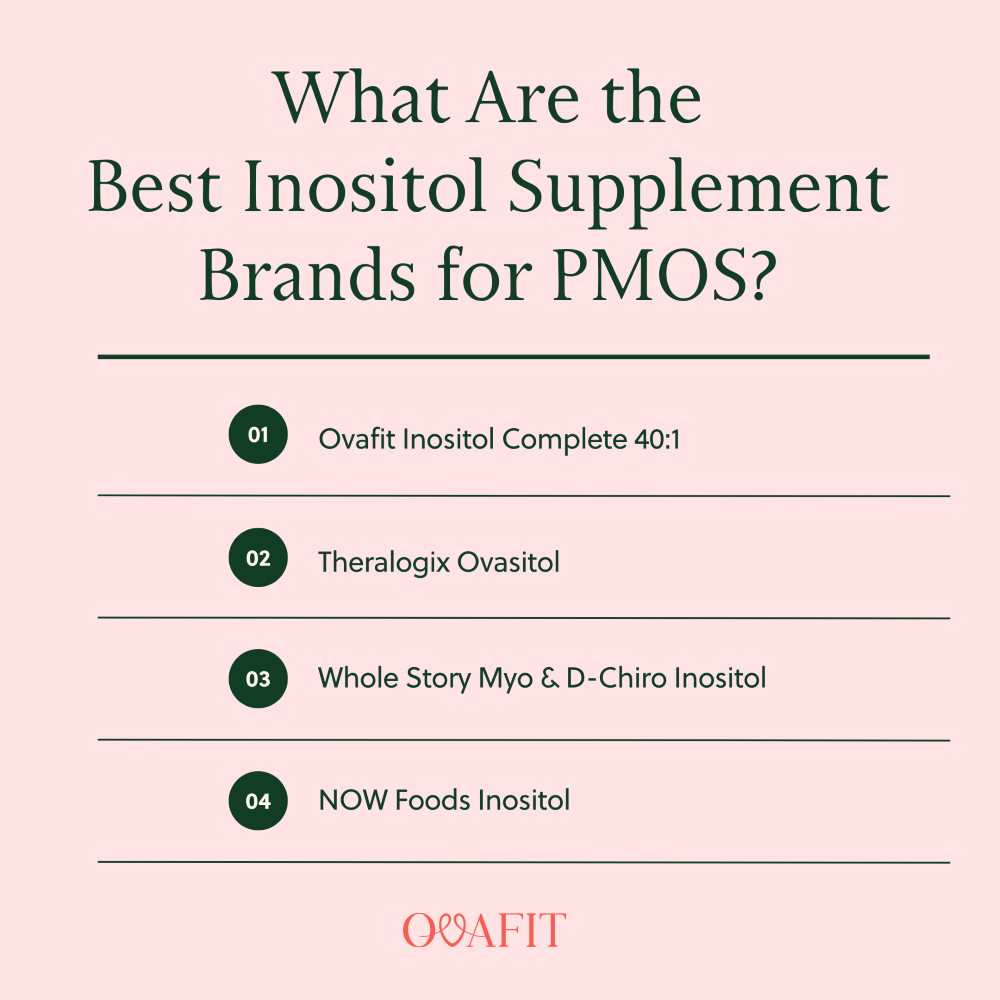
Here are a few of the inositol brands you’re likely to come across and what makes each one different:
Ovafit Inositol Complete 40:1
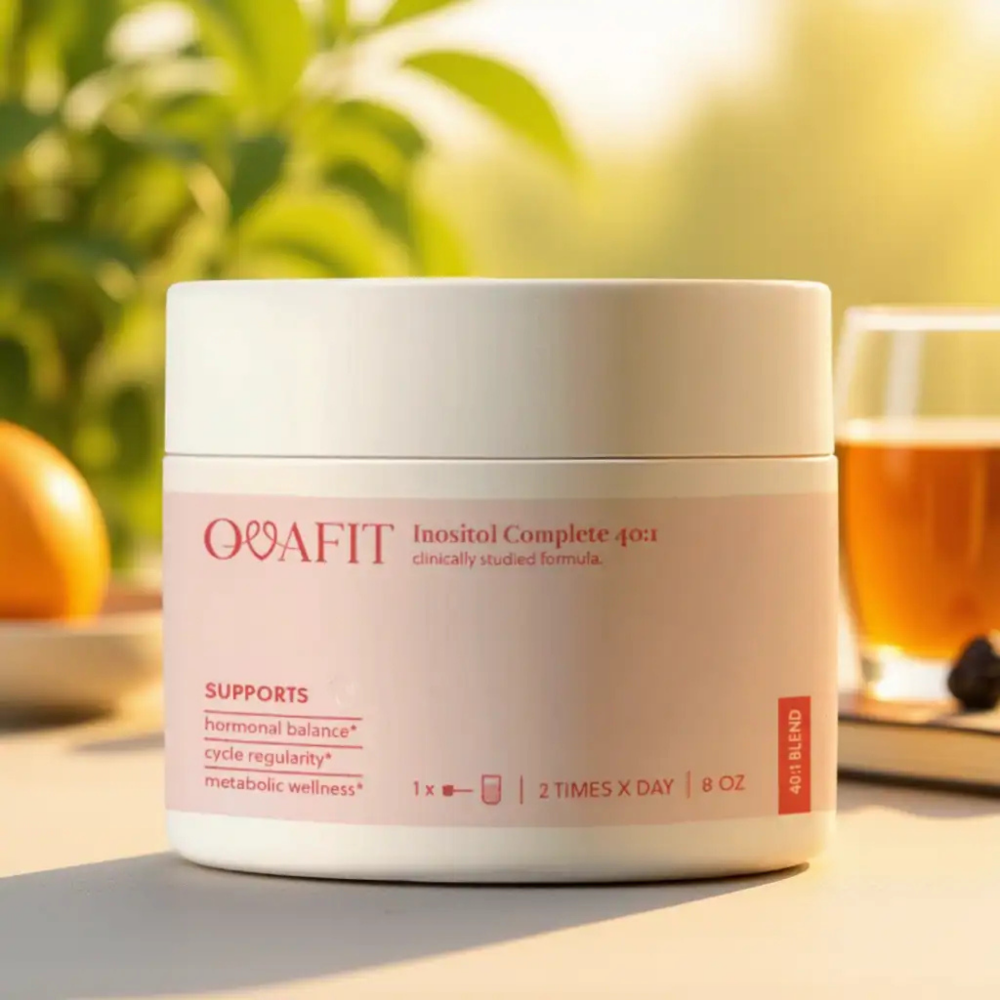
I formulated Inositol Complete 40:1 specifically with women with PMOS in mind. It combines myo-inositol and D-chiro-inositol in the widely studied 40:1 ratio, with 2,000 mg of myo-inositol and 50 mg of D-chiro-inositol per scoop. You take two scoops per day for a total daily dose of 4,000 mg of MI and 100 mg of DCI.
The formula keeps things simple with pure inositols and no added fillers or additives, and every batch is tested for purity and potency. As a registered dietitian who has PMOS myself, I wanted the formula to be straightforward: evidence-informed amounts of both forms of inositol in a powder that’s easy to add to your daily routine.
Theralogix Ovasitol
Ovasitol by Theralogix is another powder supplement that provides both myo-inositol and D-chiro-inositol in a 40:1 ratio. Its full daily serving provides 4,000 mg of myo-inositol and 100 mg of D-chiro-inositol.
Ovasitol is designed as a simple inositol formula without a long list of additional vitamins or nutrients.
Whole Story Myo & D-Chiro Inositol
Whole Story offers myo-inositol and D-chiro-inositol together in a capsulate form. This makes it a different format from powdered inositol supplements and may appeal to women who prefer taking capsules as part of their existing PMOS supplement routine.
The formula uses both forms of inositol, so it’s important to look at the current Supplementation Facts panel for the amount provided in a complete daily serving rather than comparing products based on capsule count alone.
NOW Foods Inositol
NOW Foods takes a different approach with a pure myo-inositol supplement rather than a combined MI and DCI formula. That makes it one example of the myo-only products you may encounter while shopping.
As I mentioned above, a myo-inositol has been studied independently in women with PMOS, so a combination formula isn’t the only type you’ll find. Whether you choose a myo-inositol alone or a combined formula may depend on your goals and your healthcare provider’s recommendations.
The Bottom Line On Choosing an Inositol Supplement For PMOS
When exploring an inositol supplement for PMOS, I look at a few key details: the forms of inositol included, the ratio and daily dose, ingredient transparency, and quality testing. The combination of myo-inositol and D-chiro-inositol has been widely studied in the 40:1 ratio, which is why I formulated our Inositol Complete 40:1 the way I did.
Ultimately, the right supplement depends on your individual needs. Whichever brand you choose, take a close look at the label so you know exactly what forms and amounts you’re getting, and talk with your healthcare provider if you’re unsure about what’s appropriate for you.
And remember: you’re not on this journey alone! For PMOS-friendly recipes, workouts, habit trackers, and one-on-one coaching, download the Cysterhood app. Consider it your personal PMOS management plan in your pocket.
You’ve got this,
Tallene, RD
Medical disclaimer: This post is for educational purposes only and is not medical advice. It is not intended to diagnose, treat, or replace care from your healthcare provider. Always talk with your doctor before starting any supplement, especially if you take medications or are pregnant, trying to conceive, or managing a diagnosis.
These statements have not been evaluated by the Food and Drug Administration. This product is not intended to diagnose, treat, cure, or prevent any disease.