
As a registered dietitian specializing in PCOS (polycystic ovarian syndrome), or what’s now called PMOS (polyendocrine metabolic ovarian syndrome), I get a lot of questions about medications and supplements for insulin resistance and weight management. One that comes up often: “Can you take Ozempic with Berberine together?”
Ozempic has become increasingly popular for weight loss, including among women with PCOS/PMOS. But while it can support blood sugar regulation and weight loss, it doesn’t address every factor that may be contributing to your symptoms. That’s why many women with PMOS are also interested in berberine, a plant compound commonly used to support metabolic health and healthy insulin sensitivity.
So, can you take Ozempic and berberine together? There’s not a one-size-fits-all answer. Because both can affect blood sugar and digestion, adding berberine while taking Ozempic may increase the risk of side effects or other concerns depending on your health conditions, medications, and individual response.
Below, I’m breaking down how Ozempic and berberine work, why I generally prefer a more holistic approach to managing PMOS, and what to discuss with your doctor if you’re considering using them together.
This is general advice, not medical advice. Anyone taking Ozempic or any prescription medication should talk to their prescriber before adding supplements to their routine.
Can You Take Ozempic and Berberine Together if You Have PCOS?
Berberine is an insulin sensitizer, while Ozempic mimics the GLP-1 hormone your body naturally produces after eating. Both can help women with PMOS lose that stubborn belly fat and ease frustrating symptoms. But here’s the thing: lasting relief from PMOS doesn’t come from quick fixes.
Ozempic is more like a temporary patch. Sure, you may lose weight quickly while you’re on it, but the moment you stop, that weight (and the symptoms) can creep right back in. On the other hand, berberine, especially when combined with simple lifestyle changes, can lead to real, long-term healing.
That said, many women consider taking berberine and Ozempic at the same time. And, if that’s you, there are a few important things you need to know first. By understanding how these two work together, you can feel confident and supported before making any decisions.
What Is Ozempic and What Is It Used For?
Ozempic is a semaglutide medication originally developed to help people manage Type 2 diabetes. Lately, though, it’s gained major attention for its use in weight management. That’s because Ozempic can help you feel full faster, reduce cravings, and improve insulin sensitivity. Sounds promising at first, right?
But here’s what most people don’t realize: Ozempic is only FDA-approved to manage blood sugar and lower the risk of heart disease in people with Type 2 diabetes. It’s not officially approved for weight loss or PMOS treatment.
So yes, Ozempic may help with weight loss and blood sugar management, but it’s not without risks or potential side effects, and it isn’t a cure for PCOS/PMOS. That’s why I’m always encouraging women with the condition to explore natural, sustainable ways to support their symptoms alongside any treatment plan recommended by their doctor. For me, the bigger picture is about supporting your metabolic health and building habits that can serve you long-term.
What Is Berberine and What Is It Used For?
Berberine is a natural plant compound most commonly found in plants like European goldenseal, Oregon grape, and tree turmeric. And actually, it can have a handful of positive effects for women with PMOS! From improved insulin sensitivity and lower blood pressure to decreased inflammation and lower androgen levels, berberine tackles many of the frustrating symptoms women experience with PMOS.
Even though berberine is natural, it can still cause side effects, particularly digestive symptoms, and it can interact with prescription medication. That’s especially important to consider if you’re taking diabetes medications or prescriptions that affect blood sugar. Research has also compared berberine with metformin, another medication commonly used to help manage insulin resistance in women with PMOS.
For me, berberine is one tool that can support metabolic health alongside nutrition and lifestyle changes. If you’re looking for a berberine supplement, Ovafit offers Berberine Advanced. This formula uses berberine phytosome, a form designed to improve absorption compared with standard berberine. If you’re already taking Ozempic, make sure to talk to your prescriber before adding berberine to your routine.
Interested in learning more? Check out “Berberine for PCOS.”
How Berberine and Semaglutide Work in the Body
Berberine and semaglutide can both affect blood sugar and metabolic health, but they don’t work in exactly the same way.
Berberine works in part by activating AMP-activated protein kinase (AMPK), an enzyme that helps regulate how your cells use and store energy. Activated protein kinase (AMPK) is involved in glucose and fat metabolism, which may help explain some of berberine’s effects on insulin sensitivity and blood sugar regulation.
Semaglutide works differently. As one of a class of medications called GLP-1 receptor agonists, it mimics the effects of the GLP-1 hormone, helping regulate blood sugar, slow digestion, and reduce appetite.
Because berberine and semaglutide influence different metabolic pathways, taking them together doesn’t necessarily mean you’ll get twice the benefit. Their combined effects on blood sugar and digestion can be difficult to predict, especially when other supplements, diabetes medications, prescription medications, or other health conditions are part of the picture.
This is why adding berberine while taking Ozempic is something to discuss with your doctor rather than experiment with on your own.
Why Berberine Is Called Nature’s Ozempic
You may have heard berberine called “nature’s Ozempic,” especially on social media. The nickname comes from the fact that both berberine and Ozempic have been studied for their effects on blood sugar, insulin sensitivity, metabolic health, and weight. But that doesn’t mean they work the same way or that berberine is simply a natural version of Ozempic.
As we just covered, Ozempic is a GLP-1 receptor agonist, while berberine appears to influence metabolism through pathways that include AMPK. Research suggests that berberine may support blood sugar regulation and modest weight loss, but the evidence and magnitude of effect aren’t the same as we see in semaglutide.
So, while “nature’s Ozempic is a catchy way people describe some of their overlapping metabolic benefits, I prefer to think of berberine as its own tool. For women with PMOS, its potential benefits for insulin sensitivity and metabolic health are valuable on their own without treating it as a one-for-one replacement for a prescription medication.
Can You Take Berberine and Ozempic Together if You Have PCOS?
There isn’t a ton of research or clinical trials done on combining berberine and Ozempic. That means it’s extra important to loop in your doctor before trying both. Because they each support blood sugar and insulin in different ways, taking them together could lead to unwanted side effects. And without proper medical guidance, that could cause more harm than good.
So, can you take Ozempic and berberine together? The honest answer: maybe. It depends on your unique body and your PMOS symptoms.
If you’re thinking about using both to manage PMOS, my best advice is this: Keep reading this post. I’ll discuss possible interactions, things to consider, and the best course of action if you do want to take berberine and Ozempic together. And, of course, talk to your doctor before making any changes to your routine. Your health deserves thoughtful, informed choices.
Berberine and Ozempic Interactions
Increased Risk of Low Blood Sugar
One of the potential benefits of taking Ozempic or berberine is increased insulin sensitivity, which is great for PMOS. But here’s the catch: taking them together could lower your blood sugar too much. This is called hypoglycemia, and it happens when your glucose drops below an ideal range.
You’ll know something’s off if you suddenly feel shaky, sweaty, super hungry, or totally zoned out. Fatigue and brain fog are also signs that your blood sugar might be too low.
And here’s where it gets even trickier. Low blood sugar can spike cortisol (AKA the stress hormone) that most people with PMOS are already dealing with. When cortisol levels increase, inflammation gets worse. And when inflammation gets worse… yep, weight loss gets even harder. It’s a frustrating cycle.
Want to dive deeper into how berberine affects your energy? I break it all down in my blog post, “Does Berberine Make You Tired?”
Compounding Gut Issues
Most women with PMOS deal with gut issues—it’s just part of the deal no one talks about enough. Ozempic can make those gut problems worse. Common side effects include nausea, bloating, and constipation. Not only is it frustrating, but it’s one of the symptoms you’re trying to heal.
Berberine isn’t totally off the hook either. Some women experience gas, bloating, or loose stools when they first start taking it. And if you’re combining both? Just know your gut might need some time to adjust, especially during the first 2 to 4 weeks.
But here’s the bigger picture: Long-term use of Ozempic has been linked to more serious digestive issues. It comes with risk factors like developing stomach paralysis, pancreatitis, and intestinal blockages. So while the short-term benefits might feel worth it, it’s important to know what you’re signing up for.
Meanwhile, berberine can actually improve your gut health when taken correctly. Your gut still may need time to adjust, but rest assured—what you’re experiencing is only temporary. Ultimately, it boosts good bacteria while strengthening the gut barrier. And you know what a healthier gut can mean? A clearer mind and happier hormones.
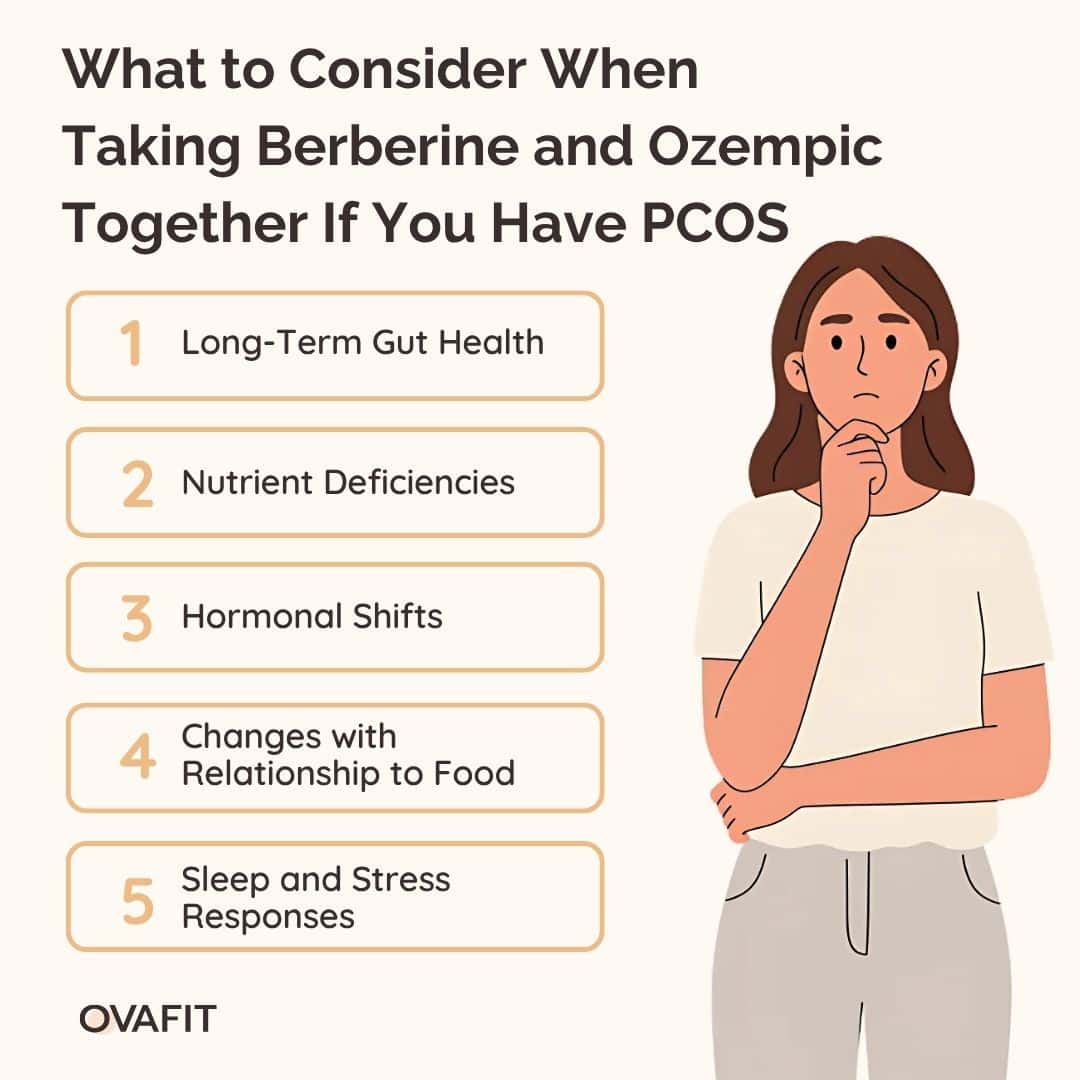
What to Consider When Taking Berberine and Ozempic Together if You Have PCOS
Long-Term Gut Health
Taking both Ozempic and berberine can impact your gut health, but not always in the way we want.
While berberine has powerful antimicrobial properties (which is great for clearing out harmful bacteria), it can also wipe out some of the good bacteria, too. And Ozempic? It slows down digestion so much that it can actually mess with how your gut bacteria ferments food. And, in turn, throws your microbiome out of balance.
Long-term use of both together could mean needing prebiotics, probiotics, and even extra gut support. And that isn’t even for healing—it’s just to stay regular and feel your best. And since most of us with PMOS already struggle with gut issues, why add more to your plate?
The better option? Stick with berberine. It can support gut health over time, help rebalance your hormones, and doesn’t come with the same risk of serious side effects. Your gut (and your hormones) will thank you.
Nutrient Deficiencies
Taking berberine and Ozempic together might interfere with how your body absorbs key nutrients. For women with PMOS, that can be a big deal.
Women with PMOS already struggle with nutrient deficiencies and absorption, thanks to insulin resistance. Add in Ozempic (which lowers your appetite) and berberine (which may reduce absorption of vitamins) and you’re looking at an even bigger nutritional gap.
The fix? Focus on eating a whole-foods, nutrient-dense diet—think leafy greens, colorful veggies, healthy fats, and high-quality protein. And for extra support, I always recommend a multivitamin designed with your PCOS/PMOS needs in mind. That’s why we created the Metabolism Plus Daily Multi. It’s packed with the nutrients we tend to be low in, so you’re not left running on empty.
Knowing whether or not you’re getting all the nutrients you need can be tricky. For help with this, check out my post, “How Many Calories to Eat When Taking Ozempic.”
Hormonal Shifts
The real key to healing PMOS? Hormone balance. But when you combine Ozempic and berberine, you might end up shifting your hormones a little too much.
Ozempic doesn’t directly affect your sex hormones, but it can still influence levels of estrogen, progesterone, and testosterone. On the other hand, berberine is known to lower androgens (AKA male hormones like testosterone), which can be great for PMOS. But when you’re taking both and combining effects, things can easily get thrown out of balance.
You may begin to notice unusual symptoms like mood swings, hot flashes, or disruptions in your cycle. And that’s the opposite of what we want. If you’re feeling “off,” your hormones could be waving a red flag. Always listen to your body and check in with your doctor before combining the two. Sometimes, less is more when it comes to healing PCOS naturally.
Changes with Appetite and Relationship to Food
Both Ozempic and berberine help reduce appetite—just in different ways. Ozempic tends to suppress hunger hard, while berberine works more subtly. Sure, this can help with weight loss, but the downside that isn’t talked about enough? Undereating and a strained relationship with food.
When you’re not eating enough, especially protein and fiber, you risk losing muscle and damaging your gut health. And those are two of the most important things to support your PCOS body long-term. (P.S. I wrote a whole blog post about how Ozempic affects muscle mass—go check it out!)
The truth is that, unfortunately, Ozempic can change your relationship to food—and not in a good way. If your appetite completely disappears on the shot, you might start ignoring your body’s natural hunger cues. Then, when you stop taking it and your appetite returns, it’s easy to spiral. You might try eating the same way you did before, even if it no longer feels right. This can lead to mental stress, disordered eating patterns, and physical setbacks.
Food is fuel, and your body deserves nourishment. That’s why I always advocate for sustainable, hormone-friendly ways to manage PMOS—all of which don’t require extreme appetite suppression.
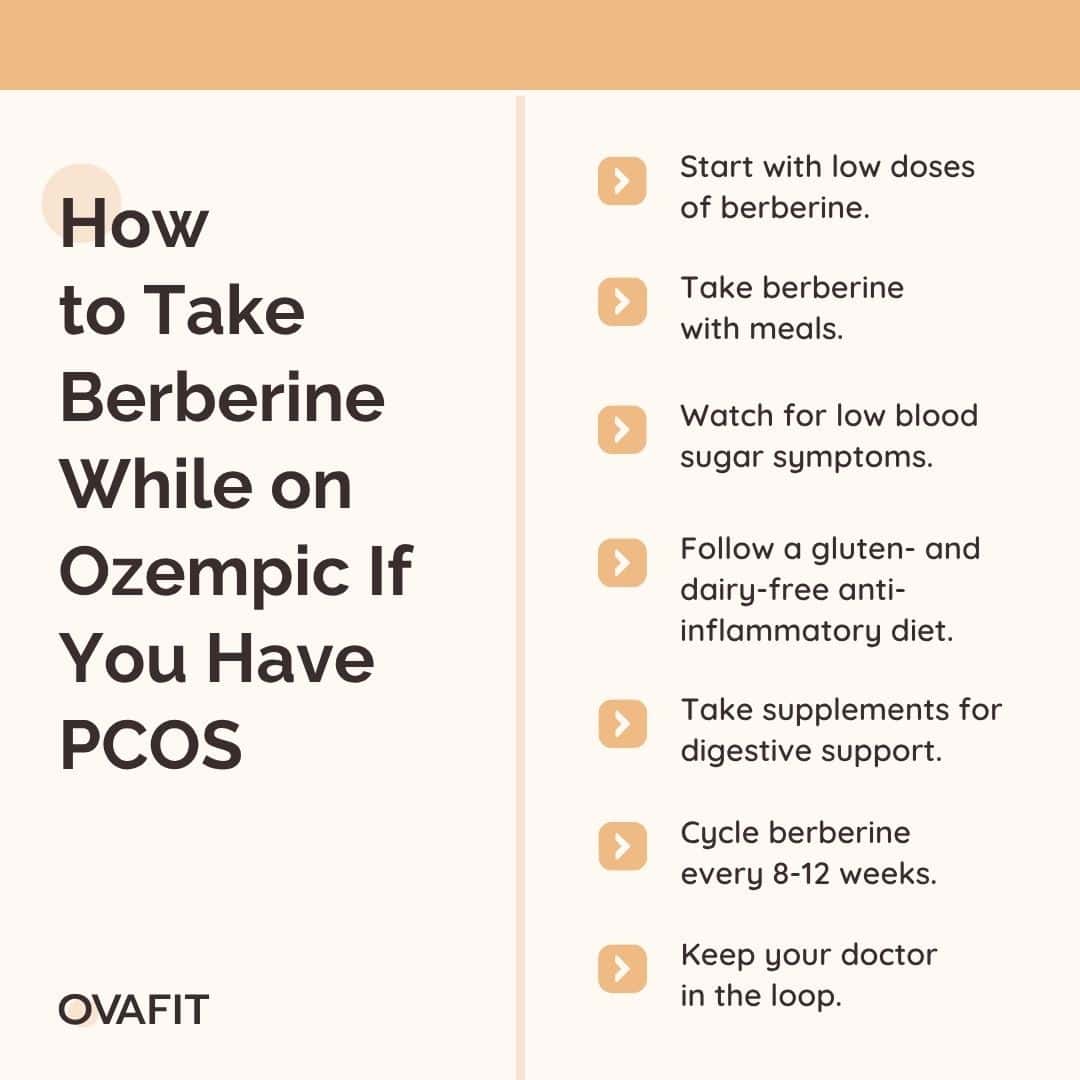
How to Take Berberine While on Ozempic if You Have PCOS
Start with low doses of berberine.
If you’ve decided to add berberine to your routine while taking Ozempic, slow and steady is the way to go. Start with a low dose and give your body time to adjust, especially your gut. While I recommend a typical dose of 550 mg of Berberine Advanced, this isn’t a one-size-fits-all type of thing. Your prescriber should confirm the amount and timing, especially if you’re taking other supplements and medications.
This gentle approach helps you ease into it without overwhelming your system. Plus, it sets you up for better results without the uncomfortable side effects.
Take berberine with meals.
The best time to take berberine is right after a meal. Taking it on an empty stomach can lead to cramping or nausea, and nobody needs that.
I always recommend taking it after breakfast and lunch. That way, it gets right to work supporting your blood sugar levels when your body actually needs the help most. Plus, it’s easier to remember when you build it into your mealtime routine.
Watch for low blood sugar symptoms.
Pay attention to how your body feels and monitor for signs of low blood sugar. If you’re noticing shakiness, intense hunger, sweating, or brain fog, it might be time to consult your doctor. Remember: don’t change or adjust your dosage on your own; this could lead to more harm than good.
Follow a gluten- and dairy-free anti-inflammatory diet.
I always recommend that women with PMOS stick to a gluten- and dairy-free anti-inflammatory diet. This goes for whether you’re taking berberine, Ozempic, or both. Choosing foods that actually make you feel good can do wonders for your hormones.
Plus, when you’re eating intentionally while on these supplements and medications, you’ll be more likely to get the nutrients, protein, and fiber your body needs.
Need some inspiration? Check out my go-to PMOS meal plan. It’s packed with delicious ideas your hormones will love. And make sure to check out The Cysterhood app for hundreds of PMOS-friendly recipes! Expect your favorite sweet treats and hearty meals with good-for-you ingredients that can make your hormones (and your body!) happy.
Take supplements for digestive support.
Since both berberine and Ozempic can impact your gut, it’s super important to give your digestion a little extra love. One of my go-to supplements for gut support (and honestly, for overall PCOS relief) is magnesium. It can help keep things moving, support your gut microbiome, and possibly lower cortisol levels, allowing you to sleep better.
And if you’re feeling a little queasy? Sip on some ginger and spearmint tea. Both are natural nausea fighters and feel like a cozy hug for your stomach.
Cycle berberine every 8-12 weeks.
A lot of medical professionals recommend cycling berberine. That means taking it for 8 to 12 weeks, then giving your body a little break for 2 to 4 weeks. This helps protect your gut flora and keeps everything in balance.
It’s not a hard rule, but it’s a smart move. If you start feeling more tired than usual or notice any gut discomfort over time, take a break. As always, chat with your doctor to see what’s best for your body.
Keep your doctor in the loop.
Thinking about pairing berberine with Ozempic? Make sure to loop your doctor in first. It’s so important to talk through your plan, especially if you’re taking other meds for thyroid health, blood pressure, or mood support.
Your doctor might want to run some routine bloodwork, but don’t worry, it’s normal! They’ll just want to keep an eye on things like hormone levels, fasting insulin, lipids, and HbA1c. That way, they can adjust your dosage if needed to make sure you’re supporting your body—not stressing it out.
Remember, this journey is about healing smarter, not harder.
Heal your PCOS body from the inside out with Berberine Advanced and Ovafit’s lifestyle tips!
If you’re already taking Ozempic and wondering whether adding berberine makes sense for PMOS goals, that’s a conversation for your doctor. Berberine and semaglutide work through different metabolic pathways, and using them together may increase the risk of side effects or affect your blood sugar in ways that need to be considered alongside your other medications.
Personally, I’m a big believer that every medicine needs an exit plan (and shouldn’t simply just mask symptoms). Supporting insulin sensitivity, nourishing your body, moving in ways that feel good, and building sustainable habits are all important pieces of supporting your metabolic health with PMOS.
The goal isn’t to stack as many weight-loss tools as possible; it’s to find an approach that supports your PMOS body and long-term health. If you’re considering adding berberine, talk to your doctor about Ovafit’s Berberine Advanced, a formula made for women with PMOS by a woman with PMOS.
You’ve got this,
Tallene, RD
Written by Tallene Hacatoryan, MS, RD, founder and formulator of OvaFit. Tallene is a Registered Dietitian who specializes in PCOS (now called PMOS) nutrition and has PCOS herself.
Medical disclaimer: This content is for educational purposes only and is not medical advice. It is not intended to diagnose, treat, cure, or prevent any disease. Always talk with your doctor or a qualified healthcare provider before starting any supplement, especially if you take medications, are pregnant or breastfeeding, are trying to conceive, or have a medical condition.
These statements have not been evaluated by the Food and Drug Administration. OvaFit products are not intended to diagnose, treat, cure, or prevent any disease.